


I used to log my bench numbers like they were facts—then realized I was “PR-ing” on a lighter bar without knowing it. Once I started checking the bar type before loading plates, my progress finally made sense week to week. It also killed a ton of gym anxiety, because I wasn’t comparing my numbers to someone else’s setup. Now I treat bar ID like tying my shoes—basic, quick, and non-negotiable.
If you want honest progress, confirm your bar first. Most are 45 lb (20 kg), but the “smaller” Olympic bar is often 35 lb (15 kg), and guessing quietly wrecks your tracking. The truth is, how much does a barbell weigh is one of the most common gym questions, yet most people just assume. Meanwhile, they’re accidentally inflating their numbers or underestimating their strength because they grabbed the wrong bar without checking.
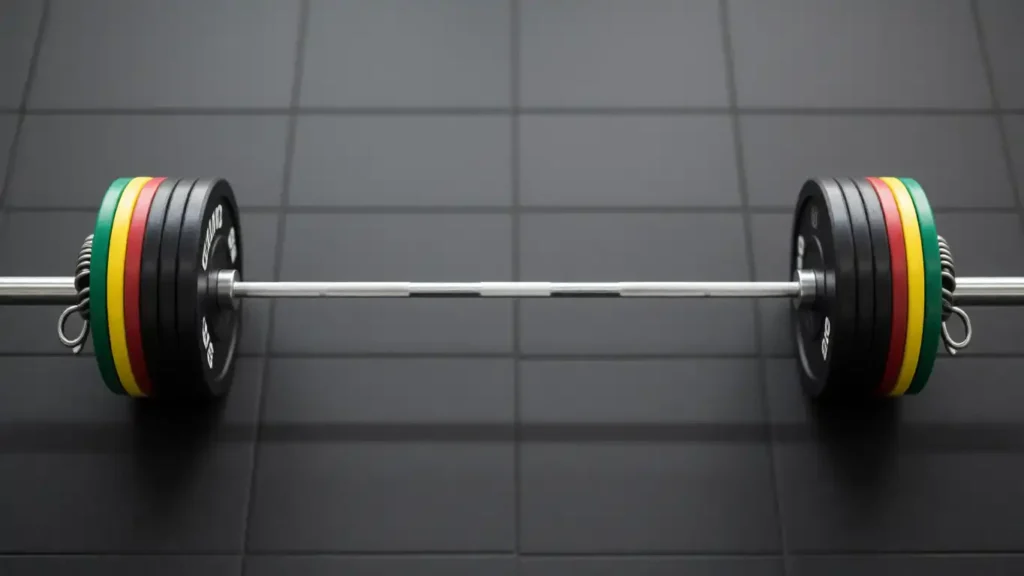
Let me walk you through everything you need to know. By the end of this guide, you’ll identify any gym bar in seconds, track your lifts accurately, and finally understand why that one bar always feels heavier than the other.
Quick Answer: Most Common Scenarios
Let’s satisfy the skim reader immediately. Here’s what you’re probably working with right now:
- Most common straight bar in gyms: typically 45 lb / 20 kg (men’s Olympic bar)
- Smaller Olympic bar (often called “women’s bar”): typically 35 lb / 15 kg
- Smith machine bar: it can vary a lot—check the sticker or label on the machine
- EZ curl bar: usually between 15 lb and 25 lb, depending on the brand
- Trap/hex bar: typically between 45 lb and 60 lb, sometimes heavier
Here’s a quick cheat table for the most common bars:
| Bar Type | Weight (lb) | Weight (kg) |
|---|---|---|
| Standard Olympic barbell (men’s) | 45 lb | 20 kg |
| Olympic barbell (women’s) | 35 lb | 15 kg |
| Standard 1-inch barbell | 15–25 lb | 7–11 kg |
| EZ curl bar | 15–25 lb | 7–11 kg |
| Trap/hex bar | 45–60 lb | 20–27 kg |
| Smith machine bar | 15–25 lb* | 7–11 kg* |
*Smith machine bars are counterbalanced, so the effective weight is usually much lighter than a free bar. Always check the label.
If you’re wondering how much does an Olympic bar weigh, the answer is almost always 20 kg or 45 lb for the standard men’s version. However, not every bar in the gym is an Olympic bar, and that’s where confusion starts.
What People Mean by “The Bar” (Don’t Guess—Identify)
When someone says “the bar,” they could be talking about five completely different pieces of equipment. Consequently, your total weight calculation changes dramatically depending on which one you’re using. Let’s break it down:
Free-Weight Straight Barbell
This is what you’ll find in the bench press area, squat rack, or deadlift platform. It’s usually the 45 lb Olympic barbell, but smaller gyms or home setups might use lighter standard bars. Therefore, always verify before you load plates.
EZ Curl Bar
You’ll see this in the arm area. It has a zigzag shape that’s easier on your wrists during curls. The EZ curl bar typically weighs between 15 lb and 25 lb, but some gyms have heavier versions. Moreover, some fixed EZ bars come preloaded with weight.
Trap/Hex Bar
This is the diamond-shaped bar used for trap bar deadlifts. The trap bar weight usually ranges from 45 lb to 60 lb, and some specialty versions weigh even more. Additionally, raised handles can shift the bar’s balance, so it might feel different even at the same weight.
Fixed Barbells
These are the preloaded bars sitting in a rack, usually labeled 10 lb, 20 lb, 30 lb, and so on. The weight printed on the end includes the bar itself, so you don’t need to calculate anything. However, older racks sometimes have faded or missing labels.
Smith Machine Bar
This is the guided bar that moves on vertical or angled rails. Because of the counterbalance system, the effective weight of a Smith machine bar is much lighter than a free barbell—often between 15 lb and 25 lb. Furthermore, friction in the rails and the machine’s design make it feel inconsistent across different brands.
Do you see why it matters now? If you assume every bar weighs 45 lb, your logged numbers might be wildly off.
Identify Your Bar in 10 Seconds (Decision Tree Style)
Here’s how I teach beginners to confirm bar weight without overthinking it. Follow these steps in order, and you’ll know what you’re lifting every single time.

Step 1: Look for Markings
First, check the end caps. Many quality bars have the weight stamped right there—”20 kg,” “45 lb,” or the manufacturer’s logo. Additionally, look for colored rings near the sleeves. Olympic bars often use color-coded markings to indicate weight class or purpose.
If you see markings, trust them. If not, move to the next step.
Step 2: Check Sleeve Size
Grab the bar and look at the rotating sleeves where you load plates. Are they thick or thin?
- 2-inch sleeves: This is an Olympic bar. It’s designed for Olympic-style bumper plates and almost always weighs 45 lb (20 kg) for men’s bars or 35 lb (15 kg) for women’s bars.
- 1-inch sleeves: This is a standard barbell, common in home gyms or older commercial gyms. These bars typically weigh between 15 lb and 25 lb.
The barbell sleeve diameter Olympic vs standard difference is one of the fastest ways to identify what you’re holding. Olympic sleeves fit Olympic plates. Standard sleeves fit standard plates. They’re not interchangeable.
Step 3: Check Length and Thickness
Full-size Olympic bars are usually about 7 feet long. Shorter bars—around 5 or 6 feet—are often lighter technique bars or women’s Olympic bars. Similarly, if the bar shaft feels unusually thick, it might be a specialty bar like an axle bar, which can weigh 45 lb or more.

Length matters because shorter bars weigh less, even if they look similar. Therefore, a 6-foot technique bar might only weigh 15 lb to 25 lb.
Step 4: Check Knurling and Center Knurl
Run your hand along the bar. Feel the rough pattern? That’s called knurling, and it helps you grip. Now check the very center of the bar. Is there knurling in the middle, or is it smooth?
- Center knurl present: This is common on power bars designed for squatting. The center knurl grips your back during squats.
- No center knurl: This is common on Olympic weightlifting bars and multipurpose bars. It prevents shirt damage during cleans and snatches.
This won’t tell you the exact weight, but it helps you identify the bar’s purpose—and purpose usually correlates with weight. Power bars and squat bars are almost always 45 lb. Olympic lifting bars might be 45 lb (men’s) or 35 lb (women’s).
💡 Pro Tip: Take a photo of the bar’s end cap or markings on your first visit to a new gym. Save it in your notes app so you never forget which bar you’re using.
Barbell Weight Chart: The Most Complete Guide
Here’s the reference table I wish I had when I started lifting. Use this to identify any bar you encounter in the gym.
| Bar Type | Typical Weight | Typical Length | Where You’ll See It | Best For |
|---|---|---|---|---|
| Standard straight barbell | 15–25 lb (7–11 kg) | 5–6 feet | Home gyms, older facilities | Beginners, lighter exercises |
| Men’s Olympic barbell | 45 lb (20 kg) | 7.2 feet (2.2 m) | Most commercial gyms | Bench, squat, deadlift, Olympic lifts |
| Women’s Olympic barbell | 35 lb (15 kg) | 6.9 feet (2.1 m) | CrossFit boxes, Olympic lifting gyms | Olympic lifts, smaller hands, lighter starting weight |
| Power bar | 45 lb (20 kg) | 7.2 feet | Powerlifting gyms, squat racks | Heavy squats, bench, deadlifts |
| Olympic weightlifting bar | 45 lb (20 kg men’s), 35 lb (15 kg women’s) | 7.2 feet (men’s), 6.9 feet (women’s) | Oly lifting platforms | Snatches, cleans, jerks |
| Trap/hex bar | 45–75 lb (20–34 kg) | Varies | Deadlift area, functional training zones | Trap bar deadlifts, farmer carries |
| EZ curl bar | 15–25 lb (7–11 kg) | 4 feet | Arm training area | Bicep curls, tricep extensions |
| Safety squat bar | 60–70 lb (27–32 kg) | 7 feet | Specialty racks | Squats with reduced shoulder strain |
| Fixed preloaded barbells | 10–110+ lb (varies) | 3–5 feet | Rack display | Quick workouts, circuit training |
| Smith machine bar | 15–25 lb effective* (7–11 kg) | Varies | Smith machine stations | Guided pressing and squatting |
| Axle bar | 45 lb (20 kg) | 7 feet | Strongman gyms | Thick-grip training |
| Cambered bar | 65 lb (29 kg) | 7 feet | Specialty squat racks | Accommodating resistance squats |
| Swiss/multi-grip bar | 35–55 lb (16–25 kg) | 5–6 feet | Bench and pressing areas | Neutral-grip pressing |
| Technique/training bar | 10–15 lb (5–7 kg) | 5–6 feet | Beginner zones, rehab areas | Learning movement patterns |
*Smith machine bars are counterbalanced, so effective weight is much lighter than the actual bar mass.
Common gap-fill note: Even within the same category, bars can vary. For instance, a power bar and an Olympic weightlifting bar might both be labeled 20 kg, but they feel different because of stiffness, whip, and knurl pattern. Similarly, specialty bars like cambered or multi-grip bars vary widely by manufacturer.

If you’re using a women’s Olympic bar weight 15 kg, that’s exactly 33 lb—not 35 lb. However, most people round to 35 lb for simplicity. Likewise, 20 kg barbell how many pounds equals 44 lb, but we round to 45 lb in the US.
Smith Machine Bar Weight (And Why It’s Confusing)
Let me address the elephant in the gym: how much does a Smith machine bar weigh? The short answer is it depends, and that’s frustrating for anyone tracking progress.
Why Smith Bars Vary
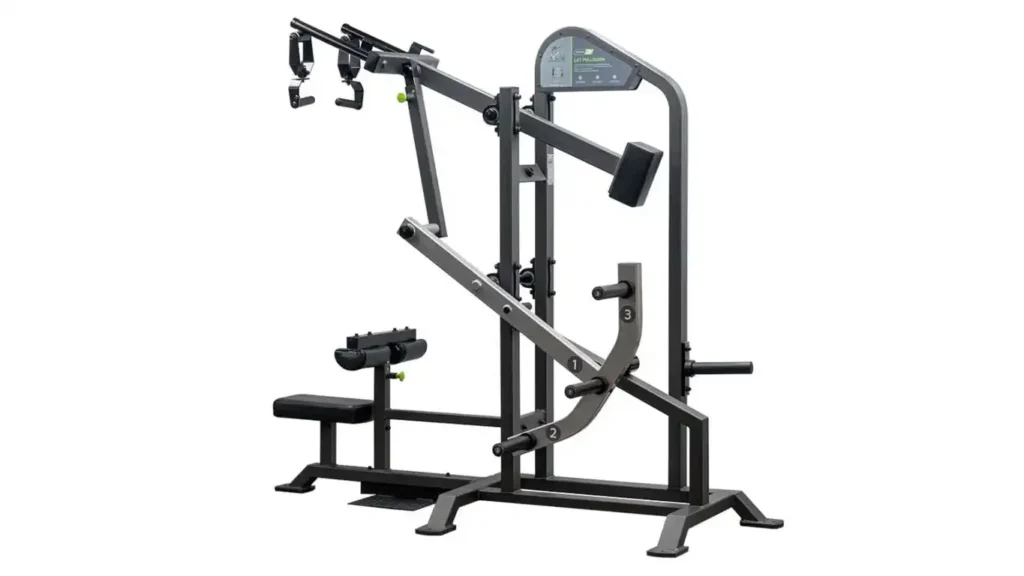
Smith machines use a counterbalance system. The bar rides on rails, and many machines have a counterweight attached to reduce the effective resistance. Consequently, a Smith bar might physically weigh 45 lb but feel like it weighs only 15 lb to 25 lb when you lift it.
Additionally, different rail angles, friction levels, and carriage systems make each Smith machine feel unique. Some are nearly vertical. Others angle slightly forward. Therefore, the same Smith bar can feel completely different at two different gyms.
How to Find the Real Number Fast
Don’t guess. Instead, look for these clues:
- Manufacturer label or sticker on the machine: Most Smith machines have a small label near the base or on the frame listing the effective bar weight.
- Gym staff or equipment sheet: Ask the front desk. They should know, or they can check the equipment manual.
- DIY check method: Use the bathroom scale method I’ll describe in the next section.
How to Track Progress on Smith Safely
Here’s what I recommend: use the same Smith machine every time. Log your sets as “Smith machine + plates” rather than converting to free-weight equivalent. This way, your progress is consistent and accurate week to week.
Moreover, if you switch gyms or machines, retest your working weights. Don’t assume the numbers transfer directly.
How to Weigh a Bar Yourself (Simple DIY Method)
What if the bar isn’t labeled and you want a definitive answer? Here’s a practical method anyone can use.
Bathroom Scale Method
You’ll need a standard bathroom scale. Here’s the process:
- Weigh one end of the bar: Place one end of the barbell on the scale. Let the other end rest on the floor or a stable surface at the same height. Read the number.
- Weigh the other end: Flip the bar around and weigh the opposite end the same way. Read that number.
- Add them together: The sum is the total weight of the bar.
For example, if one end reads 22 lb and the other reads 23 lb, the bar weighs 45 lb total.
Accuracy Tips
Use the same scale each time. Bathroom scales can vary slightly, so consistency matters more than perfection. Additionally, expect small variations due to collars, bar manufacturing tolerances, or scale error. A reading of 44 lb or 46 lb is close enough to confirm a 45 lb bar.
If you’re weighing a trap bar or specialty bar, make sure the scale sits flat under the frame. Otherwise, you might get an inaccurate reading.
💡 Pro Tip: If your gym has a luggage scale or hanging scale, you can weigh the entire bar at once by hanging it horizontally. This method is faster and often more accurate.
How to Calculate Your Total Weight (Without Melting Your Brain)
Once you know your barbell weight without plates, the math becomes simple. Here’s the formula I use every single session:
Total weight = bar + (plates on left + plates on right) + collars (if used)
Let’s break it down with examples so you can copy and paste this into your brain.
Common Examples
Example 1: Two 45 lb plates on each side of a 45 lb bar
- Bar: 45 lb
- Left side: 45 lb + 45 lb = 90 lb
- Right side: 45 lb + 45 lb = 90 lb
- Collars: 5 lb total (if using spring collars, usually 2.5 lb each)
- Total: 45 + 90 + 90 + 5 = 230 lb
Most people skip the collars in their count, so you’d log 225 lb. That’s fine as long as you’re consistent.
Example 2: Two 20 kg plates on each side of a 20 kg bar (Olympic lifting gym)
- Bar: 20 kg
- Left side: 20 kg + 20 kg = 40 kg
- Right side: 20 kg + 20 kg = 40 kg
- Total: 20 + 40 + 40 = 100 kg
In pounds, 100 kg equals 220 lb. However, if you’re logging in kg, just leave it as 100 kg. Don’t mix units.
Example 3: One 25 lb plate and one 10 lb plate on each side of a 35 lb bar
- Bar: 35 lb
- Left side: 25 lb + 10 lb = 35 lb
- Right side: 25 lb + 10 lb = 35 lb
- Total: 35 + 35 + 35 = 105 lb
Common Mistakes
Here’s where people mess up constantly:
- Forgetting the bar: They add up the plates and forget to include the bar itself. A “two-plate bench” (two 45 lb plates per side) is 225 lb total, not 180 lb.
- Mixing lb and kg plates: If your gym uses kg bumper plates but you track in pounds, convert before you log. Don’t assume.
- Assuming all straight bars are identical: A standard bar is not an Olympic bar. A women’s bar is not a men’s bar. Check first.
Do you track your lifts in a notebook or app? If not, start today. Accurate tracking depends on accurate bar identification.
💡 Pro Tip: Use a bar weight calculator app or bookmark a simple spreadsheet on your phone. Input the bar type and plate count, and it does the math instantly. This eliminates human error mid-workout.
Why Bar Weight Matters (Beyond Ego)
You might be thinking, “Does it really matter if I’m off by 10 lb?” Yes, it does. Here’s why.
Progressive Overload Accuracy
Progressive overload means adding weight or reps over time. However, if you don’t know your true starting weight, you can’t measure real progress. Imagine thinking you added 20 lb to your squat, but you actually just switched from a 35 lb bar to a 45 lb bar. That’s not progress—that’s confusion.
Comparing PRs Across Gyms
If you hit a personal record at one gym, then travel or switch gyms, you need to know whether the bars are the same. Otherwise, you might think you got weaker when really you’re just lifting a heavier bar.
Programming Percentages
Many strength programs use percentages of your one-rep max. For instance, “work at 70% of your 1RM for 5 sets of 5.” If your logged 1RM is inflated because you used the wrong bar weight, your entire program is off. Consequently, you might be lifting too light or too heavy without realizing it.
Competition Standards vs Commercial Gym Reality
Powerlifting competitions use a 45 lb (20 kg) bar for men and a 35 lb (15 kg) bar for women. If you’re training for competition, you should train with the same bar you’ll use on meet day. Similarly, Olympic lifting uses specific bar specs. Training with a different bar changes the feel, whip, and grip.
Simply put, knowing how much does a bench press bar weigh or how heavy is a barbell is foundational to honest strength training.
Choosing the Right Bar for Your Goal (Mini Guide)
Not all bars are created equal, and choosing the right one can improve your training experience dramatically. Here’s what I recommend based on your goals.
Strength and Powerlifting Focus
If you’re focused on building maximum strength in the squat, bench press, and deadlift, use a stiff power bar with aggressive knurling. These bars typically weigh 45 lb and have a center knurl for squatting. They don’t flex much under load, which keeps the lift stable and predictable.
Moreover, power bars are built to handle heavy weight without bending. If you’re loading 300+ lb, you want a bar that won’t whip or bounce unpredictably.
Olympic Lifting Focus
If you’re training snatches, cleans, and jerks, use an Olympic weightlifting bar. These bars have more sleeve spin, which allows the plates to rotate during the catch phase. They also have more “whip,” meaning they flex slightly under load to help you generate momentum.
Men’s Olympic bars weigh 45 lb (20 kg). Women’s Olympic bars weigh 35 lb (15 kg). The women’s bar is also slightly thinner in diameter, which makes it easier to grip if you have smaller hands.
Beginners
If you’re new to lifting, start with a manageable bar weight and focus on stable patterning. Don’t feel pressured to use the 45 lb bar right away. Many gyms have 15 lb to 25 lb technique bars designed specifically for learning movement patterns.
Technique first, load second. Once your form is solid, you can progress to heavier bars and plates. Additionally, using a lighter bar reduces injury risk while you’re still building coordination and motor control.
FAQ: Your Barbell Weight Questions Answered
How much does the bar weigh on bench press?
Most bench press bars are 45 lb (20 kg) Olympic barbells. However, some gyms use 35 lb women’s bars or lighter technique bars. Always check before you start lifting.
Is the bar 45 lb or 35 lb?
The standard men’s Olympic bar is 45 lb (20 kg). The women’s Olympic bar is 35 lb (15 kg). To tell the difference, check the length and diameter. Women’s bars are slightly shorter and thinner.
Why is 20 kg not exactly 45 lb?
Because 20 kg equals 44 lb, not 45 lb. The extra pound is a rounding convention used in the US. Similarly, 15 kg equals 33 lb, but we round to 35 lb.
How much does an EZ bar weigh?
Most EZ curl bars weigh between 15 lb and 25 lb. Some fixed EZ bars are preloaded and weigh more. Check the label or weigh it yourself.
How much does a trap bar weigh?
Trap bars typically weigh between 45 lb and 60 lb, but some specialty versions weigh up to 75 lb. The design and handle configuration affect the total weight.
How much does a Smith machine bar weigh?
Effective Smith machine bar weight is usually 15 lb to 25 lb due to counterbalancing. However, the actual bar might weigh 45 lb. Always check the machine label.
How can I tell if my bar is 15 kg or 20 kg?
Check the end cap for markings. If there’s no marking, measure the length. Men’s 20 kg bars are about 7.2 feet long. Women’s 15 kg bars are about 6.9 feet long. You can also weigh it using the bathroom scale method.
Do all gyms use the same bar weight?
No. Commercial gyms usually stock 45 lb Olympic bars, but budget gyms, home gyms, and specialty facilities might use lighter standard bars or heavier specialty bars. Therefore, always verify when you visit a new gym.
How to tell if a bar is 45 pounds?
Look for the “20 kg” or “45 lb” marking on the end cap. Check the sleeve diameter—2-inch sleeves indicate an Olympic bar, which is almost always 45 lb for men’s bars. Measure the length—full-size Olympic bars are about 7 feet long. If there’s no marking, use the bathroom scale method.
Final Thoughts: Know Your Bar, Track Your Progress
I’ll leave you with this: if you want honest progress, confirm your bar first. Most are 45 lb (20 kg), but the “smaller” Olympic bar is often 35 lb (15 kg), and guessing quietly wrecks your tracking. Once I started checking the bar type before loading plates, my progress finally made sense week to week.
You now know how to identify any barbell in seconds, calculate your total weight accurately, and choose the right bar for your goals. Moreover, you understand why bar weight matters for progressive overload, programming, and honest self-assessment.
Next time you walk into the gym, take ten seconds to confirm your bar. Check the markings. Feel the sleeves. Note the length. Then load your plates and lift with confidence, knowing your numbers are real.
Your strength journey deserves accurate data. Start here.

 By
By
 By
By
 By
By

 By
By


