


Can Protein Powder Go Bad? A Practical Guide to Expiration, Safety, and Spotting Spoilage
In my clinic, I see how small health choices affect your energy, confidence, and day-to-day life. So when you ask, Can Protein Powder Go Bad?, you are not being “extra.” You are being smart. Most people have an older tub sitting in a cabinet, and it is not always clear if it is still usable. If you want the source this guidance is based on, here is the Men’s Health explainer on expired protein powder.
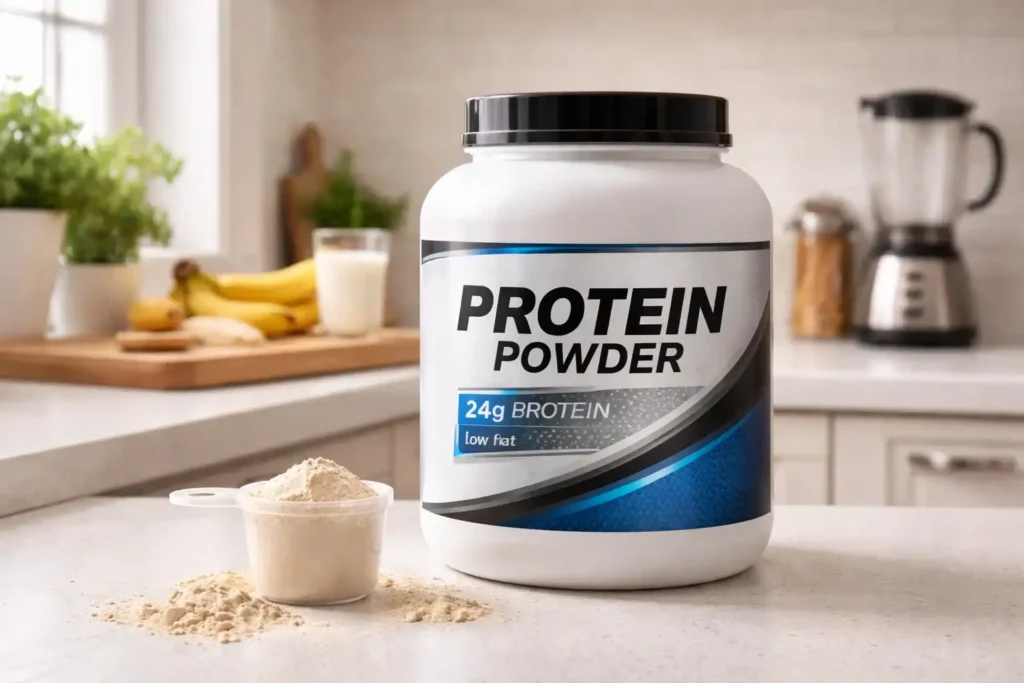
Here is what you will learn:
- What the date on the tub really means
- What changes after it “expires” and what usually does not
- When you should worry about safety
- How to check smell, taste, color, and clumps
- How to store it so you stop playing this guessing game
You deserve clear answers without fear, shame, or panic. Ready?
Quick takeaways for skimmers
- Protein powder can expire, but it often does not spoil in obvious ways like meat or milk.
- A little past the date is often more about quality than danger.
- Storage matters a lot. Heat and humidity raise the risk.
- If it smells off, tastes off, changes color, or clumps hard, treat that as a red flag.
- If you already took a small amount and feel fine, do not panic. The bigger issue is often lower quality unless it truly went bad.
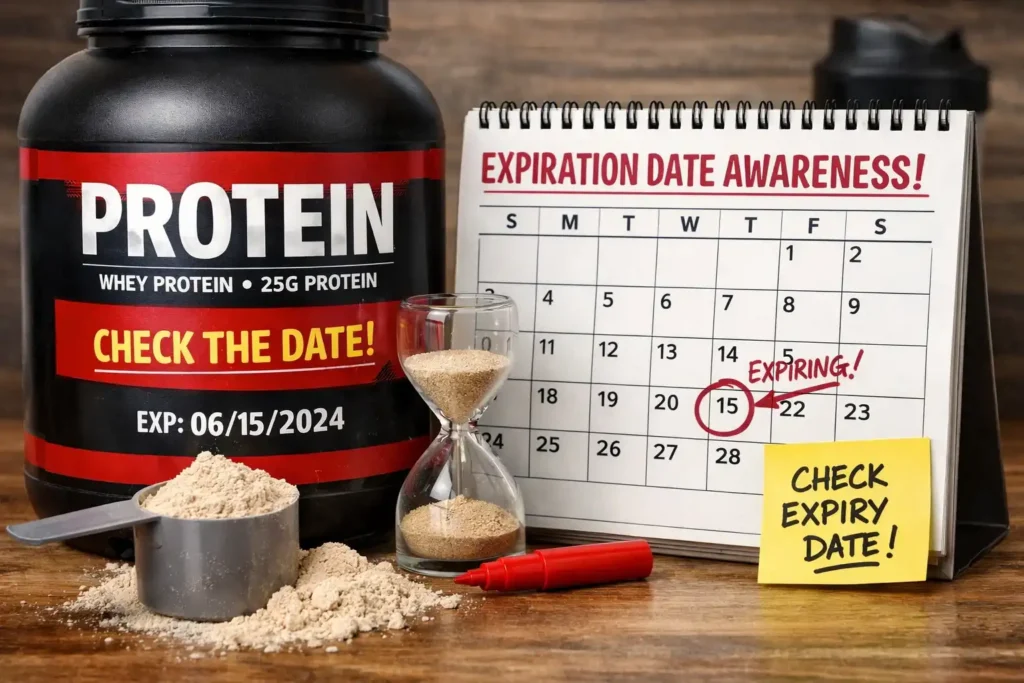
Have you ever opened a tub and thought, “This smells… weird, but maybe I am overthinking it?” That moment is exactly why this guide exists.
Why protein powder expires even though it’s dry
What makes protein powder different from perishable foods
Meat and dairy spoil fast, but powders can fail quietly
Meat and dairy usually give loud warning signs. Protein powder can be more subtle. That is why people get confused and keep using it.
Here is the key idea: “expired” often means “less effective or lower quality,” not automatically “dangerous.” But you still need to know what to look for, because bad storage can change the story.
So, the goal is not to obsess. The goal is to make a calm, evidence-based decision.
Why microbial growth is usually less likely but not impossible
In a dry tub, it is hard for microbes to grow. That is one reason powders can last longer than many foods.
However, warm and humid storage can increase risk. Think bathrooms, gym lockers, or any place that gets steamy. Moisture is the enemy here. If water gets into the powder, all bets get shakier.
Ask yourself: where has this tub been living, really?
What the date on the tub actually means
Expiration or best by as a quality marker
Many supplements include dates even when they are not always required. In real life, that date is often a “best quality by” marker. After that, the maker is no longer promising peak taste and performance.
So if you are staring at a tub that is slightly past the printed date, the better question is usually: does it still pass the basic checks?
Typical timeframe readers will see on packaging
Many tubs show dates roughly in the range of six months to a year, depending on the product.
That range can be confusing, because two powders can look the same but have different ingredients, processing, or flavor add-ins. So you use the date as a guide, not as the only judge.
How long protein powder may last and what changes that
The biggest variable how you store it
If you want one takeaway to remember, it is this: storage conditions can matter more than the date.
Heat, humidity, and repeated exposure to air all push a powder toward quality loss. If you live in a humid area, this matters even more.
What properly stored implies in the source
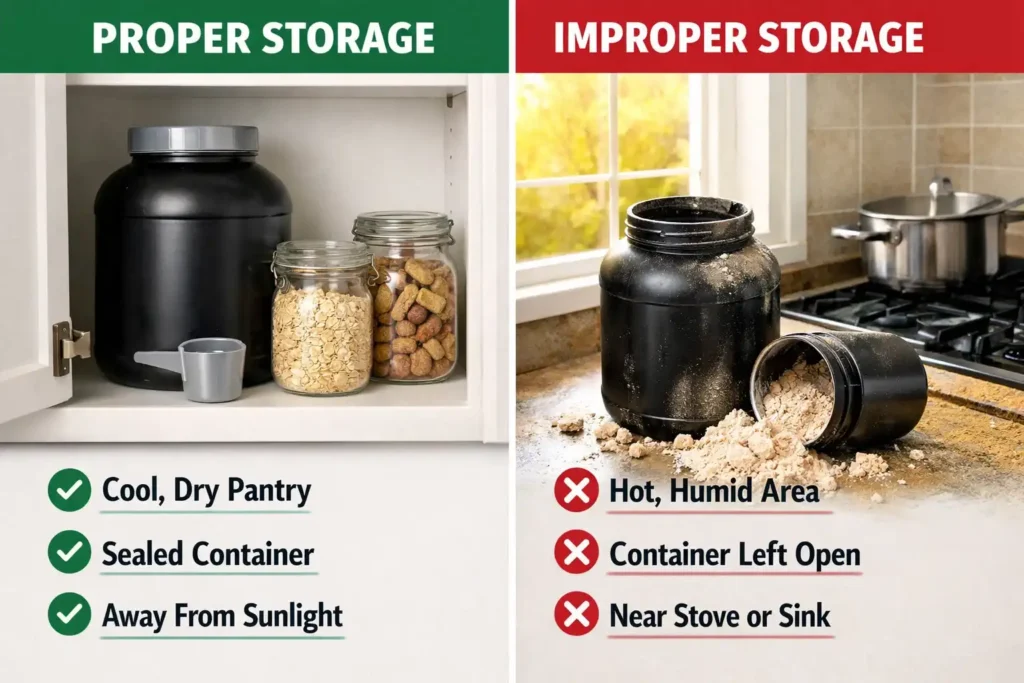
Proper storage is simple:
- Keep it cool
- Keep it dry
- Keep it out of direct light
- Keep the scoop dry
If that sounds basic, it is. And yet, it is where most people slip.
What the source says about still safe time horizons
When a protein powder is stored well, it may be safe to consume for a long time, even up to about two years, while quality may still drift down.
Here is the important split: “safe” and “effective” are not the same word. You can drink something that is not harmful and still get less benefit than you think.
Plant-based powders
You might wonder, can plant protein powder go bad? The same dry-environment logic applies. Dry storage helps. Heat and humidity still hurt.
Also, yes, can whey protein go bad? It can, especially when stored poorly or when the powder shows clear spoilage signs.
What happens after protein powder expires the why it’s less effective section
The main change muscle-building mojo fades
Over time, protein powder may lose some of the punch you are buying it for. That can mean less support for building and repairing muscle.
So if you are training hard and relying on your shakes, freshness matters more than most people think.
The mechanism explained Maillard browning leads to lysine breakdown
This is the simple version. A slow chemical reaction can happen where protein interacts with leftover sugars from processing. That reaction can reduce an amino acid called lysine over time.
Why should you care? If key amino acids drop, the protein may be less “complete,” and that can reduce its muscle-building value.
Does that mean it becomes useless overnight? No. But it does mean older powder can quietly underperform.
Can expired protein powder hurt you
The most likely scenario not dangerous just less useful
Most of the time, the concern is not immediate harm. The more common issue is that the powder is not as effective and may taste or smell off.
So if you are asking expired protein powder safe, the honest answer is: it may be, but only if it passes the spoilage checks and it was stored well.
Also, if you are wondering does protein powder expire or just lose potency, the real-world answer is often both. The “expiration” you notice first is usually quality.
When it can make you sick when it’s truly gone bad
If the powder has truly spoiled, you can get sick. People may experience stomach pain, nausea, and sometimes vomiting.
That is why I do not want you playing roulette with a tub that smells wrong. Your gut is not a testing lab.
What if you already drank some and now you are anxious? Take a breath. Most small exposures do not lead to disaster. Still, you should stop using that tub if it shows spoilage signs.
And yes, can expired protein powder make you sick? It can, if it has actually gone bad.
How to tell if your protein powder has gone bad the simple test built out
Can Protein Powder Go Bad? The fast look smell and texture check
This is your first line of defense, and it is simple:
- Protein powder smells bad: sour, musty, or just “wrong”
- Color changes that were not there before
- Hard clumps that do not break up easily
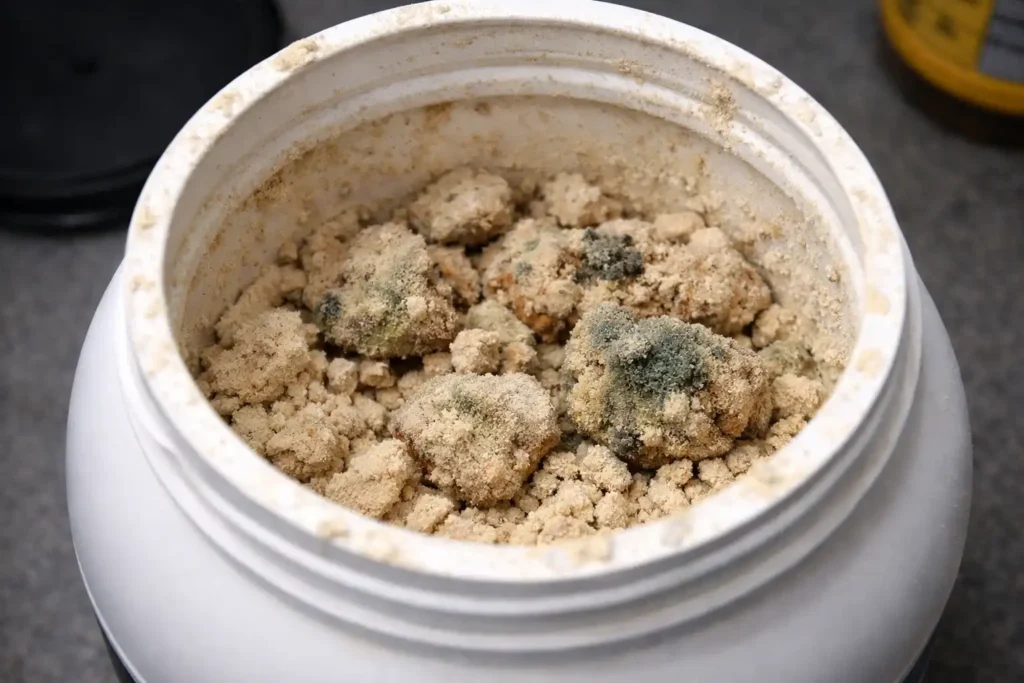
If you notice a rancid protein powder smell, trust that signal. Your senses exist for a reason.
Pro Tip 💡: If you hesitate after one sniff, do not negotiate with the tub. Toss it.
Also, people ask: clumpy protein powder safe? Mild clumping can happen from humidity exposure. But big, stubborn clumps plus odor changes are a strong reason to discard.
The taste check only when you’re barely past the date
If you are only a day or two past the printed date and everything looks and smells normal, you can do a tiny taste test.
One big red flag is when protein powder tastes like cardboard. That “flat, stale” taste can be a sign of quality breakdown. If you taste that, you toss it.
Do not gulp a full shake to “see what happens.” Your stomach deserves better.
Decision tree readers can follow
Step 1 Check the timeline
Ask: how long does protein powder last in your situation? If you are barely past the date, your next steps matter. If you are far past, the odds of quality loss rise.
Can Protein Powder Go Bad? Step 2 Ask the storage question that changes everything
Was it stored hot, damp, or in a humid place like a bathroom or gym bag? If yes, lean toward tossing it.
Step 3 Smell test
If it smells off, you stop. No debating.
Step 4 Visual and texture test
If color has changed or clumps are heavy and persistent, you stop.
Step 5 Taste test only if you are barely past date
Tiny taste only. Cardboard taste means discard.
Step 6 When unsure choose safety
If you are still uncertain, err on the side of caution. Peace of mind is part of health too.
Want the simplest summary? If you are asking how to tell if protein powder is bad, it is usually smell, color, clumps, and taste.
How to keep protein powder fresh so you don’t have this problem again
Storage basics
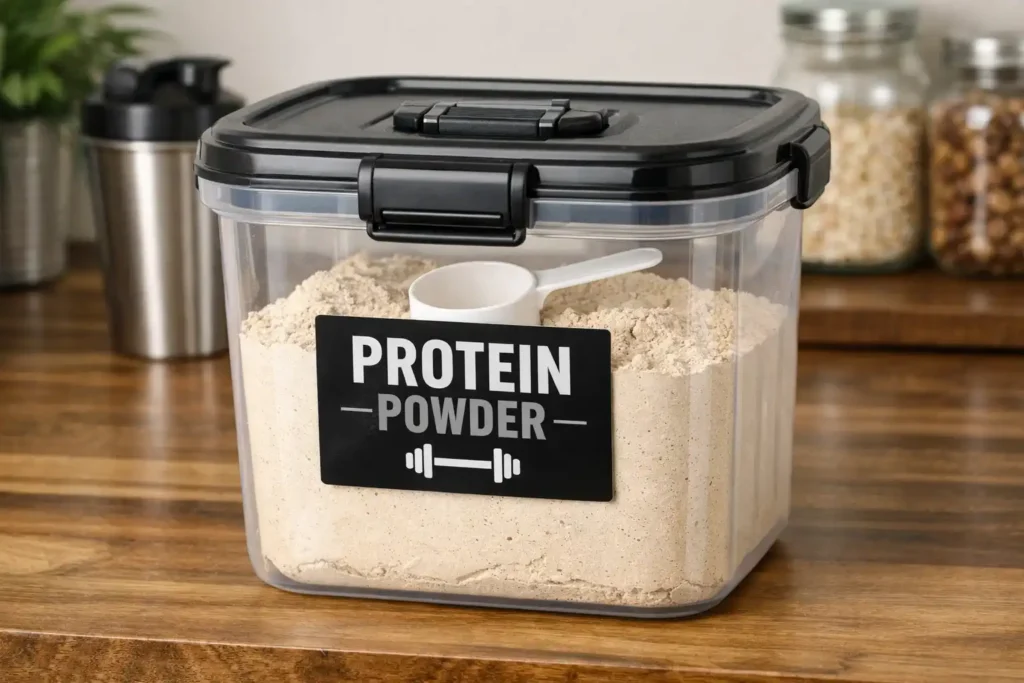
Store it somewhere cool and dark. Keep the scooper dry.
This matters more than most people realize, because moisture starts a chain reaction: clumps, odor changes, and faster quality loss.
Reduce exposure to air and contaminants
Close the lid tightly after each use. Air exposure can speed up quality changes and make odors worse.
Also, do not use a wet spoon. Do not scoop right after shaking ice in the same cup. Small habits add up.
Pro Tip 🧠: Treat your tub like food, not like “just a supplement.” Clean hands, dry scoop, tight lid.
Upgrade the container if needed
If the original tub does not seal well, move the powder to an airtight container. Many people use a clean, dry mason jar.
This is not about being fancy. It is about limiting air and moisture.
Packaging format option
Individually wrapped packets can be convenient and can help reduce repeated air exposure.
If you tend to toss tubs in your car or gym bag, packets can be a smarter move.
Pro Tip 🏋️: If your powder travels with you, use packets or keep a small airtight travel container.
Keep it or toss it recap section reader-first summary
Situations where the source suggests it’s probably okay to use
- Only slightly past the date
- Stored properly, cool and dry
- No odor change, no color change, no hard clumps
- Taste is normal
Situations where the source implies you should toss it
- Off smell or off flavor
- Stored in heat or humidity
- Color change or major clumping
- Cardboard taste
Here is a quick comparison table you can screenshot.
| What you notice | What it usually means | Best move |
|---|---|---|
| Slightly past date, stored cool and dry, looks normal | More likely quality is okay | Small taste check, then use or replace |
| Strong odor change or rancid smell | Higher chance it has gone bad | Toss |
| Color change you cannot explain | Quality loss or spoilage signs | Toss |
| Big clumps plus humid storage history | Moisture exposure | Toss |
| Tastes like cardboard | Quality breakdown | Toss |
And if you are wondering what happens if you drink expired protein powder, the most common outcome is “nothing dramatic,” but the risk rises if the powder is actually spoiled.
Expert voices to feature and where to place them
Registered dietitian perspective on safety vs quality
A registered dietitian view helps readers relax without being careless: a little past the date often means lower quality before it means danger.
That balanced framing reduces anxiety and prevents risky “I’ll just chug it” behavior.
Dietitian perspective on potency and sensory changes
This is where you emphasize that potency and other nutrients can degrade over time, and that smell and taste changes matter.
It also supports practical storage habits, because prevention is easier than guessing later.
Food science perspective on why it changes
A food science voice helps explain the slow chemistry behind flavor fading and amino acid changes, in plain language.
That explanation gives readers a reason to care without scaring them.
FAQ-style closer built strictly from questions the source directly answers
Does protein powder really expire
Yes. It can expire, but it may not show the same obvious spoilage signs as fresh foods.
How long after the expiration date is it safe
Often, a short time past the date may be okay if storage was good and there are no spoilage signs. However, the farther past you go, the more quality becomes a question.
What’s the biggest risk getting sick or losing effectiveness
Most often, the bigger risk is reduced effectiveness. Getting sick is more linked to powder that has truly gone bad.
What are the easiest signs it’s gone bad
Bad smell, color change, clumping, and a stale or cardboard-like taste.
How do I store it so it lasts longer
Keep it cool and dark, keep the scoop dry, and close the lid tightly. Airtight containers and packets can help.
Before you go, ask yourself: are you using your powder to support your health, or are you letting an old tub add stress to your routine?
Conclusion action-forward calm and practical
I want you to feel confident in small choices like this. The rule is simple: check the date, think about storage, then trust your senses. If it is only slightly past date and it passes smell, look, and taste checks, it is often okay, though it may be less effective. If it smells wrong, tastes wrong, changed color, or clumped hard, toss it.
One last question: would you rather save a few dollars, or save yourself a week of stomach regret?
 Gemma4231 says:
  Weston3263 says:

 By
By


