


When someone asks me what 15 percent body fat actually looks like, I don’t just describe visible abs or shoulder definition. I talk about what happens inside the body—how the nervous system decides whether stored energy stays locked away or gets burned as fuel. That’s the difference between another failed diet and real, sustainable transformation.
Most people assume fat loss is just about willpower and restriction. But after years of working with men who struggled despite doing “everything right,” I learned something critical: 15 percent body fat isn’t reached through starvation or exhausting yourself into the ground. It’s reached by understanding how your brain, your neurons, and your metabolic signals work together to unlock stored energy.

Today, I’m going to walk you through the science-based tools that actually move the needle. Not trends. Not gimmicks. Just biology working the way it’s designed to.
Reframing Fat Loss Beyond Calories Alone
Fat loss is a biological process, not a test of character. Your nervous system—not your discipline—ultimately controls whether body fat gets released and burned. Yes, calories in versus calories out matters. That’s foundational. But the “calories out” side isn’t fixed. It’s influenced heavily by neural signals, movement patterns, temperature exposure, and the intensity of your training.
This article isn’t about another diet plan. It’s about understanding how your body decides whether stored fat becomes available energy. We’ll cover nervous system control, movement strategies, cold exposure done correctly, exercise intensity, and research-backed compounds that support fat oxidation.
If you’ve been stuck at a frustrating plateau or you’re wondering how long to get to 15 percent body fat without losing muscle or energy, this is for you.
The Foundational Rule: Calories In vs Calories Out
Let’s start with what we can’t ignore. Energy balance—the relationship between what you eat and what you burn—is the most important variable in weight management. If you consistently eat more calories than you burn, you’ll gain weight. A significant portion will be adipose tissue. If you eat fewer calories than you burn, you’ll lose weight, and much of that will come from body fat.
A calorie is a unit of energy. That’s a fact. However, the amount of energy you burn daily is not static. It shifts based on activity, muscle engagement, thermal stress, and nervous system activation. Fat loss vs weight loss are not the same thing. Weight loss can include muscle, water, and glycogen. Fat loss is specifically about reducing adipose tissue while preserving lean mass.
That’s where the nervous system becomes the game-changer. Your brain and spinal cord govern how much fat gets mobilized, how efficiently it’s oxidized, and whether your metabolism stays elevated or crashes. Understanding this control system is what separates spinning your wheels from real progress.
Pro Tip: 💡 Track your progress with body measurements and progress photos, not just the scale. Weight fluctuates daily, but visual and measurement changes reveal true fat loss.
The Nervous System as the Master Regulator of Fat Loss
Your nervous system includes your brain, spinal cord, and all the neural connections to every organ and tissue in your body. What most people don’t realize is that body fat—white adipose tissue, brown adipose tissue, even the beige fat in between—is directly innervated by neurons. These neurons send chemical signals that determine whether fat stays stored or gets released into the bloodstream.

For decades, discussions about body fat percentage for men focused on diet composition, meal timing, and cardio duration. But the nervous system’s role was overlooked. Neurons that connect to fat tissue release signaling molecules, primarily adrenaline (epinephrine), that trigger both fat mobilization and fat oxidation. Without these neural signals, stored fat remains locked in place, no matter how few calories you eat.
This is why two people eating the same diet and doing the same workouts can have wildly different results. One person’s nervous system is primed to release and burn fat. The other’s is not. The good news? You can intentionally activate these pathways.
Understanding How Fat Is Actually Burned in the Body
Fat Mobilization: Releasing Stored Fat
Stored fat exists as triglycerides—fatty acids attached to a glycerol backbone. These sit inside fat cells, either around your organs (visceral fat) or under your skin (subcutaneous fat). To use this fat for energy, your body must first break the bonds holding the fatty acids to glycerol. This process is called lipolysis. An enzyme called lipase does the work, but it only activates when the right signals arrive.
Once freed, fatty acids enter the bloodstream and travel to cells that need energy. But mobilization alone doesn’t mean fat loss. If those fatty acids aren’t oxidized—burned up—they can be re-stored. This is why crash diets often fail. They might mobilize fat temporarily, but without the right conditions, it just cycles back.
Fat Oxidation: Turning Fat Into Energy
Oxidation is the second step. Once fatty acids reach muscle cells, liver cells, or other active tissues, they move into the mitochondria—the cellular powerhouses. Inside the mitochondria, fatty acids are converted into ATP, the energy currency your body uses for everything from thinking to lifting weights.
Both steps—mobilization and oxidation—must happen for real fat loss. Many strategies trigger only one. That’s why understanding neural control matters. Adrenaline, released locally by neurons connected to fat tissue, drives both processes. This is the key to sustainable fat loss strategies.
The Central Role of Adrenaline in Fat Burning
Adrenaline, also called epinephrine, is the primary chemical signal that unlocks fat. It’s released from two sources: your adrenal glands (which sit above your kidneys) and your sympathetic nervous system (a network of neurons throughout your body). For a long time, scientists believed that systemic adrenaline—released during stress or intense exercise—was responsible for fat burning.
That’s not quite right. The adrenaline that matters most is released locally, directly from neurons that innervate fat tissue. This localized release promotes both the breakdown of stored fat and its conversion into usable energy. Understanding this shift is critical. It means specific movement patterns, environmental conditions, and training intensities can stimulate these neurons more effectively than others.
If you want to know what does 15 percent body fat look like in terms of metabolic function, it’s a body that efficiently releases and burns fat in response to the right neural signals. You’re not just leaner visually—you’re metabolically optimized.
Non-Exercise Movement: A Hidden Driver of Fat Loss
What Is NEAT and Why It Matters
Non-exercise activity thermogenesis, or NEAT, refers to all the movement you do throughout the day that isn’t formal exercise. Walking to the kitchen. Fidgeting in your chair. Standing instead of sitting. Pacing while on a phone call. These small movements add up—and they trigger neural activity that increases calorie burn and fat oxidation.
In the 1960s and 70s, researchers Rothwell and Stock studied people who overate but didn’t gain weight. They discovered these individuals were “fidgeters.” They moved constantly throughout the day, engaging in subtle, low-level muscle contractions that increased energy expenditure significantly. Modern studies in 2015 and 2017 confirmed this using metabolic tracking. People who fidgeted more burned more calories and oxidized more fat, even when eating the same amount as sedentary peers.
Fidgeting as a Practical Fat-Loss Tool
You don’t need to run marathons to burn fat. Bouncing your knee, standing frequently, pacing, and other staccato movements activate the same neurons that release adrenaline into fat tissue. For people who are overweight, averse to structured exercise, or recovering from injury, fidgeting can be a legitimate entry point.
Is fidgeting alone going to get you to 15 percent body fat? Probably not. But it can offset a high-calorie meal, prevent fat accumulation, and keep your metabolism active throughout the day. Combined with intentional training and calorie deficit and body fat management, it’s a valuable tool.
Pro Tip: ⏱️ Set a timer every 30 minutes during work. Stand up, pace for 60 seconds, or do light stretches. These micro-breaks activate fat-burning neurons without disrupting focus.
Shivering: One of the Most Powerful Fat-Loss Signals
Shivering is involuntary muscle contraction triggered by cold. It’s one of the strongest stimuli for adrenaline release from fat-innervating neurons. When you shiver, your muscles contract rapidly, generating heat and releasing a molecule called succinate. Succinate acts on brown fat—metabolically active fat rich in mitochondria—to increase thermogenesis and fat burning.

Most people associate shivering with discomfort, but from a metabolic standpoint, it’s incredibly effective. Shivering increases both white fat mobilization and brown fat activation. It’s far more powerful than passive cold exposure alone. Unfortunately, most cold exposure protocols promoted online skip this critical step. They focus on adaptation and tolerance, which actually reduces the shivering response over time.
If you want cold to work for fat loss, you need to induce shivering—not eliminate it.
Cold Exposure and Metabolism: Doing It the Right Way
Types of Body Fat and Their Roles
You have three types of fat. White fat is the storage form—subcutaneous or visceral. It’s not rich in mitochondria and requires mobilization and oxidation elsewhere. Brown fat sits between your shoulder blades and along your upper back. It’s packed with mitochondria and can convert food energy directly into heat. Beige fat is a hybrid—white fat that has been “browned” through cold exposure or exercise.
Brown fat is metabolically advantageous. It burns calories to produce heat, even at rest. Cold exposure can increase brown fat activity and convert some white fat to beige fat. But only if you do it correctly.
How Cold and Shivering Activate Brown Fat
When you get cold, your body releases adrenaline. If the cold is intense enough, you shiver. That shivering releases succinate from muscle tissue. Succinate signals brown fat to ramp up thermogenesis. This isn’t about sitting in a cold room until you’re numb. It’s about deliberate, brief exposure that triggers the shiver response without full adaptation.
A 2021 study published in Nature showed that shivering—not cold alone—is the key mechanism. People who shivered during cold exposure burned significantly more fat than those who tolerated cold without shivering.
Safe and Effective Cold Exposure Protocol
Here’s how to use cold strategically. Find a temperature that makes you uncomfortable but not dangerous—this could be 55 to 60 degrees Fahrenheit for some, colder for others. Get into the cold water or shower until you start to shiver. Stay in for about one minute. Get out, but don’t dry off. Wait one to three minutes while still wet. Then get back in.
Repeat this cycle two to three times, one to three times per week. This in-and-out method prevents full adaptation while repeatedly triggering the shiver response. You’re not trying to become comfortable in the cold. You’re trying to stimulate metabolic activity.
Do you need to do this to reach 15 percent body fat? No. But it can accelerate progress, especially if you’re already training and managing your diet well.

Pro Tip: 🧊 If you don’t have access to cold water, try a cold shower with deliberate breathing. Inhale slowly through your nose, exhale through your mouth. This keeps you calm while still triggering the shiver.
Exercise Intensity and Fat Loss: Rethinking Cardio
Three Exercise Categories Explained
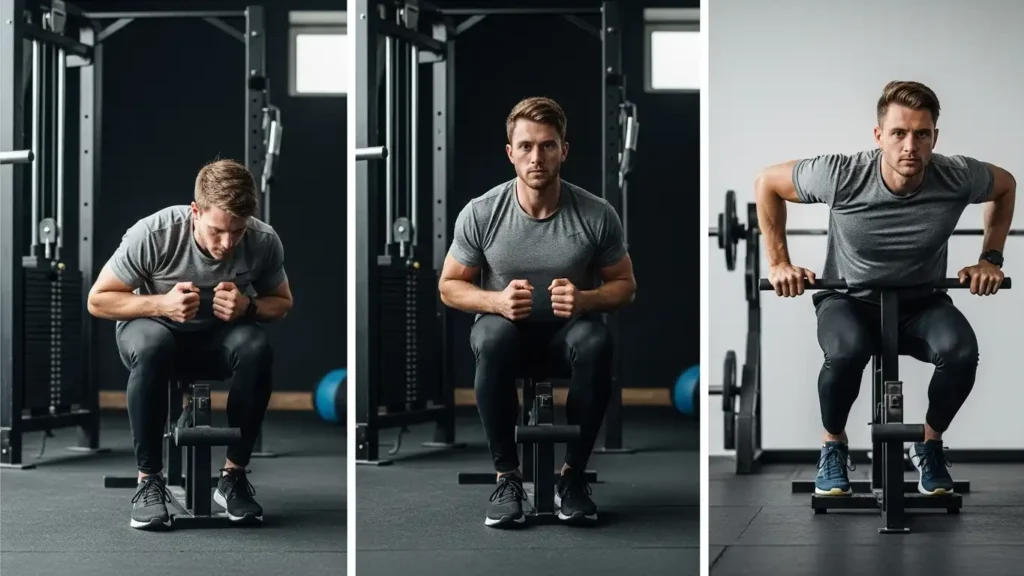
Exercise can be grouped into three intensity zones. High-intensity interval training (HIIT) involves bursts at 80 to 100 percent of your maximum effort for 60 to 240 seconds, followed by recovery. Sprint interval training (SIT) is all-out effort—over 100 percent of VO2 max—for eight to 30 seconds, then rest. Moderate-intensity continuous training (MICT), also called Zone 2 cardio, is steady-state effort at 40 to 60 percent of VO2 max for 20 to 60 minutes. You could hold a conversation, but you’d need to pause occasionally.
Each zone triggers different metabolic responses. High and sprint intervals release massive amounts of adrenaline. Moderate-intensity work can be sustained longer but releases less adrenaline initially.
Why Intensity Determines Fat Oxidation
Higher intensity exercise triggers greater adrenaline release, which directly stimulates fat mobilization and oxidation. Low-intensity, steady movement produces less adrenaline and burns more glycogen (stored carbohydrate) early on. However, if you exercise long enough at moderate intensity—beyond 90 minutes—your body shifts toward fat burning as glycogen depletes.
This is where exercise intensity for fat loss becomes critical. Short bursts of high intensity followed by longer moderate work can maximize fat oxidation, especially if done fasted.
Fasted vs Fed Exercise: What Actually Matters
Does it matter if you eat before training? For short sessions, not really. But for moderate-intensity exercise lasting 90 minutes or more, there’s a metabolic switch. If you ate beforehand, your insulin levels are elevated, and your body preferentially burns glycogen. After about 90 minutes, insulin drops enough for fat oxidation to increase.
If you train fasted, this switch happens earlier. You have lower insulin from the start, so fat becomes available sooner. The same principle applies to high-intensity work. If you do 20 to 60 minutes of intense effort (weights, sprints, kettlebells) followed by Zone 2 cardio, training fasted allows you to burn a higher percentage of body fat per unit of time.
This doesn’t mean fasted training is mandatory. If you can’t perform well without food, eat something. But if your goal is fat loss and you can handle fasted training, it’s a legitimate advantage. This is especially relevant when asking is 15 percent body fat healthy and sustainable—yes, if you’re fueling properly and not chronically depleted.
Structuring Exercise for Maximum Fat Loss
Here’s a practical structure. Three to four times per week, start with high-intensity work—20 to 60 minutes of resistance training, sprints, or other all-out efforts. Then, if you have time and energy, transition into 30 to 60 minutes of Zone 2 cardio. Do this fasted if possible, or at least with minimal pre-workout carbohydrates.
Why does this sequence work? High-intensity training depletes glycogen and floods your system with adrenaline. When you shift to moderate intensity, your body is already primed to burn fat because glycogen stores are low and insulin is dropping. The nervous system has been activated, fat is mobilized, and oxidation continues during the easier work.
You don’t need to do this every day. Recovery matters. But this pattern—intensity first, then duration—maximizes fat oxidation while preserving muscle mass. That’s the goal for reaching a healthy body fat range without sacrificing performance or energy.

Compounds That Influence Fat Burning (After Behavior First)
Caffeine and Fat Oxidation
Caffeine increases adrenaline release, which enhances both fat mobilization and oxidation. Studies show that 100 to 400 milligrams of caffeine taken 30 to 40 minutes before exercise can shift the percentage of fat burned during training. It’s most effective if you’re not over-consuming caffeine daily—tolerance reduces the effect.
A standard cup of coffee contains roughly 100 milligrams. A large café coffee might contain 200 to 300 milligrams or more. If you’re already a regular coffee drinker, you may need the higher end of the range to see benefits. But if you’re sensitive to stimulants or have heart issues, proceed cautiously. Caffeine works, but it’s not magic.
GLP-1 Pathway and Yerba Maté
Yerba maté is a plant-based tea that increases glucagon-like peptide-1 (GLP-1). GLP-1 facilitates fat oxidation by supporting glucagon activity, which opposes insulin. When insulin is low and glucagon is elevated, your body shifts toward burning fat instead of storing it.
Drinking yerba maté before exercise has been shown to increase the percentage of fat burned during activity. It also has a mild effect at rest. If you’re looking for a non-stimulant alternative to caffeine, or you want to stack the two, maté is a solid choice.
Prescription GLP-1 Drugs: Context and Caution
Pharmaceutical GLP-1 agonists like semaglutide (marketed under various trade names) are prescription-only medications used primarily for diabetes and obesity management. They work by mimicking GLP-1, suppressing appetite, and promoting weight loss. Some studies show significant fat loss, but these are serious medications with side effects.
I’m not recommending these. I’m explaining them so you understand the mechanism. If you’re considering a GLP-1 drug, it should only be under medical supervision. For most people, behavioral tools and over-the-counter compounds are safer and sufficient.
Insulin-Lowering Compounds
Insulin blocks fat oxidation. When insulin is high, your body stores energy instead of burning it. Compounds like berberine (a plant extract) and metformin (a prescription drug) reduce blood glucose, which lowers insulin. Lower insulin means more fat oxidation, both during exercise and at rest.
Berberine is available over the counter and has been studied for blood sugar management. Metformin requires a prescription and is typically used for pre-diabetes or diabetes. Both can support fat loss indirectly by improving metabolic flexibility. However, they’re not substitutes for diet and exercise. Think of them as tools that enhance what you’re already doing.
Diet, Insulin, and Long-Term Adherence
No single diet is universally superior. Research from Stanford’s Gardner Lab and others shows that low-fat, high-fat, ketogenic, and intermittent fasting diets all produce weight loss—if people stick to them. Adherence is the variable that matters most. If a diet doesn’t fit your life, you won’t follow it long enough to see results.
That said, there is a metabolic advantage to keeping insulin low. Lower insulin favors fat oxidation. This is why many people see better fat loss results on lower-carbohydrate or moderate-carbohydrate diets. Personally, I eat minimal carbohydrates during the day for mental clarity and energy, then include carbs at night to support sleep. That works for me.
You need to find what works for you. But understand the principle: lower insulin equals better fat oxidation. Whether that means intermittent fasting, low-carb eating, or simply avoiding processed sugars, the goal is metabolic flexibility.
Is 15 percent body fat achievable on any diet? Yes, if you’re in a caloric deficit and your insulin stays relatively low. But the easier path is one that naturally supports fat oxidation without constant hunger or energy crashes.
Key Takeaways and Practical Integration
Fat loss is not about willpower. It’s about biology. Your nervous system controls whether stored fat is released and burned. Adrenaline, released locally by neurons connected to fat tissue, is the key signal. You can trigger this release through movement, cold exposure, exercise intensity, and certain compounds.
Sustainable fat loss strategies combine behavioral tools first—NEAT, shivering, high-intensity training followed by Zone 2 cardio, fasted exercise when appropriate. Then, if needed, layer in caffeine, yerba maté, or insulin-lowering compounds. But never rely on supplements alone.
Consistency beats intensity. You don’t need to shiver every day or train fasted every session. You need to understand the principles and apply them progressively. Think like a scientist about your own body. Track what works. Adjust when something doesn’t.
Can you reach 15 percent body fat and maintain energy, strength, and performance? Absolutely. But only if you respect the biology, manage recovery, and avoid extreme restriction.
Final Reflection
Hitting 15% body fat has nothing to do with punishment and everything to do with precision. At the end of the day, your nervous system determines whether stored fat stays put or gets burned. Training smarter beats grinding harder every time. What actually moves the needle is setting up the right metabolic environment—using intelligent movement patterns, temperature manipulation, proper intensity, and targeted nutrition—to drive fat oxidation.
I’ve seen men transform not because they followed the latest trend, but because they learned how their bodies actually work. They stopped fighting biology and started working with it. That’s what this science-based approach offers: control, clarity, and results that last.
If you’re serious about fat loss, start with the fundamentals. Build from there. Be patient with the process. And remember—this isn’t about perfection. It’s about progress you can sustain for life.
Comparison Table: Exercise Intensity and Fat Oxidation
| Exercise Type | Intensity Level | Duration | Adrenaline Release | Primary Fuel Source | Best For |
|---|---|---|---|---|---|
| Sprint Interval Training (SIT) | >100% VO2 max | 8-30 seconds | Very High | Glycogen initially, fat during recovery | Maximizing adrenaline, preserving muscle |
| High-Intensity Interval Training (HIIT) | 80-100% VO2 max | 60-240 seconds | High | Glycogen + fat | Building endurance, fat mobilization |
| Zone 2 Cardio (MICT) | 40-60% VO2 max | 20-60 minutes | Moderate | Fat (after 90 min if fed, earlier if fasted) | Sustained fat oxidation, aerobic base |

 By
By
 By
By


 By
By


