


If you have been seeing the pete and bobby challenge dod fitness all over your feed, you are not alone. It went viral because it looks simple, yet it hits hard. Most people do not fail because they are “weak.” They fail because they are not ready for density.
In this guide, I will give you the challenge rules, the form standards that keep you safe, smart scaling options, a 4 to 6 week plan, and a pacing strategy that helps you finish the pull-up push-up challenge time cap without trashing your joints. And yes, we are going to talk about pain, pride, and the pressure to “keep up.” Because that part is real too.

You deserve a plan that protects your shoulders, elbows, and wrists, while still letting you train with confidence. Ready?
Pete and Bobby Challenge DoD Fitness and What Does DoD Fitness Have to Do with It?
At its core, this is the pete and bobby challenge: a short, high-rep test built around pull-ups and push-ups. It got tied to DoD fitness challenge messaging because it was presented as a “fitness check” at the Pentagon Athletic Center with service members and DoD civilians. That context matters because military culture often values performance under stress.
One note on wording: you may see some coverage reference the “U.S. Department of War.” Historically, the U.S. had a Department of War, but today the correct modern agency is the Department of Defense. The official event coverage frames it as DoD.
Quick summary
- What you do: 50 pull-ups 100 push-ups challenge
- Goal: finish inside the time cap
- Reality: it is as much about pacing and standards as strength
If you want to see how mainstream outlets describe it, you can check the Men’s Health UK explainer on the challenge (note: some sites restrict access in certain tools).
The Official Rules (Simple on paper, spicy in real life)
Here are the challenge rules most people follow, and the ones described in official event coverage:

- 50 pull-ups + 100 push-ups
- 10-minute cap
- Any order / partition as you like: sets, supersets, mini-rounds, or EMOM pull-ups push-ups style blocks
- Helpful gear: stable bar, timer, optional chalk, and a surface for push-ups
Callout box
Before you try it: the standard you choose (strict vs loose) changes the whole game.
If you want a pacing example that uses supersets, the Inc.com breakdown of pacing and supersets shows how quickly fatigue can stack.
Pro Tip 🧩: Pick your rep standard first, then pick your pace. Otherwise you will “win” a version that your joints do not agree with later.
Ask yourself: are you trying to impress the internet, or are you trying to build fitness you can keep?
Rep Standards What Counts as a “Real” Rep?
This section is where injuries are often prevented. When people chase speed, form slips. Then tissues take the hit.
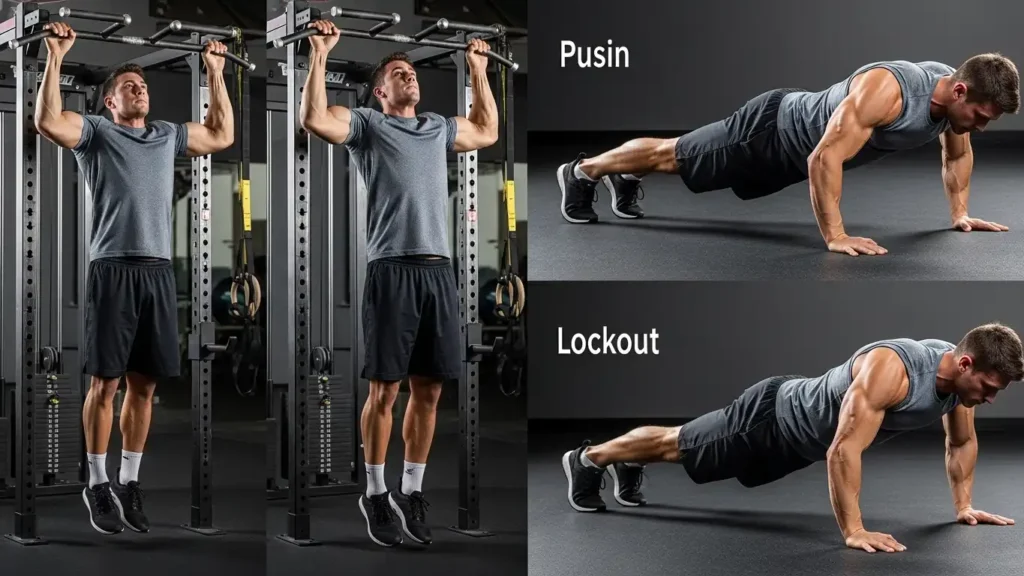
pete and bobby challenge dod fitness pull-up standard (recommended)
For strict pull-up form dead hang, I recommend:
- Start in a dead hang with arms straight
- Pull until your chin clearly passes the bar
- Lower with control back to a dead hang (full range)
Why it matters: partial reps can hide weak points, and they can also increase strain if you are yanking through the mid-range repeatedly. This is also why public discussion focused on “half reps.”
Push-up standard (recommended)
For push-up form standards lockout depth, I recommend:
- Head, hips, heels in one line
- Lower until chest is close to the floor (or a consistent target)
- Press to full lockout at the top
Comparison table Strict vs loose reps
| What you do | What it looks like | What it can cost you | Better option |
|---|---|---|---|
| Strict pull-up | Dead hang to chin over bar, full return | Harder, fewer reps, but honest | Scale reps or use assistance |
| Partial pull-up | Never returns to dead hang | More forearm and elbow load, less control | Train full range with lower reps |
| Strict push-up | Consistent depth and lockout | Tough under fatigue | Use incline or tempo |
| Short push-up | Shallow reps, hips sag | Wrist pain from push-ups, shoulder strain | Adjust height, slow down |
If you want a form-focused walkthrough, see GQ’s pull-up form breakdown.
Are You Ready? 60-Second Self-Test (don’t skip this)
pete and bobby challenge dod fitness readiness self-test (60 seconds)
Be honest with this. It is not a character test. It is a tissue tolerance test.
Minimum readiness checkpoints
- If you can only do 0 to 2 strict pull-ups, you need scaling pull-ups for beginners
- If you cannot do 15 clean push-ups, you should use push-up progression for beginners
- If you feel sharp pain in the shoulder, elbow, or wrist, stop and regress
Red flags
- Shoulder pain from pull-ups that lingers after training
- Elbow tendinopathy from pull-ups that flares with gripping
- Wrist pain from push-ups that worsens with deeper range
Here is the question I want you to answer: Do you want to test your fitness, or test your luck?
Also, if you have a current injury, it is smart to check with a licensed clinician who can examine you in person. That is not fear. That is good planning.
Scaling Options (Beginner, Intermediate, Rx)
Scaling is not “cheating.” It is how you build capacity without paying interest later.

Pull-up scaling ladder
- Ring rows / TRX rows
- Band-assisted pull-ups progression
- Jumping pull-ups plus slow negatives
- Cluster singles: 1 rep, short rest, repeat
Push-up scaling ladder
- Incline push-ups (bench or counter)
- Knee push-ups only if the torso stays rigid
- Tempo push-ups (3 down, no bounce, 1 up)
- Cluster sets: small sets with short breaks
If you only have a doorway bar
- Use a chair for controlled step-ups to start the rep
- Keep the lowering slow
- Stop before your grip fails completely because grip collapse often turns into “ugly reps”
Pro Tip 🛠️: If your form changes, your scale is too hard. Drop the difficulty and keep the rep honest.
Ask yourself: what would feel better, finishing a scaled version today, or limping through the full version and losing training time next week?
How to Pace the Challenge (Simple math, smart suffering)
Your pacing strategy for pull-up push-up workout should protect your shoulders and elbows, while also respecting the clock.

Three proven partition strategies
1) Steady EMOM (10 minutes)
- Example: 5 pull-ups + 10 push-ups every minute = finish at 10:00
- Adjust to your level, but keep the pattern
2) Superset blocks (fast transitions)
- Alternate pull-ups and push-ups to reduce total rest breaks
3) Pull-ups first vs push-ups first
- Pull-ups first: helps if your grip endurance for pull-ups is good early
- Push-ups first: helps if your pulling falls apart when your breathing spikes
The “transition tax”
If you waste 5 seconds between sets, that is 50 seconds across 10 transitions. That is the difference between finishing and timing out.
Quick pacing questions
- Can you keep your first 2 minutes calm?
- Can you avoid going to failure too early?
- Can you keep your reps consistent when fatigue hits?
4–6 Week Training Plan to Earn the Challenge
Don’t “try the challenge.” Train for it. Then cash in.

Weekly structure (example)
- Day 1: Pull-up strength + push-up volume
- Day 2: Conditioning density (intervals or EMOM)
- Day 3: Pull accessory + scapular control + core
- Day 4: Technique + submax volume (easier, cleaner)
- Optional Day 5: light cardio + mobility
Progression rules
- Add reps, reduce rest, or improve range. One lever at a time.
- If tendons get cranky, deload for a week and keep moving.
Sample sessions (templates)
A
- Pull-up clusters: 5 to 8 rounds of 2 to 4 reps
- Push-up ladder: 6, 8, 10, 8, 6
B
- 10-minute EMOM pull-ups push-ups scaled to your level
- Keep breathing controlled
C
- Rows + band pull-aparts
- Slow eccentric pull-ups
- Easy push-ups with perfect form
Pro Tip 🧘: The goal is not to survive one workout. The goal is to build repeatable fitness you can trust.
Also, if you want a deeper background on the event framing, review the official DoD News coverage of the Pentagon fitness check.
Accessories That Actually Improve Your Time
If you want how to train pull-up endurance and how to improve push-up endurance, accessories matter because they close gaps.
- Grip endurance for pull-ups: dead hangs, farmer carries, towel hangs
- Horizontal pulling: dumbbell rows, cable rows (balances shoulders)
- Scapular control: scap pull-ups, wall slides
- Triceps endurance: close-grip push-ups, slow dips (only if pain-free)
Why this works: when your grip fails, your pull-up fails. And when your shoulder blade control fails, your shoulder tends to complain.
Here is a good question: Which fails first for you, strength or control? That answer tells you what to train next.
Common Mistakes (and quick fixes)
You do not need more willpower. You need better decisions under fatigue.
Pull-ups
- Mistake: partial reps, swinging, shrugging
Fix in 2 cues: “Shoulders down” and “full hang every rep”
Push-ups
- Mistake: hips sag, elbows flare, bouncing
Fix in 2 cues: “Ribs down” and “push the floor away”
Programming
- Mistake: testing too often, going to failure every time
Fix: build volume for 4 to 6 weeks, then test
If your body is sending warning signals, listen. Pain is not a “grindset badge.” It is data.
Attempt Day Checklist (warm-up, rules, and your game plan)
Warm-up flow (5–8 minutes)
- 1 minute easy cardio
- Shoulder circles, band pull-aparts
- Scap pull-ups or active hangs
- 2 easy sets of push-ups
- 2 easy sets of pull-ups (or your scaled version)
Your plan
- Choose your rep standard (strict recommended)
- Decide your partition strategy
- Set one hard rule: stop if pain spikes or numbness appears
Ask yourself before you start: What is the smallest set size I can repeat for 10 minutes? That is usually your best pace.
Results, Benchmarks, and How to Progress After You Finish
First goal: finish under 10 minutes with clean reps. Own it.
Next goals:
- Reduce rest time
- Keep transitions tight
- Improve rep quality under fatigue
What to train next:
- If pull-ups broke first, build pulling strength and grip endurance
- If push-ups broke first, build pressing endurance and trunk control
Also, remember the “fitness check” vibe is about readiness, not perfection.
A question I ask many patients: Do you want to be the person who can do it once, or the person who stays capable year-round?
FAQs (write for featured snippets)
What is the Pete and Bobby Challenge DOD fitness?
It is a timed test: 50 pull-ups and 100 push-ups, usually under 10 minutes, done in any order.
Is it 5 minutes or 10 minutes?
Most official framing uses 10 minutes.
Can I split reps any way I want?
Yes. That is why pacing matters.
What if I can’t do pull-ups yet?
Use ring rows, band assistance, and negatives. Build capacity first.
Do chin-ups count?
Different groups judge this differently. If you want consistency, choose one standard and keep it.
How often should I retest?
Every 4 to 6 weeks is enough for most people.
What’s the safest way to train for it?
Scale, use strict standards, progress slowly, and stop when pain shows up.
Conclusion (CTA)
If you take one thing from me, let it be this: your body adapts best when you respect the process. You do not need to “prove” anything in one day. Instead, pick your level, follow the plan for 4 to 6 weeks, and then test with pride.
So, what is your starting point right now? How many strict pull-ups can you do today? And what is one change you can make this week to protect your shoulders and elbows?
Comment your level and your first test time. Then come back and tell me what improved.

 By
By


 By
By


