


Throughout my career specializing in reconstructive urology and male sexual health, I’ve guided countless men through the emotional weight of premature ejaculation. This condition affects up to 30% of men yet remains shrouded in unnecessary shame. What continually amazes me is how simple, evidence-based interventions like diaphragmatic breathing can profoundly shift the autonomic nervous system’s control over ejaculatory reflexes.
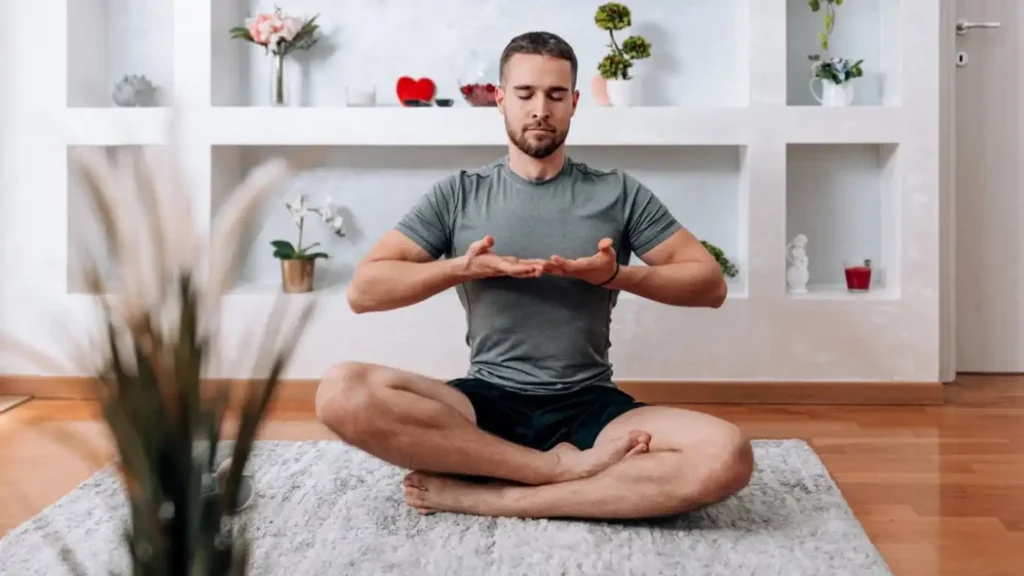
Can simple breathing exercises really help you last significantly longer in bed without medication? The answer is yes. Moreover, research shows men can improve their performance by 900% in just eight weeks. Consequently, I’ve seen how breathing exercises combined with pelvic floor training can transform sexual confidence. This isn’t just a statistic. Instead, it’s a pathway to reclaiming intimacy without pharmaceutical intervention.
In this article, you’ll discover how to last longer in bed using breathing techniques backed by science. Additionally, you’ll learn why premature ejaculation happens and what you can do about it naturally. Most importantly, you’ll walk away with practical tools you can start using today.
Understanding Premature Ejaculation: You’re Not Alone
What Is Premature Ejaculation?
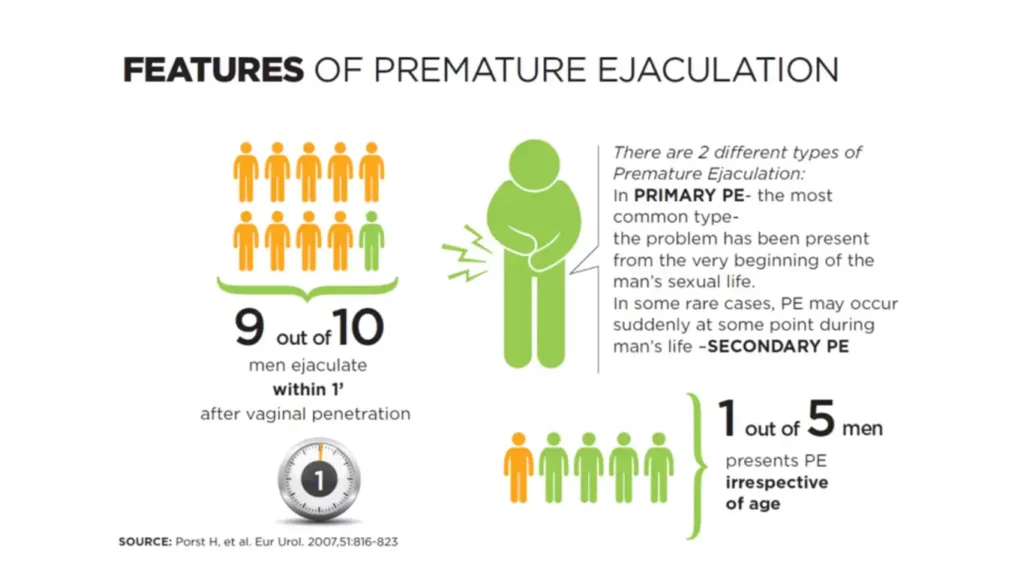
Premature ejaculation means ejaculating before you want to. Clinically, we define it as ejaculation within 1 to 2 minutes of penetration. However, “premature” is subjective. Therefore, if you feel you’re finishing too quickly, that matters regardless of exact timing.
This isn’t about judgment. Instead, it’s about understanding your body and your desires. Furthermore, premature ejaculation is one of the most common sexual concerns I encounter in my practice. Consequently, recognizing it is the first step toward finding solutions.
How Common Is This Issue?
Up to 30% of men experience premature ejaculation at some point in their lives. This means millions of men face this challenge. Nevertheless, most suffer in silence. Therefore, understanding how widespread this condition is can help reduce shame.
Additionally, premature ejaculation affects men of all ages. While it’s more common in younger men, it can develop later in life too. Hence, you’re not alone in this experience. In fact, seeking solutions shows strength, not weakness.
The Emotional and Relationship Impact
Premature ejaculation takes a toll on more than just physical performance. Specifically, it affects your confidence and self-esteem. When you’re constantly worried about finishing too fast, it becomes hard to be present during intimacy.
Moreover, this anxiety can create tension between you and your partner. Frustration builds on both sides. Consequently, what should be a moment of connection becomes a source of stress. This is both a physical and psychological issue. Therefore, addressing it requires understanding both dimensions.
The Root Cause: Why Premature Ejaculation Happens
The Autonomic Nervous System Connection
Your autonomic nervous system controls involuntary functions like heart rate and digestion. Similarly, it controls ejaculation. This system has two parts: sympathetic and parasympathetic.
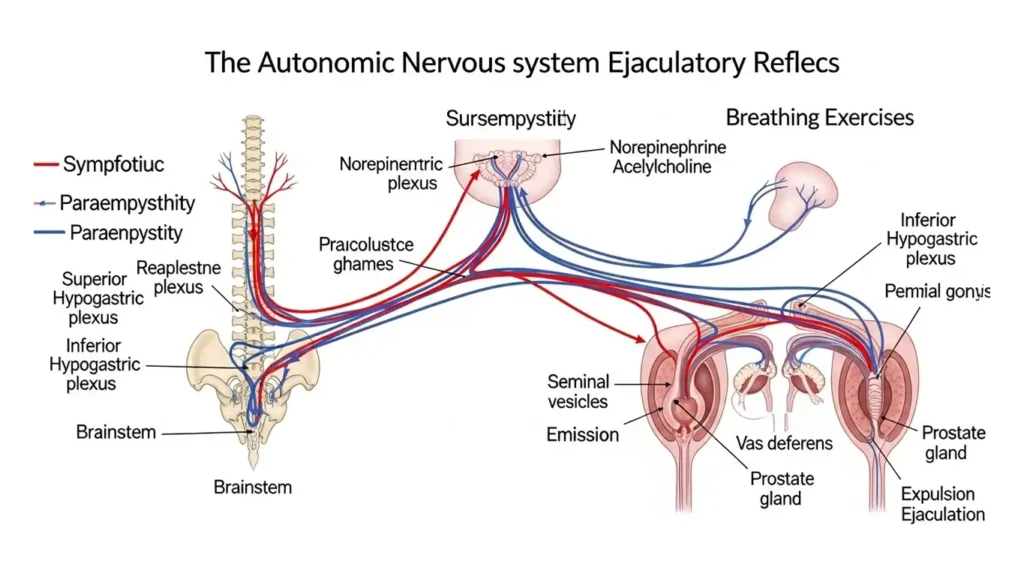
Think of the sympathetic system as your gas pedal. It triggers arousal and ejaculation. Conversely, the parasympathetic system is your brake pedal. It promotes relaxation and control. Men with premature ejaculation typically have an overactive gas pedal. Therefore, their sympathetic nervous system dominates, triggering ejaculation too quickly.
Key Triggers of Premature Ejaculation
Several factors can trigger this sympathetic overdrive. Stress and anxiety are primary culprits. Additionally, pelvic floor dysfunction plays a significant role. Furthermore, psychological factors like performance anxiety create a vicious cycle.
These triggers interact with your nervous system in complex ways. However, understanding this connection is empowering. Consequently, when you know what causes the problem, you can target solutions more effectively.
The Good News: You Can Retrain Your Body
Here’s what excites me most about this field. Your body can be retrained. Specifically, breathing can influence your autonomic nervous system. Moreover, your diaphragm and pelvic floor muscles work together to regulate arousal and ejaculation.
Therefore, by practicing specific breathing exercises, you can shift from sympathetic overdrive to parasympathetic control. This means you can literally teach your body to last longer. Consequently, groundbreaking research proves this approach works remarkably well.
Current Treatment Options for Premature Ejaculation
Behavioral Techniques
The stop-start method is a common behavioral technique for lasting longer. Here’s how it works. During intimacy, you bring yourself close to climax, then stop all stimulation. After the urgency passes, you start again. Repeat this up to three times, then allow ejaculation on the fourth attempt.
Additionally, some men use the squeeze technique. This involves gently squeezing the head of the penis during the stop phase. These behavioral techniques for lasting longer help build awareness and control over your ejaculatory reflex.
Topical Treatments
Delay sprays and numbing creams are topical treatments for premature ejaculation. These products contain mild anesthetics that reduce sensation. Consequently, they can help you last longer.
However, they have limitations. Specifically, they may reduce pleasure for you and your partner. Additionally, some men find them inconvenient or disruptive to intimacy. Therefore, many seek natural ways to improve stamina instead.
Medication Options
Currently, there are no FDA-approved medications specifically for premature ejaculation. Nevertheless, doctors sometimes prescribe off-label medications. These include certain antidepressants that delay ejaculation as a side effect.
However, medications come with potential side effects and costs. Therefore, many men prefer non-pharmaceutical PE treatment options. This is where breathing exercises offer a compelling alternative.
Groundbreaking Research: The Breathing Exercise Study
Study Design and Participants
A recent study examined diaphragmatic breathing for sexual performance. Researchers enrolled 62 men with premature ejaculation. They split participants into two groups. Both groups received standard treatments for 8 weeks.
The study design was rigorous and well-controlled. Therefore, the results provide reliable evidence for this approach. Moreover, the findings have profound implications for premature ejaculation treatment.
What Both Groups Did
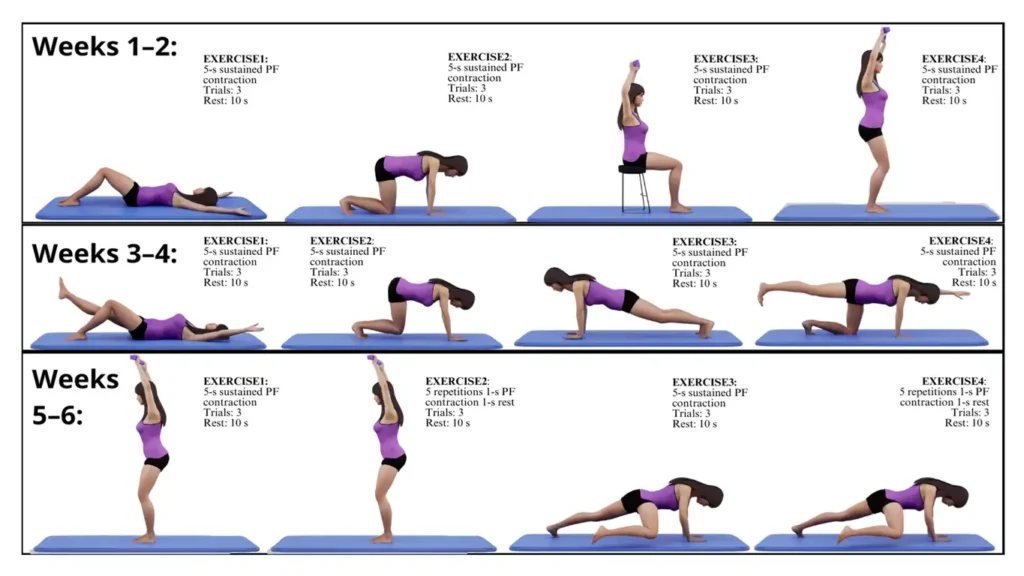
Both groups received behavioral therapy, including the stop-start method. Additionally, all participants completed pelvic floor exercises for men. Specifically, they practiced twice daily, three days per week.
The pelvic floor muscle training regimen included two parts. First, 10 seconds of contraction followed by 10 seconds of relaxation, repeated 15 times. Then, 1 second of contraction followed by 1 second of relaxation, repeated 10 times. This training helps men notice when they’re about to ejaculate and control that reflex.
💪 Pro Tip: Identify your pelvic floor muscles by stopping urination midstream. Those are the muscles you’ll contract during exercises. However, don’t regularly stop urination as an exercise, as this can cause problems.
The Key Difference: Adding Diaphragmatic Breathing
One group added breathing exercises for premature ejaculation to their routine. This was the only difference between the two groups. Therefore, researchers could isolate the specific impact of diaphragmatic breathing.
The breathing group practiced 10 slow, deep breaths twice daily. Consequently, they combined behavioral therapy, pelvic floor training, and breathing exercises. This comprehensive approach targets multiple aspects of ejaculatory control techniques.
The Remarkable Results: 900% Improvement
Measuring Success: Intravaginal Ejaculatory Latency Time (IELT)
Researchers measured intravaginal ejaculatory latency time, or IELT. Simply put, IELT measures how long you last during sex before ejaculation. This is the gold standard measurement in premature ejaculation research.
Therefore, when we discuss improvements, we’re talking about real, measurable changes in sexual stamina improvement. Moreover, these aren’t subjective reports but objective timing data.
Control Group Results
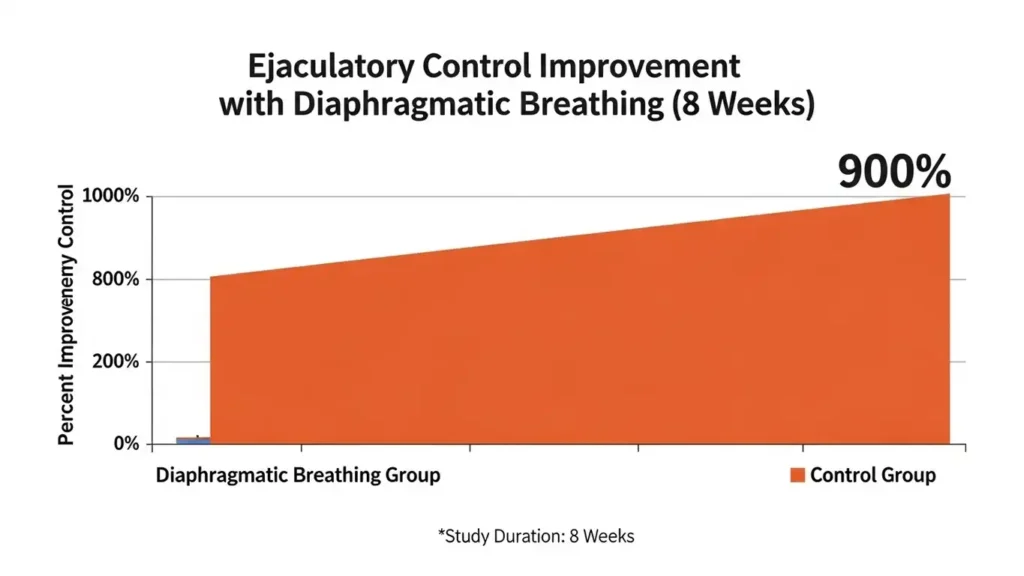
The control group saw significant improvements. Specifically, their average IELT increased from 30 seconds to 238 seconds. That’s nearly 4 minutes. Moreover, this represents a 690% improvement.
These results validate that standard treatments work. Therefore, behavioral therapy and pelvic floor exercises alone provide substantial benefits. However, the breathing group achieved even more impressive results.
Breathing Group Results
The breathing group’s average IELT increased from 30 seconds to 302 seconds. That’s about 5 minutes. Furthermore, this represents a 900% improvement. On average, they lasted one minute longer than the control group.
How to control ejaculation becomes much clearer with these numbers. The breathing exercises made a measurable difference beyond standard treatment. Consequently, this research provides strong evidence for adding diaphragmatic breathing to your routine.
Beyond Duration: Additional Benefits
The benefits extended beyond just lasting longer. Specifically, the breathing group showed significantly greater pelvic floor muscle strength. They could contract those muscles harder and hold contractions longer.
Additionally, researchers measured heart rate variability. The breathing group showed improvements indicating enhanced parasympathetic nervous system activation. This means their “brake pedal” system became more active.
Therefore, breathing exercises created holistic improvements in the autonomic nervous system and sexual health. These changes support better ejaculatory control overall.
How Diaphragmatic Breathing Works
What Is Diaphragmatic (Belly) Breathing?
Diaphragmatic breathing, also called belly breathing, uses your diaphragm muscle. Your diaphragm sits below your lungs. When you breathe deeply, it moves downward, allowing your lungs to fully expand.
Contrast this with shallow chest breathing, where only your upper chest moves. Belly breathing brings more oxygen into your body. Moreover, it directly connects to your pelvic floor muscles. Consequently, this connection is crucial for ejaculatory control.
How to Last Longer in Bed: The Nervous System Reset
Deep, controlled breathing activates your parasympathetic nervous system. Remember, this is your “brake pedal.” Therefore, diaphragmatic breathing triggers your body’s rest and digest response.
This counteracts the sympathetic overdrive that causes premature ejaculation. Specifically, when you breathe deeply, your heart rate slows and arousal becomes more manageable. Consequently, you gain better control over your ejaculatory reflex.
Think of it this way. Shallow, rapid breathing hits the gas pedal. Deep, slow breathing applies the brake. Therefore, by changing how you breathe, you directly influence your sexual response.
Strengthening the Pelvic Floor Connection
Your diaphragm and pelvic floor work as a coordinated unit. When you inhale deeply, your diaphragm moves down. Simultaneously, your pelvic floor releases slightly. When you exhale, both structures rise together.
This coordinated action strengthens the pelvic floor muscles. Moreover, it enhances your awareness of these muscles. Consequently, you develop better control over ejaculation through this mind-body connection.
🧘 Pro Tip: Practice diaphragmatic breathing while lying down initially. Place a light book on your belly and watch it rise with each inhale. This visual feedback helps you master the technique.
Step-by-Step Guide: How to Practice Diaphragmatic Breathing
The Basic Technique
Let me walk you through the exact breathing technique used in the study. First, sit up tall with good posture. Your spine should be straight but relaxed. Next, place your hands on your lower ribs.
Now, breathe slowly through your nose. Feel your belly expand outward against your hands. Your chest should barely move. Then, exhale slowly through your nose. Let your belly fall naturally. This completes one breath cycle.
Repeat this 10 times per session. Practice twice daily, ideally morning and evening. Therefore, you’re investing just 10 to 15 minutes daily for lasting longer naturally.
Common Mistakes to Avoid
Many men breathe too quickly when starting. Slow down. Each breath should take about 5 to 6 seconds total. Additionally, avoid chest breathing. Your belly should do most of the moving.
Inconsistent practice undermines results. Therefore, make this a daily habit. Furthermore, don’t expect immediate results. Remember, the study showed improvements after 8 weeks of consistent practice.
Finally, don’t practice breathing alone while neglecting other techniques. The best results come from combining all three approaches. Consequently, integrate breathing with pelvic floor exercises and behavioral methods.
Tips for Success
Set phone reminders for your practice times. This builds consistency. Additionally, create a quiet, comfortable space where you won’t be interrupted. Moreover, be patient with yourself during the learning curve.
Focus on quality over speed. One slow, deep breath done correctly beats 10 rushed breaths. Track your progress weekly, not daily. Therefore, you’ll notice gradual improvements without getting discouraged by day-to-day variations.
Consider using a meditation app or guided breathing video initially. These tools provide structure while you’re learning. However, soon you’ll be able to practice independently anywhere.
Combining Techniques for Maximum Results
The Complete 8-Week Protocol
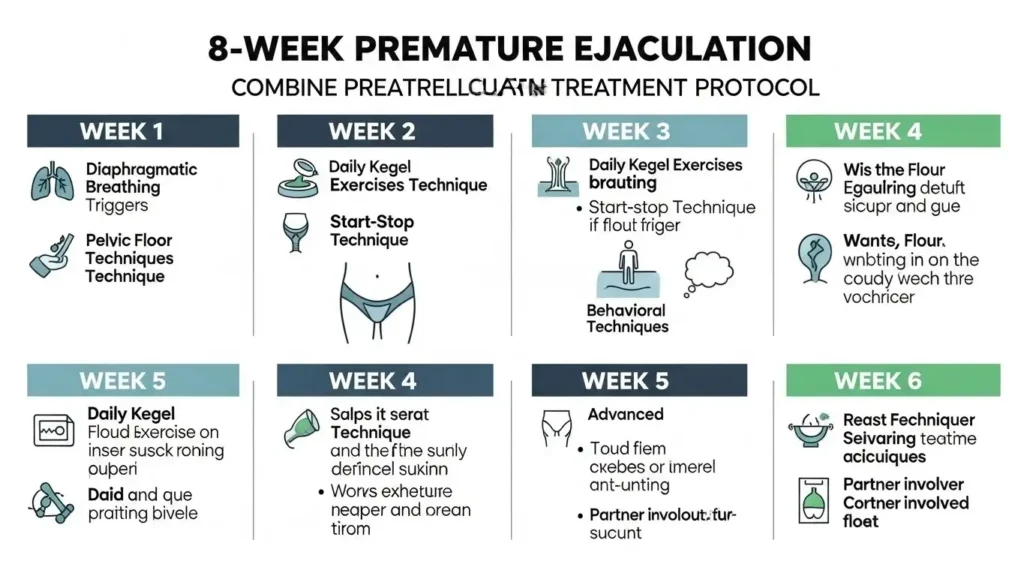
The research showed best results when combining all three approaches. Therefore, I recommend following this comprehensive protocol. First, practice diaphragmatic breathing 10 times, twice daily. Second, complete your pelvic floor exercises twice daily, three days per week. Third, use the stop-start method during sexual activity.
Create a realistic weekly schedule. For example, Monday, Wednesday, and Friday might be your pelvic floor training days. However, practice breathing every single day. Consistency matters more than perfection. Therefore, if you miss a day, simply resume the next day without guilt.
Integrating Exercises Into Daily Life
When should you practice breathing? Morning and evening work well for most men. Specifically, try breathing exercises right after waking and before bed. These times are naturally quieter and more conducive to focus.
Incorporate pelvic floor exercises during routine activities. For instance, practice during your commute or while watching TV. Additionally, communicate with your partner about using behavioral techniques during intimacy. Their understanding and support enhance success.
Make this sustainable by linking exercises to existing habits. Therefore, breathe after brushing your teeth or during your coffee routine. These habit stacks increase adherence.
Timeline and Expectations
The study showed results after 8 weeks of consistent practice. However, individual variation is normal. Some men notice improvements within 2 to 4 weeks. Nevertheless, full results typically require 8 to 12 weeks.
Therefore, commit to at least 8 weeks before evaluating effectiveness. Moreover, understand that progress isn’t always linear. Some weeks you’ll notice more improvement than others. Patience and persistence are essential for male sexual health exercises.
⏰ Pro Tip: Keep a simple journal tracking your practice frequency and any improvements you notice. This helps maintain motivation and identifies what works best for you specifically.
Why This Approach Works So Well
Addressing Multiple Root Causes
This comprehensive approach succeeds because it targets multiple root causes simultaneously. First, breathing exercises regulate your nervous system. Second, pelvic floor training strengthens critical muscles. Third, behavioral techniques build awareness and control.
Additionally, the psychological component matters. Taking active steps builds confidence. Consequently, performance anxiety decreases as you feel more in control. This holistic approach beats single-intervention methods.
No Side Effects or Costs
These techniques are completely natural and free. You don’t need medications with potential side effects. Moreover, you avoid numbing agents that reduce pleasure. The only investment is 10 to 15 minutes daily.
Furthermore, you can practice privately at home. This empowers you to take control rather than depending on external products. Consequently, this active approach often feels more satisfying than passive treatments.
Long-Term Benefits Beyond the Bedroom
The benefits extend beyond sexual performance. Specifically, breathing exercises reduce overall stress levels. Additionally, they improve nervous system regulation throughout your day. Moreover, stronger pelvic floor muscles support better bladder control and core stability.
Enhanced body awareness improves your connection with physical sensations. Consequently, this mindfulness translates to many life areas. Furthermore, increased sexual confidence positively impacts your relationships and overall wellbeing.
Who Can Benefit From This Technique?
Ideal Candidates
These techniques work best for men experiencing premature ejaculation, typically lasting 1 to 2 minutes. Additionally, those seeking natural, non-pharmaceutical options find this approach appealing. Furthermore, men dealing with performance anxiety particularly benefit.
Anyone wanting greater ejaculatory control can try these methods. Moreover, partners looking to improve intimacy together can support this process. Therefore, this isn’t just for men with diagnosed premature ejaculation.
When to Seek Professional Help
While these techniques help most men, professional help is sometimes necessary. Specifically, seek consultation if issues persist despite 8 to 12 weeks of consistent practice. Additionally, underlying medical conditions may require evaluation.
Severe anxiety or relationship problems might need specialized support. Therefore, don’t hesitate to consult a urologist or pelvic floor specialist. Furthermore, sex therapists can address psychological aspects.
If you experience pain, erectile dysfunction alongside premature ejaculation, or other concerning symptoms, schedule an evaluation. I approach these conversations with sensitivity and without judgment. My goal is restoring your quality of life through personalized care.
Frequently Asked Questions
How Quickly Will I See Results?
What timeline should you expect for improvements? The research showed significant results after 8 weeks of consistent practice. However, some men notice changes within 2 to 4 weeks. Nevertheless, individual variation is completely normal.
Consistency is the key factor in your success. Therefore, daily practice matters more than occasional intensive sessions. Moreover, remember that retraining your nervous system takes time. Be patient with yourself throughout this process.
Do I Need to Do All Three Techniques?
The study combined all three approaches for best results. Specifically, breathing exercises, pelvic floor training, and behavioral methods work synergistically. However, the breathing group did show enhanced benefits beyond standard treatment alone.
Each technique contributes differently to ejaculatory control. Therefore, I recommend the comprehensive approach for maximum improvement. Nevertheless, starting with breathing exercises alone is better than doing nothing. You can gradually add other techniques as you build consistency.
Can I Do This With My Partner?
Partner involvement can be incredibly supportive. Specifically, communication about what you’re doing reduces misunderstandings. Moreover, behavioral techniques like the stop-start method explicitly require partner participation during intimacy.
However, breathing and pelvic floor exercises can be practiced alone. Therefore, you don’t need to involve your partner in every aspect. Nevertheless, sharing your journey often strengthens your relationship and creates mutual understanding.
What If I Have Trouble With the Breathing Technique?
Feeling awkward initially is completely normal. Like any new skill, diaphragmatic breathing requires practice. Therefore, be patient as you learn. Additionally, consider using guided videos or breathing apps for initial instruction.
A pelvic floor physical therapist can provide personalized guidance. These specialists understand the diaphragm-pelvic floor connection intimately. Moreover, they can correct technique issues you might not notice yourself. Don’t hesitate to seek this support if needed.
Are There Any Risks or Side Effects?
Breathing exercises are safe for most people. However, some men feel lightheaded when starting. If this happens, simply breathe more slowly. Additionally, take breaks between practice sessions if needed.
Regarding pelvic floor exercises, avoid overdoing contractions. Too much tension can create problems. Therefore, follow the recommended regimen without excessive intensity. Most importantly, listen to your body throughout this process.
If you have concerns about underlying health conditions, consult your doctor before starting. I always encourage open communication about your health status and any symptoms you experience.
Taking Control of Your Sexual Health
You Have More Control Than You Think
Premature ejaculation feels permanent when you’re experiencing it. However, it’s actually trainable. Your body can learn new patterns. Moreover, the mind-body connection is powerful and responsive to consistent practice.
Remember that 30% of men experience this issue. Therefore, seeking solutions is normal and healthy. Furthermore, self-compassion throughout this journey matters. Be kind to yourself as you work toward improvement.
Starting Today: Your Action Plan
Begin with diaphragmatic breathing tonight before bed. Just 10 slow, deep breaths to start. Additionally, start tracking your practice in a simple journal or phone app. This builds accountability.
Research pelvic floor exercises and begin incorporating them three times weekly. Moreover, communicate with your partner if you’re in a relationship. Set an 8-week commitment to this process.
Consider consulting a urologist or pelvic floor specialist if you want professional guidance. We specialize in helping men navigate these challenges with dignity and effective solutions.
Beyond Technique: Building Confidence
These techniques do more than extend duration. Specifically, they reduce performance anxiety through increased control. Moreover, being present during intimacy improves when worry decreases.
Relationship satisfaction often improves alongside sexual confidence. Furthermore, the psychological benefits of taking active steps are substantial. You’re not passively accepting a problem. Instead, you’re actively creating solutions.
This empowerment extends beyond the bedroom. Consequently, many men report feeling more confident generally after successfully addressing premature ejaculation. Therefore, view this as an investment in your overall quality of life.
Conclusion: A Natural Path to Better Sexual Health
The 900% improvement documented in research isn’t just a statistic. Rather, it represents real men achieving real results. Moreover, this improvement came from simple techniques: breathing exercises, pelvic floor training, and behavioral methods.
This approach is free, natural, and remarkably effective. You’re investing just 10 to 15 minutes daily. Consequently, the potential life-changing results far outweigh this small time commitment. Furthermore, you can start today with your very first breathing practice session.
I’ve witnessed countless men transform their sexual confidence through these methods. Regaining control is absolutely possible. Additionally, you’re not alone in this journey. Millions of men face similar challenges and successfully overcome them.
Take that first step tonight. Practice 10 deep belly breaths before sleep. Then, commit to 8 weeks of consistent practice. Your future self will thank you for taking control of your sexual health today.
Call to Action
Ready to transform your sexual health? Start your 8-week breathing practice tonight. Additionally, consider consulting with a urologist or pelvic floor specialist for personalized guidance. Furthermore, share this article with someone who might benefit from this information.
Have questions or experiences to share? I welcome your thoughts and encourage open conversations about men’s sexual health. Together, we can normalize these important discussions and help more men reclaim confidence and intimacy.
Medical Disclaimer
This article provides educational information only and does not constitute medical advice. Always consult your healthcare provider before starting any new health regimen. Individual results may vary based on your unique situation and health status. If you experience persistent premature ejaculation or other sexual health concerns, seek evaluation from a qualified urologist or sexual health specialist.

 By
By
 By
By
 By
By
 binance kod says:
  Binance创建账户 says:
  开设Binance账户 says:
  注册获取100 USDT says:


