


Estimated Reading Time: 9 Minutes
Let’s talk about something that millions of men face but almost no one talks about honestly: premature ejaculation (PE). As a health journalist, I’ve seen this topic shrouded in so much shame. I recently heard a story from sex coach Key Ranken about a man so devastated by his PE that he had moved back in with his parents and was suicidal. This isn’t a joke. This is a deep, painful source of sexual anxiety that affects men and their partners.
For decades, men have been suffering in silence, trying “fixes” that simply don’t work. They’re told to “think about baseball” or “just clench,” which, as we’ll see, is often the worst advice you can get.
The truth is, your body isn’t broken. You’ve just been given the wrong map. In this article, we’re going to debunk the biggest myths about male sexual performance. We’ll use insights from urologist Dr. Rena Malik and sex coach Key Ranken to give you a 5-step, mindfulness-based method to move from anxiety and shame to pleasure and connection.
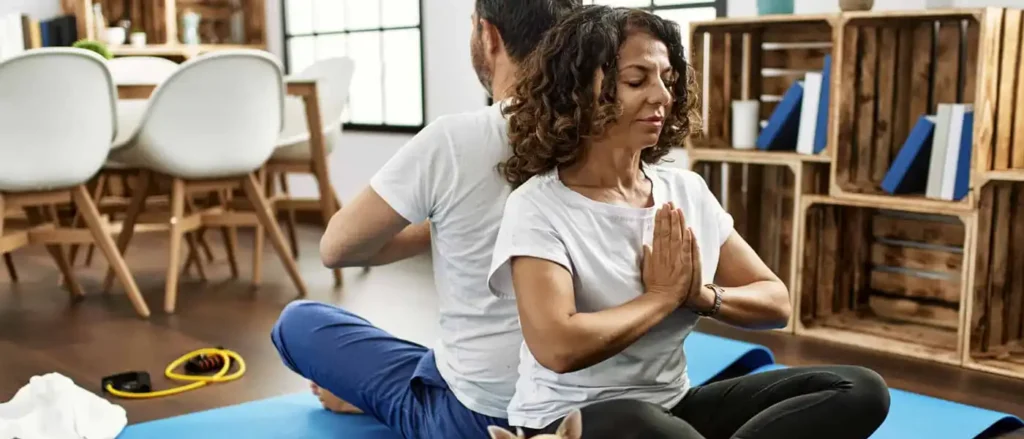
The #1 Myth About Premature Ejaculation
Let’s get right to it. The biggest myth about premature ejaculation is that you need to “just clench your pelvic floor” or “do more Kegels” to hold it in.
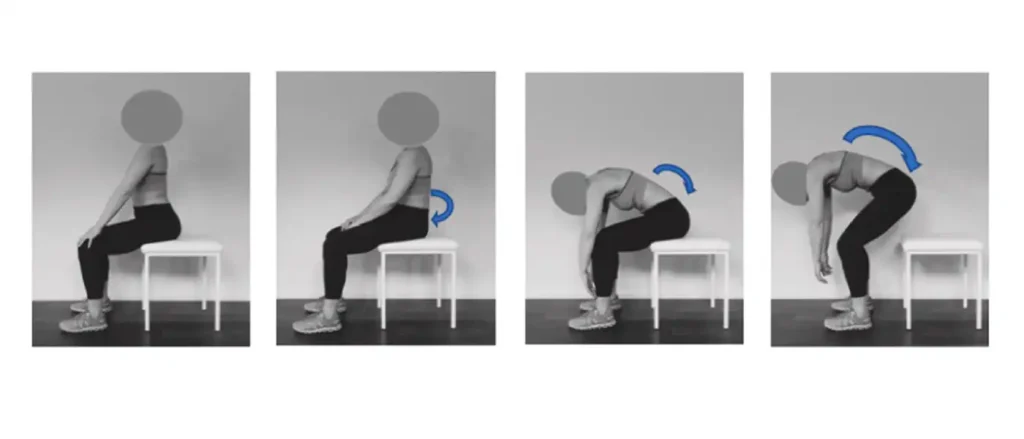
The problem is, this advice is based on a complete misunderstanding of the problem. For most men struggling with this, the issue isn’t a weak pelvic floor. In reality, it’s an over-tight one. Your pelvic floor is already clenched, tense, and full of anxiety.
Think of it like a fist. If your fist is already white-knuckle tight, “squeezing harder” doesn’t give you more control. It just leads to a faster spasm. When you clench an already-tense pelvic floor, you are actively accelerating yourself up the arousal curve toward orgasm. Consequently, the very thing you’re doing to last longer is making you finish faster. The goal isn’t more clenching; it’s pelvic floor relaxation. Sounds familiar, right?
💡 Pro Tip: You can start to feel your pelvic floor by taking a slow, deep breath and noticing the area between your testicles and anus. On your inhale, that area should gently soften and lower. On your exhale, it will naturally rise. The goal is to encourage that softening.
Why the Old ‘Stop-Start’ Method Fails
This leads us to the other piece of “classic” advice: the Stop-Start Method. This is the technique where you’re supposed to get close to the edge and then stop all stimulation, wait, and start again.
Here’s why it so often fails: it’s built on disconnection.
This method teaches you to treat sex like a frantic game of red-light-green-light. You’re not in your body; you’re in your head, anxiously monitoring your arousal level. It’s the opposite of good, pleasurable, connected sex. Not only is this awkward and disruptive, but it also requires a partner who is endlessly patient. In short, it’s a strategy based on panic, not pleasure.
A 5-Step Method for Mindful Sex and Lasting Longer
So, if clenching and stopping don’t work, what does? The solution is to retrain your body using mindfulness. This 5-step method, based on Key Ranken’s work, is a pleasure-centered, body-based alternative.
The key? Begin with solo practice. Jumping into a high-pressure partner situation won’t work when learning this new skill. You have to master driving the car before you ever enter the race.
Step 1: The Foundation is Breath
This isn’t just any breath. It’s a slow, full breath (in for 5-7 counts, out for 5-7 counts) through your mouth during arousal. This specific breath signals to your nervous system that you are safe. It’s the first step to dropping out of your anxious brain and into your body.
Step 2: The “Anal Breath” (The Game-Changer)
This is the most important mechanical-new-skill-here. It’s a counter-intuitive technique. On your inhale, you do a slight “bearing down” or pushing out of your asshole, as if you were gently passing gas.
Why? This actively softens and relaxes that over-tight pelvic floor. This is the brake pedal you’ve been looking for. It allows you to consciously come down the arousal curve for the first time.
Step 3: Separating the Arousal and Anxiety Curves
This is the “huge mountain” and the core of the problem. For many men, sexual anxiety and arousal are “married.” As arousal builds, anxiety builds right alongside it.
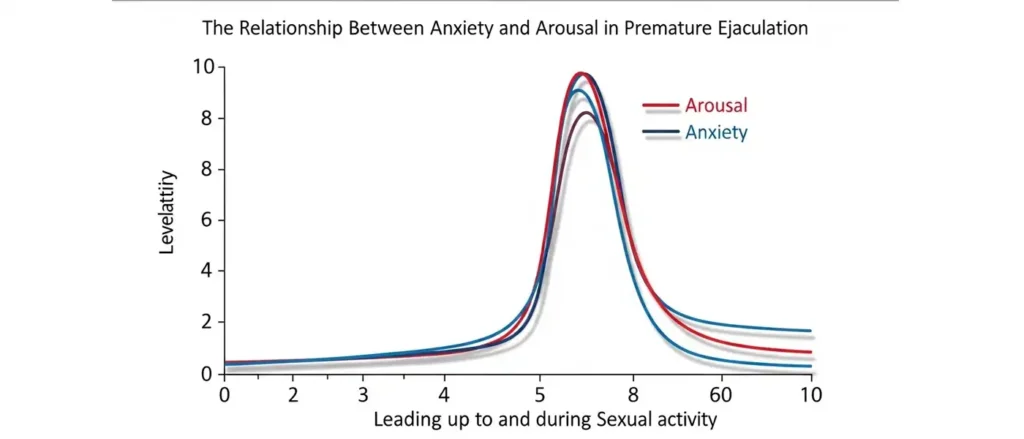
Once your anxiety crosses a 5-out-of-10, your body goes into a full-blown fight-or-flight response. Your nervous system panics and hits the “eject” button. Ejaculation is the escape. Using the breath from Step 1 is how you start to break this link, teaching your nervous system that you can be aroused and relaxed at the same time.
📈 Pro Tip: You can’t learn this overnight. Start by practicing mindfulness outside the bedroom. Set a 5-minute timer each day to just sit and focus on your breath. This builds the fundamental “muscle” of focus you’ll need later.
Step 4: “Surfing the Sweet Spot”
Think of your arousal on a scale from 1 to 10. Nine is the “point of no return.” Most men with PE go from a 3 to a 9 in seconds.
“Surfing” is the art of using your Anal Breathing Technique (Step 2) to consciously move up and down the curve. You’ll let yourself get to a 7 or 8, then use the anal breath to ride the wave back down to a 5 or 6, all while continuing stimulation. This is how you build control and prove to your body that 8 isn’t a cliff, it’s just a wave.
Step 5: Spreading the Energy
This last step can sound a little “woo-woo,” but it’s incredibly practical. It’s about moving your focus from being 100% genital to being 100% full-body.
Use an analogy: Imagine your pleasure is a drop of bright blue dye in a glass of water. As you feel it, consciously imagine that color spreading. Feel it in your feet, your hands, your chest. When your whole body is involved, the pleasure is more intense but less “spike-y.” This shifts the goal from “performance” to “pleasure,” which is the ultimate antidote to anxiety.
The Real Obstacle: Why Your Brain is the Hurdle
So, what’s the catch? Why doesn’t everyone do this? The single biggest obstacle is impatience.

We live in a culture of quick fixes. But the truth is, this is not a quick fix. Unlearning decades of anxious habits takes time. Treat this process like learning to play the guitar or mastering a handstand. Trying it for just two weeks and declaring it a failure won’t work. Progress can take months, and that’s perfectly okay.
This is especially true for “go-getter” personalities. Many men with PE are high-achievers in other areas of life. That “go-go-go” anxiety is threaded through their whole nervous system. But what makes you great in the boardroom is what’s failing you in the bedroom. Are you giving yourself enough time to learn?
It’s Not Just PE: Other Common Hurdles
This anxiety-based framework helps explain other common issues, too. Premature ejaculation is just one piece of the puzzle.
A. Delayed Ejaculation
On the other hand, some men have the opposite problem. They can’t finish at all. As a journalist, I’ve seen this is often rooted in two things: masturbation habits (like a “death grip” or “pillow humping” that makes real-world sex feel like nothing) or deep psychological trust issues. The body is literally saying, “It’s not safe to let go.”
B. Penis Size Anxiety
Let’s be blunt about this: many men feel a “deep, deep grief” about their size. This is fueled by pornography and relationships where unrealistic standards are the norm. The 3-step process to work through this is:
- Acknowledge the grief: It’s okay to feel bad about it.
- Psychoeducation: The data is clear. Most women don’t care about size nearly as much as men think, and many actively prefer an average-to-smaller penis.
- Acceptance: Size does not equal pleasure. Skill, connection, and intimacy and communication are what matter.
C. Porn’s Unrealistic Expectations
This is the elephant in the room. You’re comparing your real-life body and partner to a curated film. Key Ranken notes the porn industry has a ratio of something like 7 male performers for every 300 female performers. Why? Because so few men can perform on command, under hot lights, for hours. It is not reality. This Porn vs. Reality Sex gap creates massive performance anxiety and is a known driver of Porn-Induced ED.
From ‘Sexless’ to ‘Connected’: The ‘Touchless’ Problem
This all builds to a larger issue: the sexless marriage. As a journalist, I’ve found that most “sexless” couples are actually “touchless” first.

Here’s the problem: The partner with lower desire (for any reason: stress, hormones, resentment) starts to shut down all touch. Even innocent cuddles or hand-holding are rejected. Why? Because they feel that all touch is just a “ramp” to intercourse, which they don’t want. The other partner then feels rejected, stops initiating, and the divide grows.
The solution, therefore, is rebuilding safety through intimacy and communication.
- You MUST talk about it. But not in the heat of the moment. Plan a time.
- Take genital touch off the table. A sex coach can help here. The goal is to re-learn how to touch, cuddle, and kiss just for the sake of connection, with no agenda.
- Use better questions. Stop asking the dead-end, “Do you like this?” It forces a “yes” and tells you nothing. Instead, ask, “Faster or slower?” or “Harder or softer?” This asks for direction, not validation.
🗣️ Pro Tip: When you’re learning how to talk about sex, use “I feel” statements. Instead of “You never touch me,” try “I feel lonely when we don’t connect physically.” It shifts the conversation from blame to vulnerability.
Your Two-Part Action Plan for Better Sex
So, what’s the takeaway from all this? The path to better sex isn’t about “performance,” “clinching,” or finding a magic pill. It’s about mindfulness, relaxation, and real communication.
Slow. Down. This is the single most important piece of sex and relationship advice I can give you. Slow down everything. Breathe more deliberately. Touch with greater patience. Release your expectations gradually.
Second: Get Curious. Sexuality is not static. It’s a journey. What you liked at 20 is not what you’ll like at 40. Get curious about your own body. Get curious about your partner’s body. Ask questions. Be open to how your needs change.
And the final thought I’ll leave you with is this: You are not broken. This is a skill. And it’s one you can absolutely learn.
Q&A: Your Questions Answered
1. What’s the biggest myth about premature ejaculation? The biggest myth is that you need to “clench” or “do Kegels” to last longer. For most men, the problem is an over-tight pelvic floor, and clenching just makes the problem worse by increasing tension.
2. Why doesn’t the “stop-start” method work well? It’s built on disconnection. It trains you to panic and leave your body, which is the exact opposite of pleasurable, connected sex. It turns intimacy into an anxious, mechanical process.
3. What is the “anal breath” and how does it help? It’s a mindful breathing technique where you do a slight “bearing down” or pushing out with your anus on the inhale. This actively softens and relaxes the pelvic floor, acting as a “brake” to help you come down the arousal curve.
4. How are anxiety and arousal connected in PE? For many men, they are “married.” As arousal builds, anxiety builds with it. When anxiety hits a certain point, the body’s fight-or-flight system kicks in and triggers a panic-based ejaculation.
5. What’s the first step to fixing a “sexless marriage”? The first step is to address the “touchless” problem. Often, non-sexual touch stops because one partner fears it will always lead to sex. The solution is to talk about it (outside the bedroom) and agree to re-introduce non-sexual touch (like cuddling) with no agenda or pressure for it to lead anywhere.

 By
By
 By
By

 By
By binance odkazov'y bonus says:
  注册Binance says:
  免费Binance账户 says:
  skapa binance-konto says:
  开设Binance账户 says:
  注册 says:
  www.binance.info registrera dig says:
  Skapa ett gratis konto says:
  binance US-registrera says:
  注册免费账户 says:


