

Struggling with erections can make you feel as though your body is failing you. You might feel alone or embarrassed; however, as a urologist, I see this every day. It is important to realize that your sexual function is actually a window into your overall vascular health.
About 70 percent of physical erectile dysfunction (ED) cases are caused by blood flow issues rather than hormones. Think of the penis as a very specialized, large blood vessel. If the pipes in one part of your body are struggling, it is often a sign that the rest of your system needs attention. Why do we wait until things break before we look under the hood? My goal today is to help you move past “quick fixes” and toward a life of sustainable men’s sexual wellness.
The Science of the “Hardon”: Understanding Endothelial Health
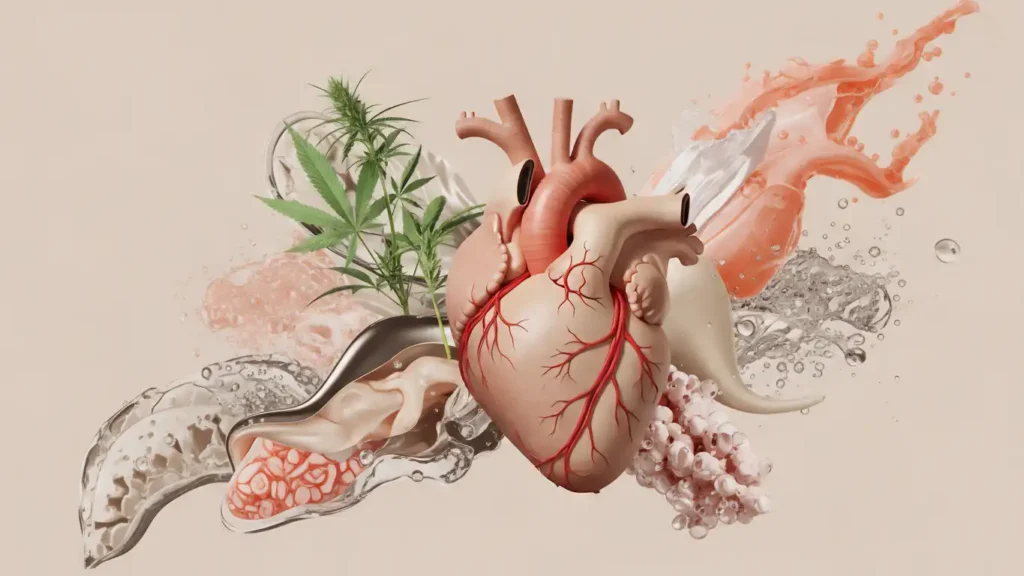
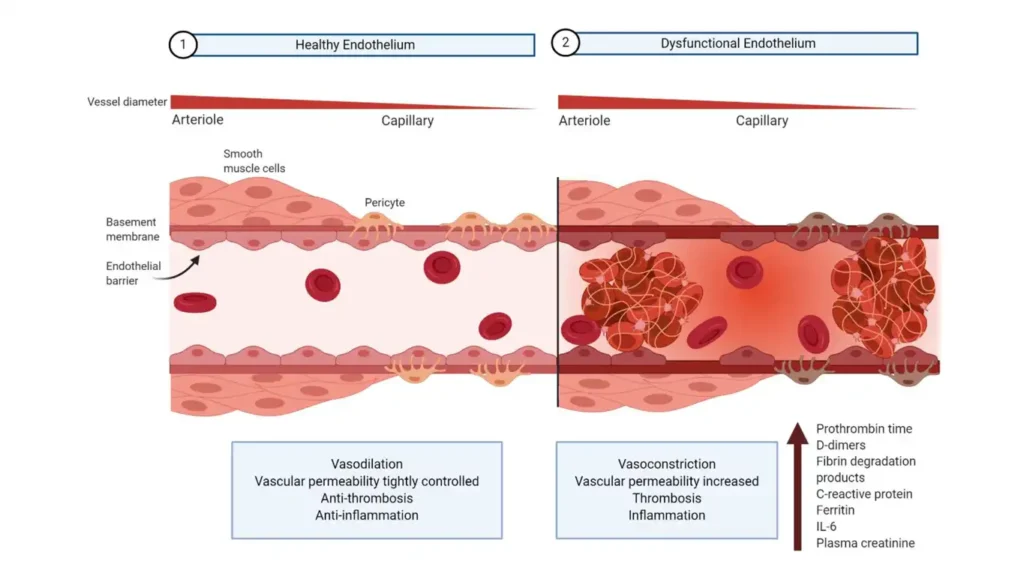
To understand your vascular health, you must know about the endothelium. This is a thin, delicate lining inside every blood vessel in your body. Rather than just being a tube, it is a highly active organ that releases a special gas called nitric oxide. This gas was once named the “molecule of the year” because it tells your blood vessels when to open up. If this lining is damaged, your body cannot produce enough nitric oxide, and blood cannot flow where it needs to go.
The Mechanics of Arousal
Did you know that “relaxation equals erection” in the medical world? Most people think of an erection as an active, tensed-up state, but it is actually the opposite. When you are flaccid, your muscles are contracted because of adrenaline, which keeps blood out. To get hard, those muscles must relax, and nitric oxide allows this relaxation to happen.
If you are constantly stressed, your body stays in a “contracted” state. How can you expect your body to relax if your mind is always on high alert? Practice deep belly breathing for five minutes a day to lower adrenaline and help your blood vessels learn to relax again.
The Exercise Prescription for Penile Longevity
I often tell my patients that cardio is the best medicine I can prescribe. When you run or swim, your heart pumps faster, creating “shear flow,” which acts like a massage for your blood vessels. This pressure strengthens the endothelium and improves your vascular health. Research shows that men over 75 who still have great blood flow are almost always lifelong exercisers. Movement is quite literally the fountain of youth for your penis.
Aerobic vs. Anaerobic: What Works?
You do not need to be a marathon runner to see results. Any activity that gets your heart rate to about 85 percent of its maximum—such as a brisk walk, a bike ride, or a heavy lifting session—is great. The key is consistency. A “one-off” workout once a month won’t fix the lining of your vessels; you need to show up for your body at least three to four times a week. Are you giving your heart the same attention you give your career or hobbies?
Managing the “Antagonists” of Vascular Health
There are three main enemies of your blood vessels: hypertension, diabetes, and high cholesterol. These conditions act like sandpaper on the inside of your arteries, causing scarring and blockages. If you have high blood sugar or high blood pressure, your sexual health will be the first thing to suffer. Managing these through diet and medicine is a vital part of protecting your future intimacy.
Debunking the Testosterone Myth
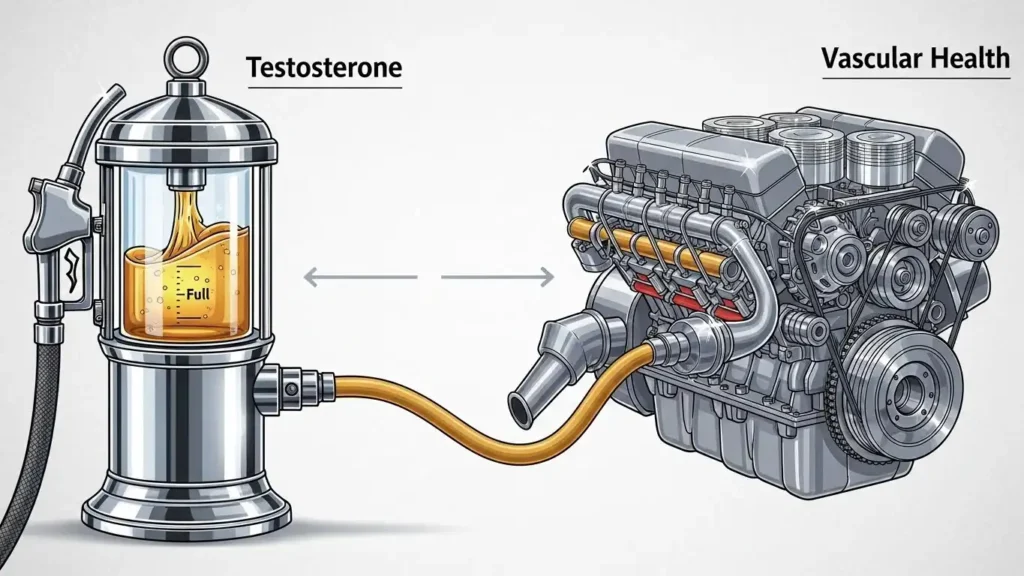
Many men come to me asking for “T-shots” because they think testosterone and ED are the same thing. In reality, the link is very weak. Testosterone is like the fuel in a car; it gives you the desire to drive (libido). However, the erection itself is the mechanical engine. You can have a full tank of gas, but if the engine’s pipes are clogged, the car won’t move. I have seen men with zero testosterone who still have a sex drive, proving that the mind and the vessels are the real stars of the show.
The Dangers of “Shortcut” Supplements
The internet is a “Wild West” for male enhancement. Many “natural” boosters on sites like Amazon are dangerous, as testing often shows these pills contain undeclared Viagra or Cialis. Companies hide these drugs inside to make the supplement seem like it works. This is risky because you don’t know the dose you are taking. Why risk your safety on a mystery pill when we have proven, regulated treatments available?
Clinical Evaluation of Low T
Low testosterone is real, but its symptoms are tricky. You might feel tired, grumpy, or notice you are gaining weight, but these same symptoms can be caused by stress or poor sleep. This is why I insist on early morning blood tests to see your levels when they are at their peak. We use a specific “testosterone checklist” to make sure we are treating a real deficiency and not just a lifestyle issue. Always get your testosterone checked before 10:00 AM, as levels naturally drop significantly as the day goes on.
The Modern Toolbox: PDE5 Inhibitors
Medicines like Viagra and Cialis are called PDE5 inhibitors. They work by stopping an enzyme that breaks down the signals for blood flow. Essentially, they keep the “door open” for blood to enter the penis. However, there is a big catch: you still need a “trigger”. These pills are not “on” switches; you must be mentally or physically aroused for them to work.
Choosing Your Protocol
There are two main ways to use these tools. Short-acting meds like Viagra are great for planned encounters; you take them on an empty stomach and they last a few hours. Long-acting meds like Cialis are often called the “weekend pill,” and you can even take a small dose every day to allow for more spontaneity. Which approach fits your lifestyle better?
Hidden Cardiovascular Benefits
Here is some good news that most people don’t know: regular use of these pills is actually good for your heart. Because they improve blood flow, they have been linked to lower rates of heart attacks and strokes. The old myth that “sex pills cause heart attacks” is false; in fact, they are cardio-protective. They help maintain your systemic wellness while they help your performance.

Navigating Premature Ejaculation (PE)
Premature ejaculation is very common, but it comes in two types. Lifelong PE is usually a chemical issue in the brain involving serotonin that has likely existed since your first sexual encounter. Acquired PE happens later in life and is usually caused by the anxiety of having ED. When you worry about staying hard, your adrenaline spikes, and your body tries to “finish” as fast as possible.
Treatment Pathways for PE
For chemical cases, we often use low-dose SSRIs to help slow things down. For acquired cases, we must treat the underlying ED first. Once the man knows his erection will stay, the anxiety disappears, and the PE often goes away on its own. While behavioral exercises like the “squeeze technique” exist, many men find medical intervention much more effective and less stressful.
The Mind-Body Connection: Stress and Adrenaline
If you are a “Type A” person, you might be sabotaging yourself. High-stress levels flood your body with adrenaline, which tells your blood vessels to stay shut. You cannot be in “fight or flight” mode and “bedroom” mode at the same time. Learning to shut off the workday is just as important as any pill I can give you.
The Tight Pelvic Floor
Sometimes, the issue isn’t blood flow but muscle tension. A pelvic floor health issue can cause pain or mimic the symptoms of Peyronie’s disease. If your pelvic muscles are always clenched, they can squeeze the nerves and vessels. This is where pelvic floor therapy and meditation become vital. If you spend all day sitting, try “reverse kegels” or happy baby yoga poses to stretch and relax your pelvic floor.
“Use It or Lose It”: Penile Rehabilitation
Your body has a built-in maintenance system. Most healthy men have three to six erections every night during REM sleep. These are not about sex; they are about health. These “nighttime workouts” bring fresh oxygen to the penile tissue. If you stop having these because of health issues, the tissue begins to change for the worse.
Preventing “Collagenization”
When the penis doesn’t get enough blood for a long time, the smooth muscle starts to die and is replaced by collagen (scar tissue). This is called “collagenization”. Unlike muscle, scar tissue cannot stretch or expand, leading to permanent loss of size and function. This is why penile rehabilitation is so important; we use pumps or daily meds to keep the tissue healthy. We are also looking into exciting new treatments like shockwave therapy and PRP to help regrow healthy tissue.
Conclusion: Breaking the Silence
We must stop the “Five Sins” of sexual medicine: agism, apathy, and the idea that this doesn’t matter. Your sexual health is a vital sign that tells us how your heart and your head are doing. You deserve to have a fulfilling life at any age. Please, do not wait for your doctor to bring this up; you must be your own advocate. By focusing on your circulation, your habits, and your mental peace, you are investing in your longevity.

 By
By
 By
By

 binance h"anvisningskod says:
  binance "oppna konto says:
  Registrera dig says:
  Binance开户 says:
  binance Registrera says:
  binance "oppna konto says:
  binance anm"alningsbonus says:
  binance "oppna konto says:
  Binance注册 says:
  Binance账户创建 says:
  Δημιουργα δωρεν λογαριασμο says:

 By
By


