

As a physician specializing in men’s health and reconstructive surgery, I spend my days helping people restore their physical function and quality of life. However, I have learned that true healing is rarely just physical. The mind and the body are deeply connected. Just as I guide patients through surgical recovery, there is a vast field of experts dedicated to guiding patients through mental and emotional recovery. This is where we must ask the question: what is behavioral health, and how do the professionals in this field change lives?
In this article, I want to take you behind the scenes of this critical medical field. We will explore the insights shared by the team at Clay County Medical Center, looking at the daily lives, educational paths, and deep rewards of a career in mental health. Whether you are a student, a career-changer, or just someone seeking to understand how care works, this guide is for you.

The Foundations of Behavioral Health at Clay County Medical Center
When we look at a facility like Clay County Medical Center, we see that helping patients with their mental health is crucial to many medical challenges and treatments. It is not just about treating a disease; it is about seeing the person. Their team shows us how a career in this field uses empathy and insight to help at-risk patients navigate a path to mental health wellness.
Introduction to the Mission
I believe that medicine must be community-based. The team at Clay County Medical Center shares this comprehensive outlook on healthcare. Their dedication is focused on improving the health of their communities by providing quality, compassionate care to everyone, every time. This philosophy resonates with me deeply. In my own practice, I know that compassion is the tool that builds trust. Without trust, healing is difficult.
Addressing the Growing Need
We are currently seeing an increasing need for behavioral health services across the country. To meet this demand, Clay County Medical Center recently constructed a dedicated mental health clinic. This expansion is not just about bricks and mortar. It represents a commitment. It serves as the new home for their behavioral health team, giving them the space they need to provide life-changing care.
Defining the Goal
What is the ultimate objective here? It is to help patients in crisis find their footing. The goal is to help them navigate a path to mental health wellness. Whether a patient is dealing with a sudden crisis or a long-term struggle, the objective is stability.
- Empathy: Understanding the patient’s feelings.
- Insight: Using clinical knowledge to see the root cause.
- Action: Creating a plan for recovery.
What is Behavioral Health in Daily Practice?
You might wonder what a typical day looks like for these professionals. Is it just sitting in a chair listening? It is actually much more dynamic.
Clinical Preparation

For providers like Dr. Heather Trumbley, a psychiatric practitioner, the day begins with preparation. She arrives at the office and reads all her notes before she sees her patients. This is a critical step. She makes specific notes on what to ask, checking on how they are doing and ensuring she covers every necessary detail. This preparation ensures that when the patient walks in, the focus is entirely on them.
The Outpatient Experience
The outpatient experience can vary greatly depending on the patient’s needs. We are essentially looking at outpatient psychiatry, where patients come into the clinic just like you would go in for a regular doctor’s visit.
They come in to talk about how they are doing, how their medications are working or not working, and any side effects they might be experiencing. This is also where a little bit of psychotherapy happens. Appointments can range anywhere from a quick 10 to 15-minute visit to a longer hour-and-a-half session, depending entirely on what is going on with the patient.
Case Management & Maintenance
The work does not stop when the patient leaves the room. During lunchtime or whenever there is free time, providers try to provide consults. For example, if somebody calls and asks for a refill, the provider tries to take care of it as soon as possible for their patients. This behind-the-scenes work is vital. It ensures that there are no gaps in care.
Pro Tip: Effective time management is the secret weapon of every successful healthcare provider. Using your breaks to handle administrative tasks like refills ensures you never fall behind! ⏰
The Experts Defining What is Behavioral Health
To truly understand what is behavioral health, we must look at the specific roles of the people who deliver care. It is usually a team effort.
Psychiatric Mental Health Nurse Practitioner (PMHNP)
Heather Trumbley gives us insight into the nursing side. If you enjoy the sciences and want to focus on medications, pathophysiology, the brain, and anatomy, you might want to go the nursing or medical route.
A psychiatric mental health nurse practitioner prescribes medications and also provides psychotherapy. It is a dual role. They manage the biological side of mental health while also providing a listening ear.
Licensed Specialist Clinical Social Worker (LSCSW)
On the other hand, we have professionals like Matt Myers. If you really enjoy the social aspect and the social sciences—providing that whole picture of a patient’s socioeconomic environment—then maybe you want to go more toward the social work side.
As a licensed specialist clinical social worker, Matt works as a program therapist. His focus is less on biology and more on the therapeutic process and the patient’s life circumstances.
The Behavioral Health Support Team
Is this a solo job? Not at all. It is very much a team job. In Matt’s office, there are three of them: a patient coordinator, a registered nurse, and the therapist.
- Patient Coordinator: Manages logistics.
- Registered Nurse: Provides medical monitoring.
- Behavioral Health Tech: Handles calls about side effects and supports the team.
Question: Have you ever considered how many different professionals are working together behind the scenes to support a single patient’s recovery?
Comparison of Key Roles
| Feature | Psychiatric Nurse Practitioner | Clinical Social Worker |
| Primary Focus | Medical, Brain, Anatomy | Social Sciences, Socioeconomic |
| Medication | Prescribes Medication | Does Not Prescribe |
| Therapy | Provides Psychotherapy | Provides Therapy & Groups |
| Education Path | Nursing School (BSN to MSN/DNP) | Social Work (BSW to MSW) |
Senior Life Solutions: What is Behavioral Health Recovery?
For some patients, a standard appointment is not enough. This is where programs like Senior Life Solutions come in. This is considered intensive outpatient care.
Program Structure
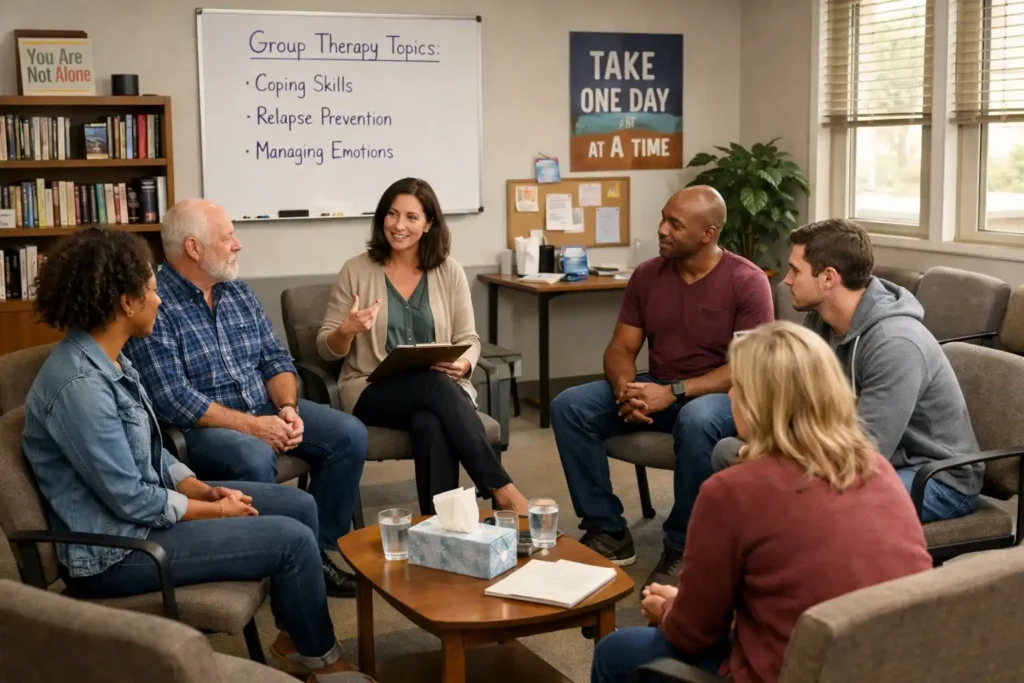
This program is rigorous and structured to provide maximum support. Matt explains that their days consist of groups. Specifically, on Mondays, Wednesdays, and Thursdays, they provide group therapy for 10 individuals at a time. These sessions last for 3 hours for those three times a week.
Individualized Care
Group therapy is powerful, but individual attention is also necessary. The people that come for this program also get individual therapy two times a month. This ensures that personal issues that might not be appropriate for a group setting are addressed.
The Holistic Approach
The team works together to provide the best care, getting the holistic treatment of medical care, medical monitoring, and then also the mental health component. You can really see the effectiveness of the team aspect with everyone that comes to the program.
The Journey to Licensure: Educational Pathways and Timelines
If you are asking what is behavioral health because you want to work in the field, you need to know the road ahead. The clinical licensure process requires dedication.

The Nursing Route
Heather shared her journey through nursing.
- Undergraduate: It took four years for her Bachelor’s degree in nursing.
- Graduate: After working for a while, it took another two and a half years to get her Master of Science in Nursing.
- Certification: You have to take board certification at the end of all of that.
There are other entry points too. You could work in the field with a CNA or CMA certification, which takes about six months43. Conversely, a doctorate in nursing practice would take closer to eight years44.
The Social Work Route
Matt took a more “non-traditional” path. He was out of school for 14 years before he decided to go back and get his Master’s. His undergrad was actually in biology.
- Standard Path: It took him about two and a half years to achieve his degree in social work.
- Advanced Standing: If you are a student that has a Bachelor’s in social work, you are considered to be an “Advanced Standing” student, and it would only take a year to achieve that Master’s.
Clinical Supervision

Graduation is not the end. Once you graduate, you have to take a licensing exam to become a Licensed Master Social Worker. From there, you go through the clinical supervision process. You must have at least two years of clinical supervision by a licensed clinical social worker to achieve the standards for seeing individuals, assessment, and diagnosis. Once you do that, you take another exam for your clinical licensure, which allows you to practice independently.
Question: Does the idea of a “non-traditional” career path, like returning to school after years of working, make you feel more hopeful about your own career possibilities?
The Reality of the Field: Challenges, Rewards, and Self-Care
Working in behavioral health is incredibly fulfilling, but it is also demanding. It requires a strong heart.
The Most Rewarding Moments
Why do they do it? For Heather, the most rewarding part is helping people feel better. People come to you when they are not feeling well at all. After a couple of months, being able to have them come in and tell you that they are enjoying life, enjoying their family, and enjoying their career is very rewarding.
Matt agrees. Seeing the progression patients make from their start to their outcomes is amazing. He loves seeing how they realize there is a better way of living their lives.
Managing the Emotional Toll
However, there is a risk. If you are not careful, you can have what is called “secondary trauma,” where you are feeling the same trauma as the person you are working with. You hear some pretty rough things at times as a therapist.

The “Million Dollar Question”
How do you manage it? Heather admits that managing the toll is the “million dollar question”. It comes down to self-awareness and practicing what you preach. You constantly talk to patients about setting healthy boundaries and focusing on priorities, so you must do the same.
The Necessity of Personal Therapy
There is a lot of training around self-care. One piece of advice Matt gives to new therapists is to get their own therapy. You should seek out your own therapist to get that self-care going because the work can be very trying.
Pro Tip: Never be afraid to ask for help. Even the experts need support! Building a support group with colleagues can be a lifesaver. 🤝
Advice for Aspiring Behavioral Health Professionals
Are you ready to join the behavioral health team roles? Here is how to start.
Explore Your Interests
The behavioral health field is so vast. You need to find out what you enjoy.
- If you like science and anatomy, consider nursing.
- If you like social structures and talk therapy, consider social work.
“Getting Your Feet Wet”
You can start early. Matt started his mental health career with a summer job at a group home for boys when he was in college. That summer job led to working at other group homes for a total of nine years.
He recommends looking at a position at a mental health center working with children or adults to kind of “get your feet wet”. This helps you see if it is something you would enjoy doing and furthering.
Shadowing and Internships
Can you watch a professional in action? Absolutely. Heather has students reach out all the time to shadow. She has had high school students follow for just a day or two to see what it is like.
Matt suggests you just call the agency you want to shadow and see what the policies are around that. Internships through a university course are also a really good way to get that experience.
Pro Tip: Be proactive! Call local clinics and ask about shadowing opportunities. It shows initiative and gives you a real-world look at the job. 📞
Conclusion: A Collaborative Future for Mental Health
So, what is behavioral health? It is a field defined by collaboration, compassion, and scientific expertise. It is rarely a solo job. In roles like Heather’s, she has a whole team who works to manage medications, refills, and appointments.
Whether you are looking to treat a condition or looking for a career, remember that this field offers extraordinary opportunities to change lives. As Matt says, there is a lot out there to be offered78. If you have the heart for it, I encourage you to explore it.
FAQs
1. What are the different educational timelines for roles like nurse practitioners versus clinical social workers?
For a social worker, if you have a Bachelor’s in social work, you can get a Master’s in one year; otherwise, it takes about two years. For a nurse practitioner, it takes four years for a Bachelor’s in nursing, followed by about two and a half years for a Master’s degree.
2. What is the functional difference between providing psychotherapy and prescribing medication in a clinical setting?
A psychiatric mental health nurse practitioner (PMHNP) can prescribe medications and provide psychotherapy. A therapist or social worker focuses on psychotherapy and counseling but does not prescribe medication.
3. How can someone transitioning from a non-traditional background enter the behavioral health field?
You can start fresh like Matt, who went back to school after 14 years. You can also start with entry-level jobs in group homes or as a case manager to gain experience before pursuing advanced degrees.
4. How do professionals manage the emotional toll of mental health work?
Professionals use self-care strategies, set healthy boundaries, and often seek their own therapy to process the emotions and avoid secondary trauma.
5. Is behavioral health care a solo or team-based profession?
It is primarily a team-based profession. Providers work with nurses, patient coordinators, and techs to provide holistic care, although some providers may work more individually.

 By
By
 By
By


 By
By


How much food can we intake during a high blood pressure condition?