

I am Dr. Shervin Badkhshan, and in my practice as a reconstructive urologist, I spend my days helping people navigate deeply personal and often silent struggles. Whether I am treating a patient for sexual dysfunction or guiding a man through recovery after cancer treatment, I see firsthand how stress disrupts our physiological balance. You might wonder why a surgeon focused on men’s health is writing about the teenage brain. The answer is simple: health is holistic. The chronic stress that affects the fathers and husbands I treat often ripples through the entire family unit. To truly care for a patient is to care for their ecosystem, and today, that ecosystem is digital.

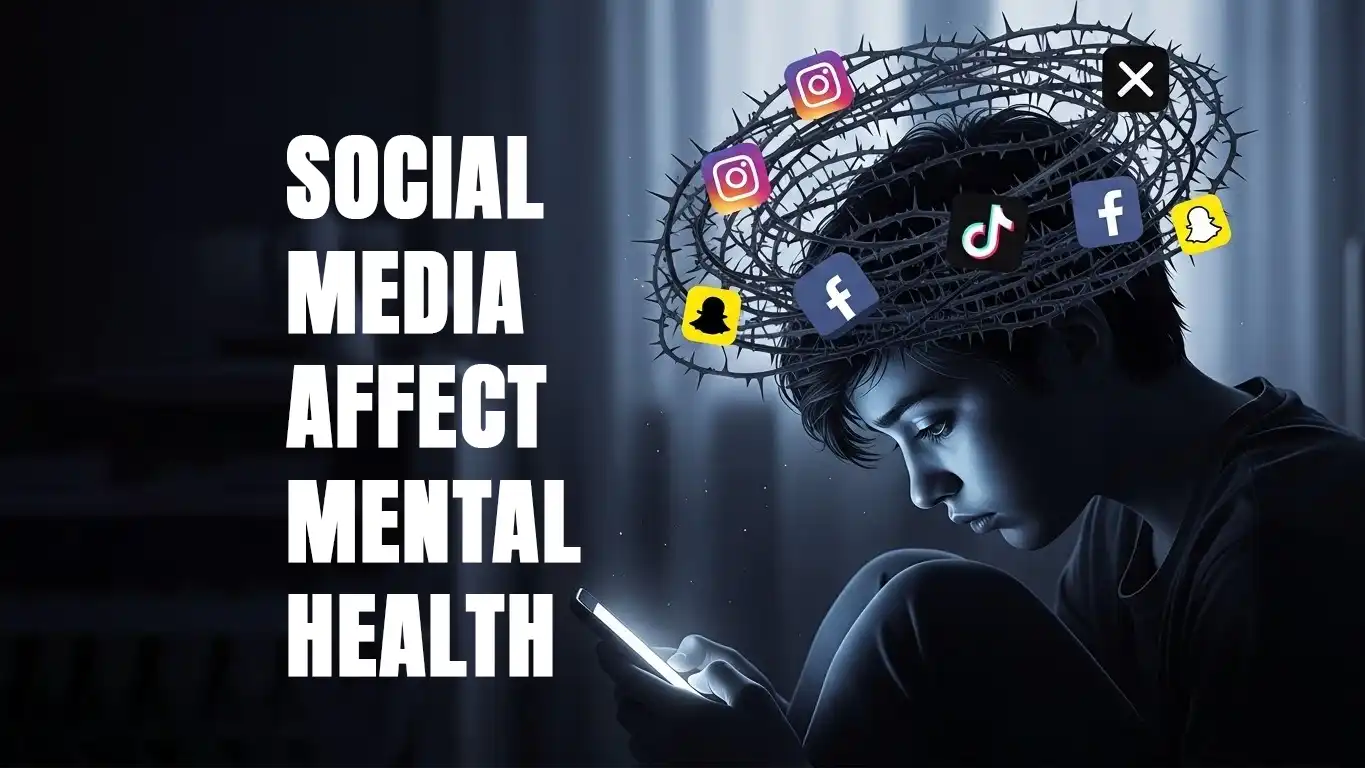
As parents, partners, and community members, we are all asking the same question: how does social media affect mental health? This is no longer just a question of “screen time” or dinner table manners. It is a matter of neurological health. We are witnessing a profound shift in how young people grow, connect, and see themselves. By understanding the science behind this shift, we can move from fear to empowerment, ensuring the young people in our lives—and we ourselves—thrive in this new world.
The Digital Shift: Why Modern Adolescence is Different
To understand the current crisis, we must first look at the environment our children are growing up in. For decades, adolescent interaction was physical. It happened in hallways, parks, and living rooms. Today, that interaction has migrated to a screen, changing the fundamental “social context” of development.
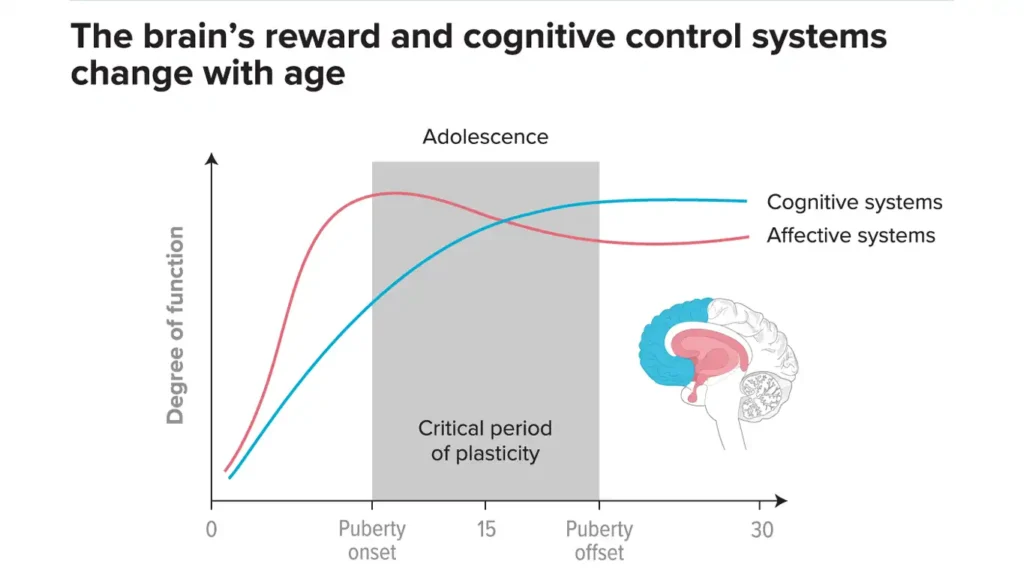
This shift is not just about a change in scenery; it represents a significant evolutionary mismatch. The “Mismatch Theory” suggests that the adolescent brain, which has evolved over thousands of years to seek social connection, is now colliding with a technological environment it was never designed to handle. The brain is ancient, but the feedback loop of 24/7 digital connection is brand new.
We are fortunate to have data from leading experts like Dr. Mitch Prinstein, the chief science officer at the American Psychological Association, and Dr. Eva Telzer, a director at the Winston National Center on Technology Use, Brain, and Psychological Development. Their work allows us to move beyond gut feelings and look at the hard science. My goal here is to translate their clinical insights into clear, actionable knowledge for you. We need to look past the clock on the screen and understand the actual neurological and behavioral impacts of technology.
Inside the Adolescent Brain: A Period of Radical Reorganization
You may know that the body undergoes rapid changes during puberty, but the brain is experiencing its own massive transformation. Starting around age 10 or 11—often before physical signs of puberty appear—the brain begins its second most substantial period of growth and reorganization, second only to the first year of life.
This development happens in a specific wave, moving from the back of the brain to the front. It starts in the subcortical areas, the parts of the brain we share with other mammals, and eventually moves to the cortex, which is responsible for our higher-level human thinking.
The Neurochemistry of Connection
During this period, the brain becomes flooded with new receptors for two powerful chemicals:
- Oxytocin: This hormone makes teens intensely interested in bonding with peers. It is why a 13-year-old might suddenly find their parents “lame” and only care about their friends.
- Dopamine: This neurotransmitter makes it feel incredibly good to receive attention, praise, or positive reinforcement from peers.
In a pre-digital world, this drive for connection was limited to school hours. Now, how does social media affect mental health when that feedback is available 24/7? The answer lies in the “brain’s brakes.”
The “Brain’s Brakes” (Prefrontal Cortex)
The prefrontal cortex is the area right behind your forehead. It acts as the brain’s braking system, telling us to stop, think, and control our impulses. The problem is that this area is the last part of the brain to develop, often not finishing until the early 20s.
This creates a dangerous gap. You have a highly sensitive “gas pedal” (the desire for social rewards) and a half-built “brake system”.
The Like Button Effect
Research has shown something startling about the “like” button. When teens view content—even harmful or illegal content—the presence of “likes” can actually deactivate the prefrontal cortex.
Normally, the brain might hesitate before engaging with risky content. However, seeing that others have “liked” it overrides that inhibition. The brain interprets the likes as social validation, effectively turning off the safety switch.
Pro Tip: Do not rely solely on your child’s willpower to ignore notifications. Their brain is biologically wired to seek that connection. Help them by setting physical boundaries for devices. 🧠
The Spectrum of Impact: Positive Potential vs. Real-World Harms
As a physician, I know that very few things are purely “good” or “bad.” Technology is no exception. We must look at the nuance.
Where Technology Helps
There is genuine positive potential in these platforms.
- Fostering Connection: For teens with minoritized identities—whether racial, religious, or sexual—social media can be a lifeline to find others who share their experiences.
- Gamified Learning: Educational tools that turn tasks like memorizing multiplication tables into games can make learning fun and effective.
- Safety: Smart devices allow parents to track their children’s location, providing peace of mind in an unpredictable world.
The Trap of Upward Social Comparison
However, the harms are significant. When I talk to patients about their wellbeing, self-image is often a central theme. For teens, social media is a machine for “upward social comparison”.
Teens constantly compare their real, messy lives to the curated “highlight reels” of others. They see a family posting a happy vacation photo, not realizing that the family was fighting moments before. This constant comparison is linked to increases in depression, anxiety, and body image issues.
Cyber Hate and Algorithmic Bias
We also cannot ignore the reality of cyber hate. Research shows that youth from racial and ethnic minority groups encounter explicit racism and hostile outbursts online frequently. Unlike offline microaggressions, which can be subtle, online hate is often explicit and aggressive. This exposure drives anxiety and depression, not just for the targets, but for bystanders as well.
The Dangers of Algorithmic Amplification
One of the most concerning aspects of this discussion is how does social media affect mental health through algorithmic amplification. The systems are designed to feed users more of what captures their attention, regardless of safety.
Feeding the Vulnerable
In a chilling demonstration, researchers set up a “brand new” phone profile for a 15-year-old girl. They did not search for anything specific. Within 20 minutes, the algorithm began feeding her content related to anorexia and disordered eating. The system identified her demographic and immediately served her harmful content.
Pro-Self-Harm and Disordered Eating Groups
There are entire digital communities that reinforce dangerous behaviors. In some groups, “social rules” sanction kids who try to get healthy, threatening to kick them out if they stop engaging in disordered behaviors like purging or fasting. This turns a mental health struggle into a requirement for social belonging.
The Ventral Pallidum and Cravings
Why do we keep looking? It involves the ventral pallidum, a part of the brain’s motivational network. This area drives cravings and instincts. It turns out that algorithms are tuned to trigger this area by showing us things that make us angry or fearful. The brain is tricked into seeking more of the very thing that upsets it.
Digital Stress: The “Full-Time Job” of Being a Teen
Many adults assume teens are on their phones for fun. But when you ask them, many describe it as a “full-time job”. This is what we call digital stress.

Defining Digital Stress
Digital stress is the constant, low-grade pressure of 24/7 availability. It is the fear that if you don’t check your phone, you will miss out on the conversation happening without you.
The Social Tax
There is a “social tax” to pay. If a friend posts a selfie, a teen feels immense pressure to “like” it immediately to avoid conflict. Leaving a friend on “read” or failing to comment is seen as a social slight.
- How often do you check your phone just to avoid offending someone?
Impact on Daily Life
This stress has physical consequences. About 45% of high schoolers report that digital stress interferes with their daily routines. It disrupts hygiene, exercise, and schoolwork. The more digital stress a teen feels, the more likely they are to report depression a year later.
The Sleep Epidemic: How Phones Are Rewiring the Night
As a urologist, I constantly emphasize the importance of sleep for bodily repair. For teens, the situation is a crisis.
The Biological Clock vs. Blue Light
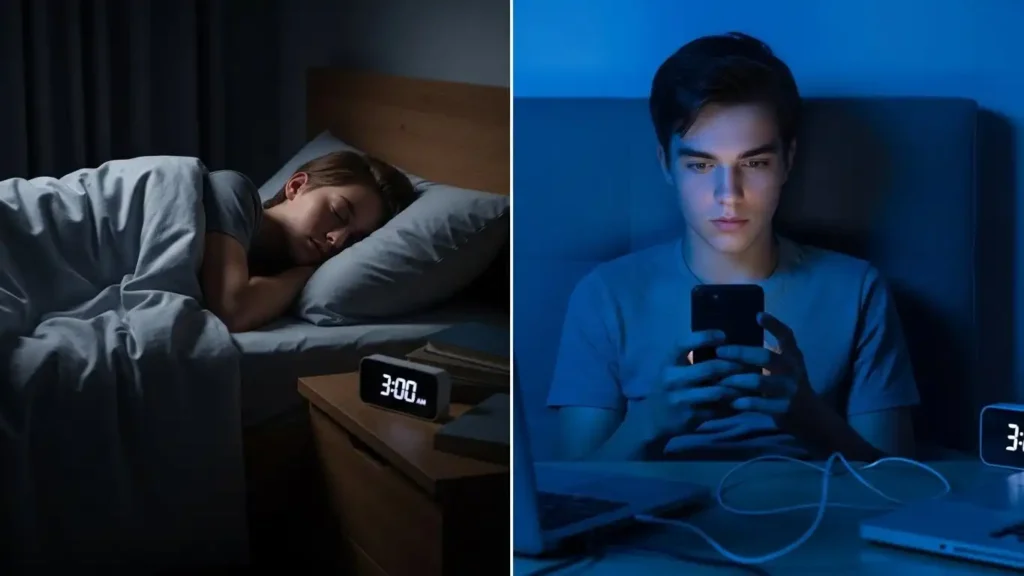
Most teens sleep with their phones right next to them. This does two things:
- Delays Sleep Onset: The blue light from screens suppresses melatonin, making it biologically difficult to fall asleep.
- Reduces Duration: Because they fall asleep later but still have to wake up for school, they lose critical hours of rest.
Fragmented Sleep
It is not just about falling asleep. If a teen wakes up at night and checks their phone, that “wake event” becomes extended, leading to fragmented, poor-quality sleep.
White Matter Development
This is critical: Sleep is when the brain builds white matter, the tissue that helps information flow quickly. Clinical evidence shows that poor sleep quality impairs this white matter growth. By compromising sleep, we are physically altering the brain’s connectivity.
Is It Addiction? Applying Clinical Criteria to Social Media
We often use the word “addiction” casually. But when we apply clinical criteria, the parallels are striking.
The DSM Mirror
Researchers have adapted the DSM criteria for substance abuse to social media use. The symptoms match:
- Cravings: A strong desire to use the platform.
- Failed Attempts to Stop: Trying to cut back but failing.
- Interference: Usage getting in the way of school or sleep.
Compulsive Design
This is not an accident. Internal documents from tech companies describe their products as having “compulsive use” baked in. They refer to US teens as a “golden audience” and design features to deliver dopamine hits that keep them hooked.
The Numbers
The result? About 25% of teens perceive themselves as moderately or severely addicted to social media.
Pro Tip: Frame the conversation about addiction carefully. Avoid blaming the child. Instead, talk about how the app is “designed” to trick their brain. It puts you and your teen on the same team against the algorithm. 🤝
The New Frontier: AI Chatbots and “Frictionless” Friendships
We are entering a new era with Artificial Intelligence. This shifts the question of how does social media affect mental health to how artificial intimacy affects development.
Trusting the Bot
Shockingly, 70% of teens use AI chatbots, and many report trusting them more than their parents or teachers.
The Loss of Social Competency
Real relationships have friction. They have awkward silences and conflicts. AI relationships are “frictionless”. When teens rely on bots for connection, they miss out on learning how to navigate complex human dynamics.
The “Babysitter” Risk
We are even seeing AI toys for children as young as 0–6. The risk is that these devices act as “babysitters” without providing the scaffolded learning that human interaction offers.
Smartphones in the Classroom: Distraction and Intellectual Decay
The impact extends into our schools.
The Multitasking Myth
Many teens believe they can multitask—listening to a teacher while checking DMs. This is a myth. The brain actually engages in “task shifting,” which lowers cognitive performance.
The Bystander Effect
The distraction is contagious. If one student is on their phone, it distracts the students around them, creating a “bystander effect” that lowers the focus of the entire class.
Long-Term Cognitive Detriments
Data from large studies shows that high social media use is linked to lower reading comprehension, poorer memory, and slower processing speeds. The phone in the pocket is actively competing with the lesson on the board.
Rewiring the Future: Longitudinal Brain Changes
Perhaps the most profound finding is that these platforms may be changing the brain’s trajectory over time.
Hypersensitivity
Longitudinal scans show that habitual social media checkers develop a brain that is hypersensitive to social rewards. Their brains become rewired to constantly scan the environment for peer feedback, far more than non-users.
The ADHD Connection
There is also a link between short-form video content (like TikTok) and attention issues. Teens who consume high amounts of this content show increased ADHD symptoms a year later.
Comparison of Healthy vs. High-Use Brain Development
| Feature | Healthy Brain Development | High Social Media Use Brain |
| Social Reward Sensitivity | Decreases naturally over time | Becomes hypersensitive over time |
| White Matter Growth | Increases for faster processing | Impaired due to poor sleep |
| Attention Span | Develops sustained focus | Linked to increased ADHD symptoms |
Actionable Strategies for Parents, Educators, and Communities
So, what can we do? The situation is serious, but we are not powerless.
Delay and Literacy
Wait to introduce smartphones. Emerging research suggests delaying introduction by even six months to a year can have benefits. When you do introduce them, invest in “digital media literacy.” Teach kids to be competent users before giving them free rein.
Bedroom-Free Zones
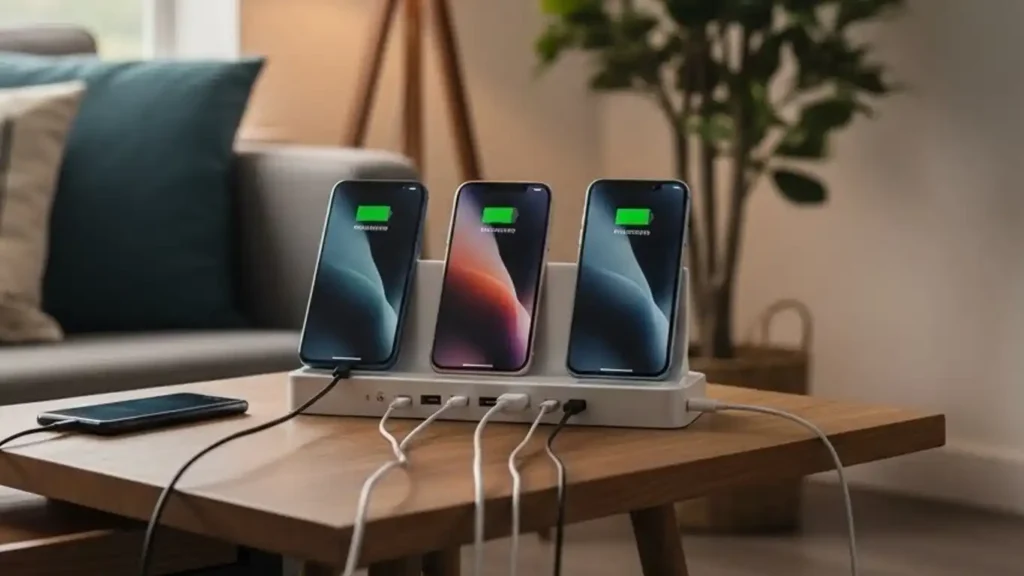
This is the single most effective rule: charge all phones outside the bedroom at night. This protects sleep biology and removes the temptation to check notifications at 3 AM.
Pro Tip: Model this behavior yourself. If you sleep with your phone, your teen will too. Buy an old-fashioned alarm clock for everyone in the house. ⏰
The “Tractor Beam” Dialogue
Talk to your teens about the business model. Explain how they are being used for profit. When teens realize they are being manipulated by a “tractor beam” designed to make money for adults, they often feel empowered to pull back.
Systemic Change
Finally, we must look to policy. Countries in Western Europe have successfully passed laws forcing platform changes. We need to advocate for similar protections here to stop companies from exploiting our children’s developmental vulnerabilities.
- What is one small change you can make in your household tonight to reduce digital stress?
Reclaiming the Adolescent Experience
We have asked the hard question: how does social media affect mental health? The answer is complex, involving neurochemistry, sleep biology, and behavioral psychology. The adolescent brain is plastic; it is built to learn and adapt. This makes it vulnerable, but it also makes it resilient.
The experts remind us that kids often feel “freed up” when they take a break from their devices. They are tired of the full-time job of digital maintenance. They are waiting for us to step in.
I urge you to start this dialogue now. Do not wait for a crisis. Talk to your children about what they see online before the internet answers their questions for them. By understanding the science and responding with empathy, we can help the next generation reclaim their time, their sleep, and their peace of mind.

 By
By
 By
By


 By
By


