


Introduction: The Silent War of Stress on Women’s Bodies
Does stress delay menstruation? The short answer is yes. Moreover, chronic stress can wreak havoc on your entire reproductive system in ways you might not expect.
In the whirlwind of modern life, stress has become an unwelcome companion. It lingers in workplaces, seeps into relationships, and casts shadows over moments that should bring rest. Yet beneath its seemingly innocuous facade, stress wages a silent war within the body, disrupting the delicate balance of hormones.
Perhaps you’ve noticed your period arriving late after a particularly demanding month at work. Or maybe you’ve experienced debilitating cramps after a period of emotional turmoil. These are your body’s ways of sounding the alarm, urging you to pay attention to the intricate connection between mental and reproductive health.

This article will explore how chronic stress and anxiety delay your period, the biological mechanisms at play, and most importantly, what you can do to reclaim your hormonal harmony. From understanding the HPA axis to learning evidence-based stress reduction techniques, you’ll discover why your body responds this way and how to support your menstrual health.
Pro Tip 🌟: If you’ve missed a period, take a pregnancy test first to rule out pregnancy before attributing it solely to stress.
The Widespread Impact of Chronic Stress on Menstrual Health
The impact of chronic stress extends far beyond the occasional late period. Consequently, it can disrupt the very foundation of your hormonal symphony, leading to a cascade of menstrual irregularities that profoundly affect quality of life.
Common stress-related menstrual disruptions include:
- Irregular cycles with unpredictable timing
- Heavy bleeding that soaks through protection hourly
- Excruciating pain that interferes with daily activities
- Mood swings and heightened anxiety
- Persistent fatigue and sleep disturbances
These physical manifestations are not merely inconvenient. In fact, they can be debilitating, impacting relationships, careers, and overall sense of well-being. Furthermore, many women suffer in silence, unsure whether their symptoms warrant medical attention.
Have you ever wondered why your period becomes so unpredictable during stressful times? The answer lies in understanding how stress hormones affect menstruation at the deepest biological level.
Understanding Cortisol: The Culprit Behind Hormonal Disruption
What Is Cortisol and Why Does It Matter?
To understand how stress and late periods connect, we must first examine cortisol, the primary stress hormone. When you face a stressful situation, your adrenal glands release cortisol, preparing you to either fight or flee.
This response served our ancestors well when facing immediate physical threats. However, the ancient survival mechanism becomes maladaptive in the face of chronic, unrelenting stress. While short-term bursts of cortisol are essential for well-being, chronic stress keeps your body in overdrive.
The difference between acute and chronic cortisol exposure is crucial. Acute stress triggers a temporary spike that resolves quickly. In contrast, chronic stress leads to a perpetual flood of cortisol that disrupts your delicate hormonal balance.
The HPA Axis: Your Body’s Stress Response System
The hypothalamic-pituitary-adrenal (HPA) axis functions as a symphony of communication between your brain and adrenal glands. This complex system is central to your body’s response to stress.

Here’s how the HPA axis works:
- Your hypothalamus senses stress and sends a signal
- The pituitary gland releases adrenocorticotropic hormone (ACTH)
- ACTH travels through your bloodstream to the adrenal glands
- The adrenal glands release cortisol into your system
When the HPA axis remains in overdrive due to chronic stress, it disrupts your endocrine system balance. Particularly, it impacts the hormones responsible for regulating menstrual cycles. This constant activation explains why chronic stress reproductive health problems are so common.
How Stress Hormones Disrupt the Menstrual Cycle
The Hormonal Symphony of a Normal Menstrual Cycle
Before understanding disruption, you need to know how a healthy cycle works. The hypothalamic-pituitary-ovarian (HPO) axis orchestrates your monthly cycle through precise hormonal signals.

Key players in this hormonal orchestra include:
- Hypothalamus: Acts as the conductor
- GnRH (gonadotropin-releasing hormone): Serves as the maestro
- Pituitary gland: Responds to GnRH signals
- FSH (follicle-stimulating hormone): Stimulates egg development
- LH (luteinizing hormone): Triggers ovulation
Each month, these hormones work together in a carefully choreographed dance. The cycle begins with follicle development and builds toward the crescendo: a surge in LH that triggers ovulation. Subsequently, the second half of your cycle prepares the uterine lining for potential pregnancy.
GnRH: The Maestro Disrupted by Stress
GnRH plays a critical role in your menstrual cycle. This hormone is released in a pulsatile manner, meaning it’s secreted in short bursts followed by periods of rest. These precisely timed signals are essential for proper cycle function.
However, when cortisol floods your system due to chronic stress, it acts like an overzealous audience member constantly interrupting the conductor’s cues. As a result, GnRH suppression stress occurs, disrupting the delicate signaling process.
When cortisol levels remain chronically high, your pituitary gland may not release sufficient FSH and LH. This disruption can lead to irregular cycles or even the absence of periods altogether. Therefore, many women experiencing high stress notice their periods becoming unpredictable or stopping completely.
Does Stress Delay Menstruation Through Progesterone?
Progesterone, often referred to as the calming hormone, plays a vital role in the luteal phase (the second half of your menstrual cycle). After ovulation, the ruptured follicle transforms into the corpus luteum, which produces progesterone.
Progesterone serves multiple functions:
- Prepares the uterine lining for potential implantation
- Promotes a sense of calm and well-being
- Counteracts the effects of stress hormones
Unfortunately, progesterone deficiency stress is common. High levels of cortisol interfere with the corpus luteum’s ability to produce sufficient progesterone. This hormonal imbalance can delay your period, shorten your luteal phase, or cause other cycle irregularities.
Common Menstrual Problems Caused by Chronic Stress
Anovulation: When Ovulation Stops
Anovulation refers to cycles where ovulation doesn’t occur. Imagine the conductor suddenly falling silent, leaving the orchestra in disarray. This metaphor captures what happens during anovulation from stress.
The mechanism works like this:
High cortisol → Disrupted GnRH pulses → Inadequate FSH/LH → No ovulation signal
Women experiencing anovulation may notice irregular periods or absent periods (amenorrhea). The absence of ovulation is not merely a matter of menstrual irregularity. Indeed, it has profound implications for fertility, as pregnancy cannot occur without ovulation.
How long can stress delay your period through anovulation? It varies significantly. Some women miss one or two cycles, while others experience stress-related amenorrhea for several months.
Irregular Menstrual Cycles: The Clock Gone Haywire
The menstrual cycle normally functions like a clockwork mechanism, relying on a precise interplay of hormones. Nevertheless, stress can throw a wrench into these delicate gears.
Picture a clock with its hands moving erratically, sometimes speeding up, sometimes slowing down. Similarly, chronic stress disrupts the HPO axis, causing fluctuations in hormone levels and cycle length.
Irregular periods from stress often include:
- Unpredictable bleeding patterns
- Cycles that vary by more than 7 days each month
- Painful periods with varying intensity
- Accompanying mood swings and fatigue
These irregular cycles are often a telltale sign that your body is struggling to maintain hormonal harmony. Therefore, paying attention to pattern changes can help you identify when stress is affecting your reproductive health.
Heavy Menstrual Bleeding (Menorrhagia)
While menstrual bleeding is natural, it should not be excessively heavy or debilitating. Chronic stress, however, can tip the scales, leading to what’s medically termed menorrhagia.
Cortisol and menstrual cycle disruption can cause an imbalance between estrogen and progesterone. Specifically, this imbalance may lead to a thicker uterine lining that sheds more profusely during menstruation.
Symptoms of stress-induced heavy bleeding include:
- Large blood clots during your period
- Soaking through pads or tampons every hour
- Needing to change protection during the night
- Feeling exhausted and weak
Beyond the inconvenience, heavy bleeding can lead to iron deficiency anemia, causing persistent fatigue and difficulty concentrating. Consequently, this creates a vicious cycle where stress causes heavy bleeding, which causes fatigue, which increases stress.
Can Anxiety Delay Your Period and Worsen PMS?
Premenstrual syndrome (PMS) encompasses physical and emotional symptoms occurring in the days or weeks before menstruation. While hormonal fluctuations naturally contribute to PMS, stress significantly exacerbates these symptoms.
The decline in progesterone during the luteal phase plays a significant role in PMS. Additionally, high cortisol levels interfere with serotonin and dopamine production. These neurotransmitters regulate mood, sleep, and appetite.
Stress-amplified PMS symptoms include:
- Heightened anxiety and irritability
- Severe mood swings
- Difficulty sleeping or insomnia
- Intense food cravings, especially for sweets
- Overwhelming fatigue
Can anxiety delay your period? Absolutely. Furthermore, anxiety worsens the emotional symptoms you experience before your period arrives, creating a challenging combination.
Stress, Inflammation, and Menstrual Pain
The Inflammation Connection
Chronic stress doesn’t just disrupt reproductive hormones. Additionally, it fuels inflammation throughout your body. While inflammation is a natural part of healing, it becomes problematic when it persists at low levels.
Think of chronic inflammation as a simmering pot threatening to boil over. This ongoing inflammatory state can exacerbate menstrual cramps and worsen PMS symptoms. Moreover, the mental health and menstrual cycle connection becomes even more apparent when inflammation enters the picture.
Prostaglandins and Painful Cramps
Prostaglandins are hormone-like substances involved in pain and inflammation. Under normal circumstances, they help regulate various bodily functions. However, stress can disrupt the balance of different prostaglandin types.
When stress leads to overproduction of pain-causing prostaglandins, you experience more intense uterine contractions. Consequently, this results in more severe menstrual cramps, often described as:
- Cramping or throbbing sensation in the lower abdomen
- Pain radiating to the lower back and thighs
- Discomfort so intense it interferes with daily activities
Pro Tip 💊: Anti-inflammatory foods like fatty fish, turmeric, and leafy greens can help reduce prostaglandin-driven inflammation and ease cramps.
The Fertility Impact: How Stress Affects Your Ability to Conceive
Fertility as a Delicate Biological Dance
The journey to parenthood involves a complex biological dance of hormones, timing, and biology. For many couples, conception happens smoothly. Nevertheless, others navigate a more winding road, encountering unexpected delays.
Unfortunately, stress can act as a formidable roadblock on this journey, disrupting the intricate symphony of fertility. Both women and men experience fertility challenges related to chronic stress reproductive health issues.
How Does Stress Delay Menstruation and Affect Female Fertility?
Cortisol disrupts reproductive hormone production and signaling through multiple pathways. Specifically, chronic stress impacts:
- Egg quality: High cortisol can damage developing eggs
- Ovulation timing: Stress may delay or prevent ovulation entirely
- Uterine lining receptivity: The endometrium may not properly prepare for implantation
Each of these factors reduces your chances of conception. Moreover, the combination of multiple disruptions makes pregnancy even more challenging.
Anti-Müllerian Hormone (AMH) and Ovarian Reserve
Anti-Müllerian hormone (AMH) serves as a valuable fertility marker. Produced by cells in your ovaries, AMH indicates your ovarian reserve—the quantity and quality of eggs remaining.
Higher AMH levels generally correlate with a more robust ovarian reserve. Conversely, lower levels may indicate a diminished reserve. While AMH naturally declines with age, chronic stress can accelerate this decline.
Here’s how stress affects AMH:
- High cortisol suppresses AMH production
- Lower AMH levels appear in bloodstream tests
- Diminished ovarian reserve makes conception more challenging
- Reduced egg quality compounds the problem
The Uterine Lining: A Nurturing Cradle Disrupted
For a fertilized egg to implant successfully, your uterine lining (endometrium) must transform into a nourishing, receptive environment. Each month, under the influence of estrogen and progesterone, your endometrium thickens in preparation.
The normal preparation process includes:
- Endometrial cells dividing and multiplying
- Blood vessels becoming engorged with nutrient-rich blood
- Glandular structures developing to support early pregnancy
However, chronic stress interferes with this intricate process. When cortisol suppresses progesterone production, your endometrium may not develop adequately. Furthermore, it may break down prematurely, reducing implantation likelihood.
Additionally, stress constricts blood vessels, reducing uterine blood flow. This decreased circulation means less oxygen and fewer nutrients reach your endometrium, further compromising its receptivity.
Male Fertility: Stress Affects Partners Too
Fertility requires healthy contributions from both partners. Just as chronic stress wreaks havoc on women’s reproductive systems, it also impacts sperm health significantly.
Stress effects on sperm include:
- Reduced sperm count: Fewer sperm available for fertilization
- Abnormal morphology: Misshapen sperm with reduced function
- Decreased motility: Sperm swim less effectively toward the egg
The mechanisms behind these changes involve cortisol disrupting the delicate hormonal balance in the testes. Specifically, cortisol interferes with testosterone production, essential for sperm development. Moreover, it increases oxidative stress, damaging sperm DNA.
Men experiencing chronic stress may notice decreased libido, erectile dysfunction, or difficulty achieving orgasm. Therefore, addressing stress in both partners is crucial when trying to conceive.
Miscarriage Risk and Chronic Stress
Miscarriage, defined as pregnancy loss before 20 weeks of gestation, affects many couples. While causes are often complex and multifactorial, chronic stress has emerged as a potential risk factor.
Stress may increase miscarriage risk through several mechanisms:
- Cortisol disrupts the hormonal balance essential for healthy pregnancy
- Progesterone interference affects uterine lining stability
- Stress triggers inflammation in the uterus
- Placental development may be disrupted
- Reduced oxygen and nutrient delivery to the embryo
- Weakened immune system increases infection susceptibility
While occasional stress doesn’t necessarily cause miscarriage, persistent high stress levels may contribute to pregnancy loss. Consequently, managing stress becomes even more important during early pregnancy.
Reclaiming Hormonal Harmony: Stress Reduction Strategies
The Power to Take Control
Amid these insights into stress’s impact, there’s empowering news: you’re not a passive bystander. Instead, you possess the power to reclaim your rhythm, restore balance, and cultivate resilience.
Stress reduction techniques are essential tools for stress management for regular periods, not mere luxuries. Think of stress as a relentless downpour flooding your system with cortisol. In this metaphor, stress reduction techniques act as an umbrella, shielding you from the deluge.
The beauty of stress reduction lies in its accessibility and versatility. From ancient practices like meditation and yoga to modern cognitive behavioral therapy, numerous options exist. The key is finding what resonates with you personally.
Deep Breathing: Ancient Wisdom for Modern Stress
Deep breathing offers a potent yet simple antidote to stress’s physiological and psychological grip. This technique, as ancient as breath itself, provides remarkable benefits.
How deep breathing works:
- Activates your parasympathetic nervous system
- Triggers the “rest and digest” response
- Counters fight-or-flight activation
- Slows your heart rate naturally
- Lowers blood pressure
- Reduces cortisol levels significantly
Imagine each deep breath as a gentle wave, washing over you and carrying away tension, worry, and stress hormones. As you inhale deeply, allowing your abdomen to expand, you signal your body that it’s safe to relax.
The 4-7-8 Breathing Technique
This simple yet powerful technique exemplifies deep breathing’s transformative potential. Best of all, you can practice it anywhere, anytime.

Step-by-step instructions:
- Find a comfortable seated position
- Close your eyes and exhale completely through your mouth
- Inhale quietly through your nose for a count of 4
- Hold your breath for a count of 7
- Exhale completely through your mouth for a count of 8
- Repeat this cycle for 5 to 10 rounds or as needed
The 4-7-8 technique is particularly effective before bed or during moments of acute stress. Moreover, its accessibility means you can use it whenever you feel overwhelmed.
Adaptogens: Nature’s Stress Allies
In the pursuit of stress resilience, nature offers remarkable allies called adaptogens. These herbs and mushrooms, revered for centuries in traditional medicine systems like Ayurveda, possess unique stress-balancing properties.
Think of adaptogens as skilled diplomats navigating your endocrine system’s intricate web. They calm overactive stress responses while supporting underactive ones. Unlike pharmaceuticals targeting specific symptoms, adaptogens work holistically, addressing stress’s root causes.
Ashwagandha (Indian Ginseng)
Ashwagandha is a revered adaptogen known for its cortisol-reducing abilities. Research shows it can:
- Reduce cortisol levels by up to 28%
- Alleviate anxiety and promote calmness
- Improve sleep quality significantly
Rhodiola
Rhodiola, another potent adaptogen, offers different but complementary benefits:
- Enhances mental clarity and focus
- Combats fatigue effectively
- Supports your body’s stress resistance
Usage guidance: Adaptogens come in various forms including teas, tinctures, capsules, and powders. However, it’s essential to consult with a qualified healthcare professional to determine appropriate dosage and ensure they align with your individual health needs.
Pro Tip 🌿: Start with one adaptogen at a time to assess how your body responds before combining multiple herbs.
Nutritional Support: Cycle Syncing Your Diet
Understanding Cycle Syncing
Cycle syncing involves aligning your food choices with different phases of your menstrual cycle. This concept, gaining increasing recognition, provides targeted nourishment to support your body’s natural rhythms.

Imagine your menstrual cycle as a journey through four distinct seasons, each with unique energy and nutritional needs. By eating in harmony with these phases, you support hormonal balance and optimize well-being.
Follicular Phase Nutrition
The follicular phase occurs during the week or so after your period ends. During this time, your body enters a rebuilding phase.
Characteristics of this phase:
- Rising estrogen levels
- Typically higher energy
- Increased motivation and focus
Optimal foods include:
- Leafy greens (spinach, kale, arugula)
- Cruciferous vegetables (broccoli, cauliflower, Brussels sprouts)
- Lean proteins (chicken, fish, tofu)
- Whole grains for sustained energy
These foods support hormone production and cellular repair. Additionally, cruciferous vegetables help your body metabolize estrogen effectively.
Ovulatory Phase Nutrition
The ovulatory phase is marked by an estrogen surge and rising LH. Consequently, energy levels typically peak, and you may feel more social and outgoing.
Optimal foods include:
- Lighter, easier-to-digest meals
- Berries rich in antioxidants
- Citrus fruits providing vitamin C
- Green tea for gentle energy
The antioxidant-rich foods protect against oxidative stress, which increases during ovulation. Moreover, lighter meals prevent sluggishness during your most energetic phase.
Luteal Phase Nutrition
During the luteal phase, your body prepares for either pregnancy or menstruation. Progesterone rises, often bringing:
- Increased appetite
- Potential mood changes
- Need for grounding, comforting foods
Optimal foods include:
- Complex carbohydrates (sweet potatoes, quinoa)
- Magnesium-rich foods (dark chocolate, pumpkin seeds)
- Healthy fats (avocado, nuts, olive oil)
- Root vegetables for grounding
These foods support stable blood sugar, which helps manage mood swings and cravings. Furthermore, magnesium reduces PMS symptoms and supports sleep quality.
Comparison: Cycle Phases and Nutritional Needs
| Cycle Phase | Timing | Hormonal State | Energy Level | Optimal Foods | Purpose |
|---|---|---|---|---|---|
| Follicular | Days 1-13 | Rising estrogen | Increasing | Leafy greens, cruciferous vegetables, lean proteins | Support hormone production, cellular repair |
| Ovulatory | Days 14-16 | Estrogen peak, LH surge | Highest | Berries, citrus, green tea, light meals | Antioxidant protection, sustained energy |
| Luteal | Days 17-28 | Rising progesterone | Declining | Complex carbs, magnesium-rich foods, healthy fats | Stabilize blood sugar, reduce PMS |
| Menstrual | Days 1-5 | Hormone decline | Lowest | Iron-rich foods, warming soups, ginger tea | Replenish nutrients, reduce inflammation |
The Foundation: Prioritizing Sleep for Hormonal Health
Sleep as Hormone Rejuvenation
In the tapestry of life, sleep is often relegated to the sidelines. Nevertheless, sleep is not merely rest time but a vital period of rejuvenation.
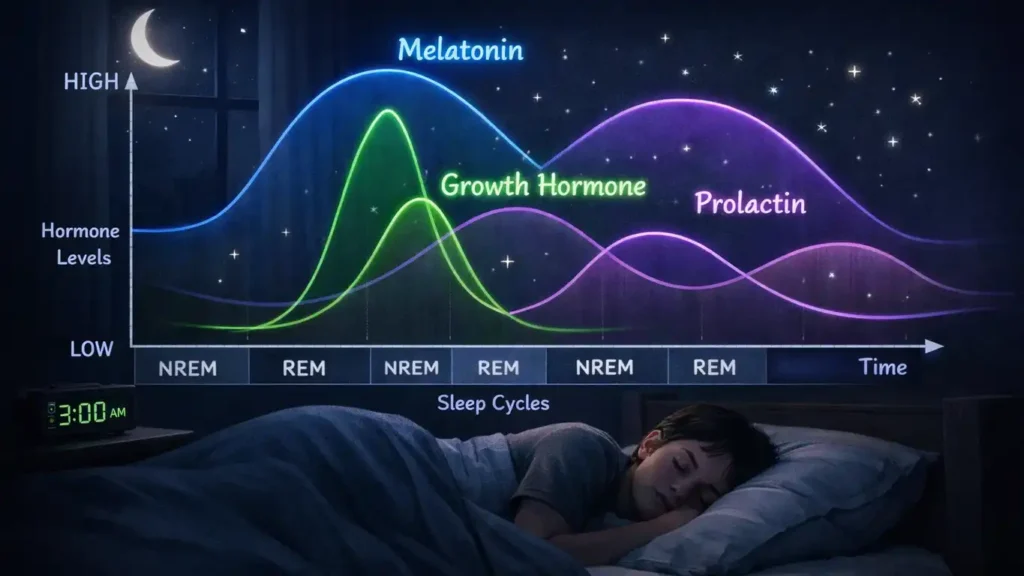
Think of sleep as a nightly spa treatment for your hormones. During sleep, cortisol levels naturally decline while production of essential hormones optimizes.
Key hormones restored during sleep:
Melatonin
- Regulates your circadian rhythm
- Promotes restful, restorative sleep
- Often called “the sleep hormone”
Growth Hormone
- Secreted primarily during deep sleep
- Crucial for cell repair
- Supports metabolism and growth
Prolactin
- Released during sleep
- Supports reproductive health
- Essential for immune function
- Facilitates lactation in nursing mothers
The Cost of Sleep Deprivation
Chronic sleep deprivation disrupts this delicate hormonal dance. When you consistently sleep less than 7-8 hours nightly, a cascade of negative consequences unfolds.
Sleep deprivation effects include:
- Disrupted melatonin production making it harder to fall asleep
- Elevated cortisol levels throughout the day
- Reduced progesterone production
- Increased inflammation markers
- Worsened insulin sensitivity
Consequently, poor sleep creates a vicious cycle: stress disrupts sleep, which increases cortisol, which further disrupts sleep. This cycle profoundly impacts menstrual health and overall well-being.
Do you prioritize sleep as much as diet and exercise? If not, improving sleep quality may be the single most impactful change you can make for hormonal balance.
Understanding the Full Picture: Key Takeaways
Stress as the Unseen Enemy
Like a persistent drizzle slowly eroding even the sturdiest structures, chronic stress exerts profound influence on your hormonal symphony. Throughout this article, we’ve explored multiple disruption pathways.
Key disruption mechanisms include:
- HPA axis dysfunction leading to cortisol excess
- GnRH suppression stress interrupting reproductive signals
- Hormonal cascade disruption affecting FSH, LH, estrogen, and progesterone
- Impact on ovulation, cycle regularity, menstrual flow, and emotional well-being
Common Manifestations of Stress on Menstruation
Stress-related menstrual issues we’ve covered:
- Missed periods and anovulation: High cortisol prevents ovulation
- Irregular cycles: Unpredictable hormone fluctuations
- Heavy bleeding: Imbalanced estrogen and progesterone
- Worsened PMS: Disrupted neurotransmitter production
The connection between mental and physical health is undeniable. Your menstrual cycle serves as a monthly report card on your overall well-being.
Conclusion: Your Journey Toward Holistic Well-Being
You Have the Power to Reclaim Your Rhythm
You are not powerless in the face of stress-induced hormonal disruption. Instead, you have numerous evidence-based tools at your disposal.
Available stress management approaches include:
- Deep breathing exercises like the 4-7-8 technique
- Adaptogens such as ashwagandha and rhodiola
- Cycle syncing nutrition to support each phase
- Prioritizing 7-8 hours of quality sleep nightly
- Regular movement and exercise
- Mindfulness and meditation practices
The Menstrual Cycle as Health Barometer
Your menstrual cycle reflects overall health and inner balance. When you experience irregularities, your body is attempting to communicate. Therefore, listening and responding appropriately is crucial.
Menstrual irregularities deserve the same attention as any other health concern. They’re not character flaws or signs of weakness but physiological responses requiring compassionate, evidence-based care.
Embracing the Journey
This journey toward menstrual harmony is not about achieving perfection. Rather, it’s about cultivating self-awareness, self-compassion, and self-care.
Focus on developing:
- Awareness of your body’s signals throughout your cycle
- Compassion for yourself during challenging times
- Care practices that nourish physical, emotional, and mental health
Tune into your body’s whispers. Notice how you feel throughout your cycle. Make choices that support your unique needs. Find stress reduction techniques that resonate with you personally.
Recognize that sleep is a fundamental pillar of hormonal health, not a luxury. Seek professional support when needed. Healthcare providers can offer personalized guidance and treatment options.
Final Message
Holistic well-being is an ongoing process, a continuous dance of self-discovery, self-acceptance, and self-love. It’s about honoring your body’s innate wisdom and embracing the cyclical nature of your being.
By understanding how stress affects your hormones and implementing targeted interventions, you can restore balance and reclaim your rhythm. Celebrate the strength, resilience, and beauty that reside within you. Your menstrual cycle, far from being a burden, is a powerful indicator of your overall health and vitality.
Remember: chronic stress may disrupt your hormones, but with knowledge, tools, and support, you can navigate these challenges and emerge stronger, healthier, and more in tune with your body’s needs.

 By
By
 By
By


 By
By


