


By Dr. Muhammad Usman Arif
When we think about fighting cancer, we usually picture chemotherapy drips, radiation machines, or complex surgeries. However, what if I told you that one of the most potent medicines available isn’t found in a pharmacy? It is found within your own muscles. As a specialized men’s sexual health practitioner, I have walked this journey with countless patients. I have seen the fear in their eyes when they receive a diagnosis. Yet, I have also witnessed the incredible transformation that occurs when they realize they have agency over their own biology.
This is not just about “staying active” or taking a light walk; rather, this is about prostate cancer exercise as a precise, dosed form of medicine.
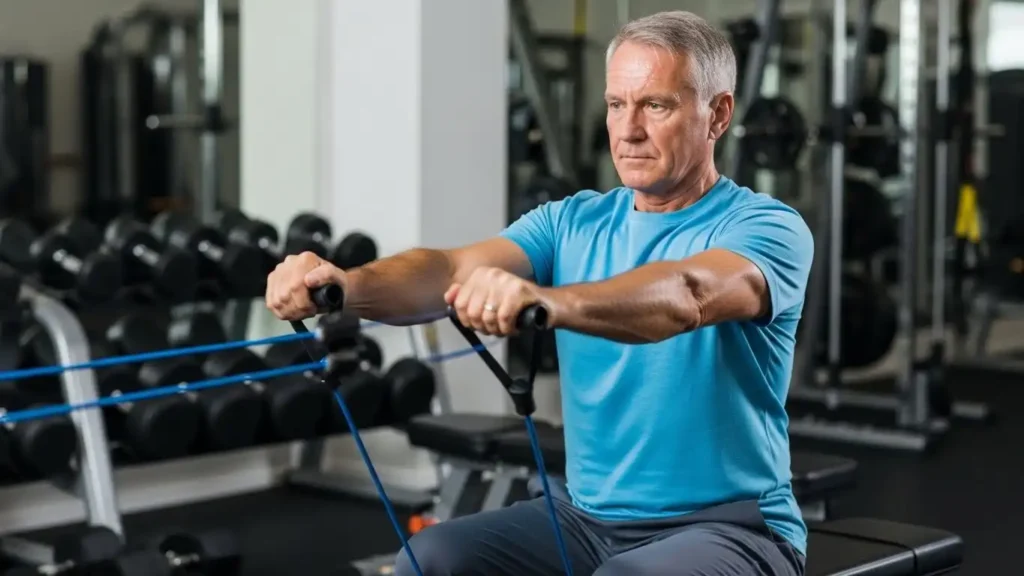
Recent breakthroughs in exercise oncology have completely shifted how we view movement. Consequently, it is no longer just a good lifestyle choice; it is a survival strategy. Whether you are preparing for surgery, currently undergoing androgen deprivation therapy (ADT), or navigating life as a survivor, understanding how to dose this “internal medicine” can change your outcome. In this guide, I will walk you through the science, the strategies, and the practical steps to harness your body’s own pharmacy.
Exercise as First-Line Medicine
For years, patients were told to “rest” after a cancer diagnosis, but we now know that advice was not just wrong; it was harmful. Dr. Robert Newton, a pioneer in exercise oncology, describes exercise as “endogenous medicine,” which means it is medicine generated from inside your body.
When you take a pharmaceutical drug, you are introducing an external chemical to fix a specific problem. It is effective, but it can be blunt. Dr. Newton uses a brilliant analogy: imagine your body is a symphony orchestra playing a complex piece of music. Conversely, taking an external drug is like having a guy in the front row playing a harmonica. It might be loud, and it might drown out some errors, although it doesn’t always fit the harmony.
In contrast, exercise alters the chemical, thermal, and hormonal environment of every cell in your body simultaneously. It is the conductor of the orchestra, bringing your biological systems into harmony to fight disease.
The core message I want you to take to heart is this: Prostate cancer exercise is a first-line therapy. It has a direct, causative relationship with how long you live and how well you live.
- Key Insight: You are not just working out; you are dosing yourself with anti-cancer biology.
- Clinical Reality: Patients who exercise vigorously often tolerate treatments like chemotherapy and radiation with fewer side effects than those who do not.
Pro Tip: Think of your gym session or home workout as a prescription. You wouldn’t skip your heart medication, so don’t skip your movement medicine! 💊
Understanding the “Prostate Cancer Exercise” Continuum Across Your Cancer Journey
Cancer is not a static event; therefore, your body needs different types of support at each stage. We view this as a continuum where prostate cancer exercise adapts to your specific clinical needs.
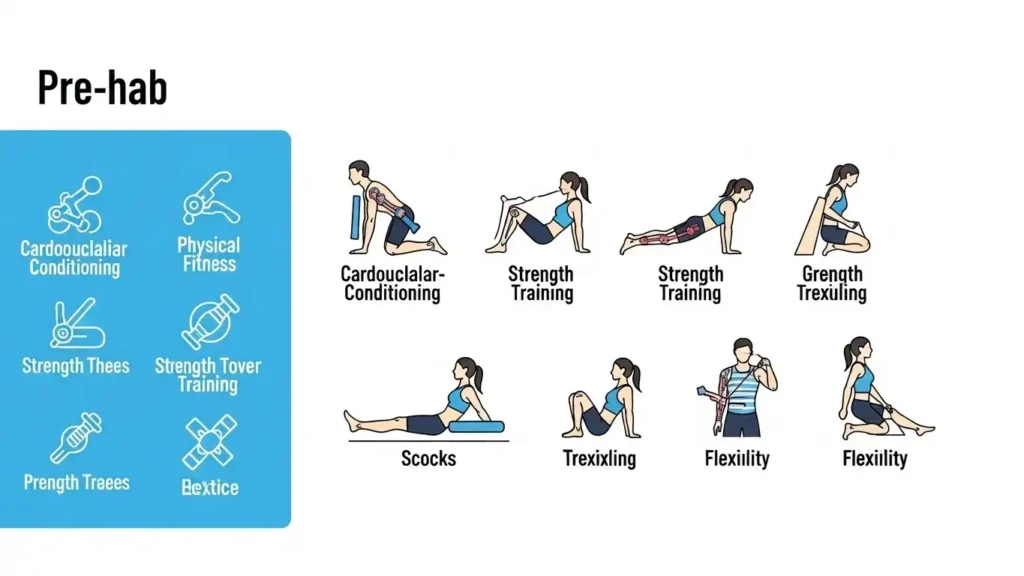
Neo-Adjuvant (Pre-Treatment)
This is the phase between diagnosis and your primary treatment, such as a prostatectomy (surgery). We use this window to build “resilience”. Think of it like training for a marathon. You wouldn’t run 26 miles without training, and similarly, surgery is a massive physiological event. By improving your fitness before surgery, we can reduce complications, shorten hospital stays, and—crucially for my patients—help preserve sexual and urinary function.
Adjuvant (During Treatment)
This is where exercise acts as a supportive shield. If you are on therapies like ADT, your body goes through drastic hormonal changes. Exercise here is not about setting world records. Instead, it is about suppressing cancer progression and neutralizing the toxic side effects of the drugs. Furthermore, it keeps your body strong enough to take the full dose of the life-saving treatment you need.
Survivorship and Rehabilitation
Once the primary treatment is done, the goal shifts. Now, we want to regain what was lost. We focus on fixing incontinence, rebuilding muscle, and preventing recurrence. This is the “maintenance phase” where we ensure the cancer stays away and your quality of life returns.
Stage IV (Survival Phase)
This is perhaps the most hopeful area of modern research. Even when a cure is not possible, and the disease has spread (metastasized), targeted exercise can extend survival. Additionally, it maintains your independence and keeps you moving, which is vital for mental and physical dignity.
The Science of Survival: How Exercise Fights Prostate Cancer Cells
You might be asking, “Dr. Arif, can lifting weights really help me live longer?” The data is resoundingly yes.
The 40–60% Advantage
Epidemiological studies—research that looks at large populations—have shown us something startling. Men with prostate cancer who engage in regular physical activity have a 40% to 60% lower risk of dying from the disease compared to sedentary men. That is a massive statistic. In fact, it rivals the effectiveness of many pharmaceutical drugs.
The “Challenge” Study Breakthrough
For a long time, skeptics said, “Maybe healthy men just exercise more”. However, the landmark “Challenge” study changed that conversation. It was a randomized controlled trial (the gold standard of science) that proved exercise causes the survival gain. Notably, it showed that exercise provides a survival advantage similar to, and in some cases superior to, traditional chemotherapy options for certain cancers.
Vigorous vs. Light Activity
Here is the catch: a leisurely stroll isn’t enough. The research indicates there is a “threshold” of intensity. Therefore, to trigger the biological changes that suppress tumors, you need to reach a moderate-to-vigorous level of activity. You need to sweat. Moreover, you need to get your heart rate up.
Comparison of Survival Gains: Exercise vs. Traditional Chemo (Concept from Challenge Study)
| Treatment Modality | Survival Gain (Approximate) | Side Effects Profile |
| Vigorous Exercise | + 7% to 15% (varies by cancer) | Positive (Better sleep, mood, strength) |
| Traditional Chemo | Varies (often small % in advanced stages) | Negative (Nausea, fatigue, neuropathy) |
| Combination (Both) | Highest Success Rate | Reduced toxicity from Chemo |
Do you know if your current activity level is hitting the “vigorous” threshold needed to fight cancer cells?
How Your Body Produces Its Own Anti-Cancer Drugs
This is my favorite part of the science because it empowers you. Specifically, your muscles are not just for lifting groceries; they are an endocrine organ.
Myokines (Internal anti-cancer medicine) and Their Power
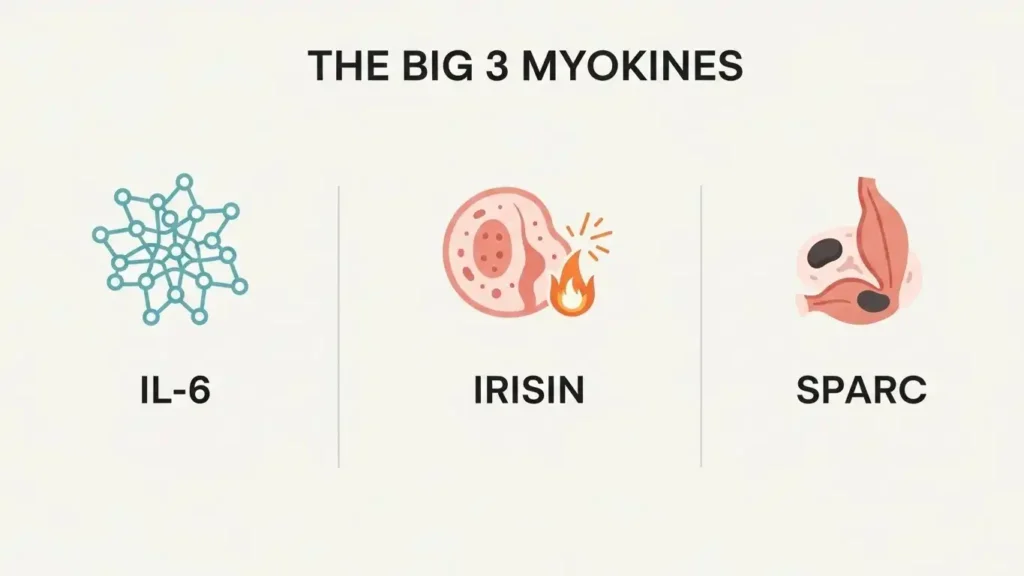
When you contract your muscles, they secrete chemical messengers called Myokines (Internal anti-cancer medicine). These are your body’s natural drugs.
- Direct Attack: Specific myokines, such as Interleukin-6 (IL-6), Irisin, and SPARC, travel through your blood to the tumor site. Subsequently, they can signal cancer cells to stop dividing (cycle arrest) or even commit suicide (apoptosis)
- The “Super Soldier” Immune System: Exercise floods your body with adrenaline (catecholamines). As a result, this mobilizes Natural Killer (NK) cells—the special forces of your immune system. The myokines then act like a GPS, guiding these NK cells to infiltrate the tumor and destroy it.
The Muscle-Fat Imbalance (The Yin and Yang)
We must also talk about body composition. Fat tissue is often “cancer supportive”—it releases inflammation that fuels tumor growth. Conversely, muscle tissue is “cancer suppressive”. This balance is the Yin and Yang of your internal health.
- Sarcopenia (Muscle loss) is a condition where you lose muscle mass. Unfortunately, it is a strong predictor of poor outcomes.
- Our goal is to tip the scales: reduce the fat that feeds the cancer and build the muscle that fights it.
Neutralizing the Side Effects of Treatment
One of the hardest parts of prostate cancer treatment is dealing with the side effects of Androgen Deprivation Therapy (ADT). Although ADT lowers your testosterone to starve the cancer, it takes a toll on your body.
Conquering ADT-Induced Bone and Muscle Loss
Testosterone protects your bones. Consequently, when it is removed, men lose bone density at three times the rate of a post-menopausal woman. This can lead to fractures and frailty.
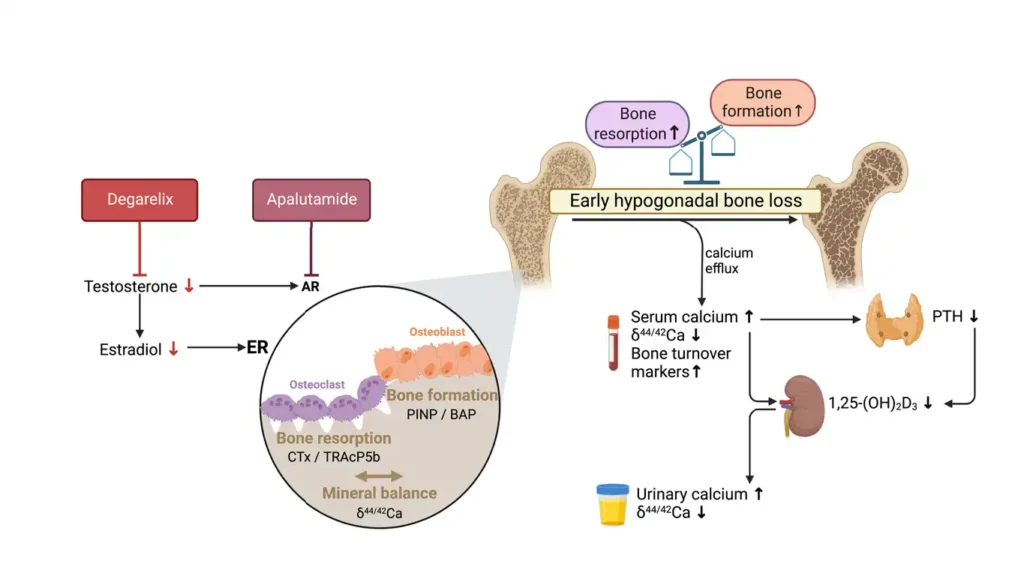
- Precision Dosing: Simply walking will not fix this. In reality, to signal your bones to stay strong, you need “impact loading” (like skipping or marching) combined with heavy resistance training. The bone needs to feel mechanical stress to retain calcium.
- Preserving Muscle: ADT and newer weight-loss drugs (like GLP-1s) can strip muscle away rapidly. Sarcopenia (Muscle loss) is a silent killer here. We counter this with targeted weight lifting to keep your metabolic engine running.
Improving Sexual Health and Incontinence
I see the emotional weight of these side effects in my clinic every day. Men feel they have lost a part of themselves. But there is hope. Studies show that a combination of pelvic floor exercise and general physical training significantly improves erectile function and sexual satisfaction. Thus, it boosts blood flow, improves mood, and helps you reconnect with your body.
Pro Tip: Don’t suffer in silence. Combining exercise with psychosexual education (learning about your changing body) yields the best results for intimacy! 🧠❤️
Optimizing Other Treatments: Radiation and Chemotherapy
Exercise doesn’t just work alone; rather, it makes your other treatments work better.
Prostate Cancer Exercise and Tumor Vascularization
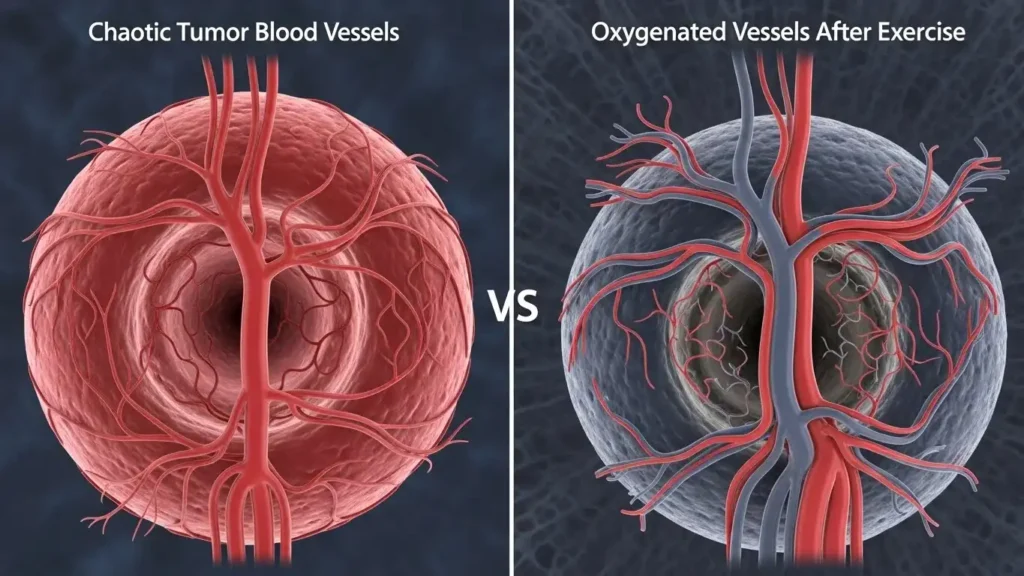
Tumors are messy builders. Their blood vessels are disorganized, twisted, and leaky. This chaotic structure leads to areas of low oxygen, called hypoxia. Radiation therapy needs oxygen to work—it creates free radicals that kill cancer DNA, but only if oxygen is present.
The 900-Fold Increase:
Research shows that doing just 10–15 minutes of aerobic exercise immediately before radiation can increase blood flow to the tumor by up to 900%. Therefore, this floods the tumor with oxygen, making the radiation significantly more potent.
- Practical Application: We now encourage patients to exercise before their radiation appointment.
- The Bladder Myth: You might worry about exercising with a full bladder (required for radiation). Surprisingly, exercise actually decreases urine production temporarily, making it safe to move even when prepped for treatment.
Enhancing Chemotherapy Delivery
Similarly, Tumor vascularization and oxygenation improvements from exercise help chemotherapy drugs get where they need to go. Instead of the drug bypassing the tumor because of poor blood flow, exercise pumps the medicine deep into the malignant tissue.
- Dose Intensity: Patients who exercise have more energy and better blood counts. As a result, their doctors rarely have to lower their chemotherapy dose. Ultimately, you get the full, effective fight against the cancer.
Precision Exercise Oncology: Tailoring the “Dose” to You
Gone are the days of generic advice. Indeed, we are entering the era of Precision Exercise Medicine.
The Assessment
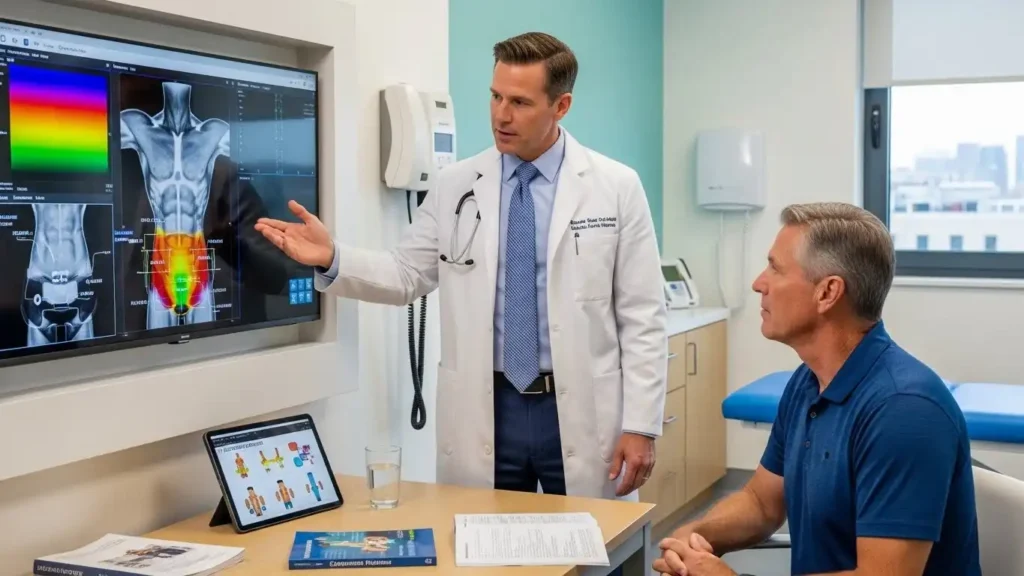
We stop guessing. We don’t just use BMI (Body Mass Index), which is often inaccurate for muscular men. Instead, we use Bone mineral density scans (DEXA) to look at the exact breakdown of muscle, fat, and bone. This tells us if you are “skinny fat” (sarcopenic obesity) or if your bones are at risk.
Targeted Prescription
The old guideline was “150 minutes of walking a week”. That is a good start, but it is not medicine. A precision prescription considers:
- Genetics: How does your body respond to load?
- Psychology: What creates barriers for you?
- Real-time Monitoring: Using wearables to adjust the “dose” daily based on how you feel.
Safety in Advanced Disease: Is Prostate Cancer Exercise Safe?
This is a critical question. If cancer has spread to your bones (metastasis), you might be terrified that moving will cause a fracture.
- The M3P Model: We use a “Modular Multimodal Exercise Program”. Basically, this means we exercise the parts of you that are not broken. If you have a lesion in your right arm, we exercise your left arm and legs.
- Supervision is Key: With proper supervision, high-intensity training is safe. Notably, we have seen zero serious adverse events in trials when protocols are followed. You do not have to be fragile.
How would it feel to know that your workout plan was designed specifically for your body’s cancer-fighting needs?
Your Next Step in the Fight
We have covered a lot of ground. From the cellular level of Myokines (Internal anti-cancer medicine) to the practicalities of lifting weights on Androgen deprivation therapy (ADT).
Summary:
- Exercise is a drug.
- It changes your internal chemistry.
- Every single workout is a “dose” of anti-cancer medicine.
- Finally, it protects your bones, builds your immune system, and makes radiation and chemo more effective.
Actionable Advice:
Please, do not wait. Start moving today. While a precision plan is the gold standard, any movement is better than none. Walk to the mailbox. Lift a milk jug. Alternatively, stand up during commercials. But your next best step is to find a specialist—an exercise physiologist or a physical therapist who understands oncology. Ask them to help you build a plan that includes resistance training and impact loading.
You are the conductor of your own symphony. Pick up the baton and start the music.
Pro Tip: Consistency beats intensity in the beginning. Start with 10 minutes a day and build up. Your body is resilient! 🚀

 By
By
 By
By


 By
By


without exercise it can not be defeated
Dear dr. you have write nice article it helps me a lot to understand this cancer and how to cure with exercise. thanks